
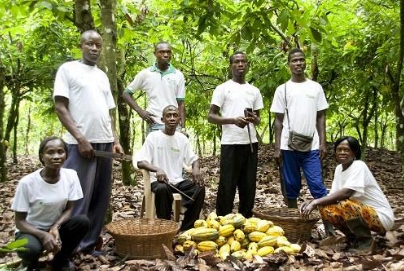
Cocoa farmers across the country are threatening a nationwide demonstration next week over unpaid monies owed by the Ghana Cocoa Board (COCOBOD) for cocoa beans supplied. Ghana travel guide
The farmers say months of delayed payments have plunged them into severe financial hardship, affecting their ability to cater for basic needs, including healthcare and school fees.
Speaking to Citi News, President of the Mankrong Cocoa Cooperative Farmers Association, Francis Teinor, urged COCOBOD and government authorities to act swiftly to clear the arrears to avert disruptions in the cocoa sector.
“It is really affecting farmers; some are sick and want to seek medication, but they don’t have the money to go to the hospital. Do you want them to die? School has reopened, and parents want to pay fees.
“We cannot keep the cocoa because farmers don’t have the storage facilities.
“As I speak, it’s been about six weeks, and there’s no money for cocoa farmers. This is seriously affecting the sector. If the COCOBOD CEO does not do anything about it, he should expect something ugly next week. Farmers are not happy; if he is not careful, we will be on the streets next week,” he said.
Cocoa, the mainstay of Ghana’s economy, is cultivated in the Eastern, Ashanti, Brong Ahafo, Volta, Central, and Western North and South Regions. About 850,000 farm families across Ghana’s cocoa regions are believed to be involved in cocoa farming and related activities.
The crop generates about $2 billion in foreign exchange annually and is a major contributor to the country’s
Gross Domestic Product (GDP). Many Ghanaians have, in recent times, cultivated the habit of consuming cocoa in the form of chocolates, cocoa pebbles, and cocoa powder, given its numerous health and nutritional benefits.
The coca beans were first introduced to Ghana by Dutch missionaries at the beginning of the 19th century, but their commercial cultivation is credited to Tetteh Quarshie, a Ghanaian blacksmith from Osu in Accra.
He lived and worked in Fernando Po (now Equatorial Guinea) for several years and on his return to Ghana in 1879, brought the Amelonado Cocoa pods and established the first cocoa farm at Akwapim Mampong in the Eastern Region.
This farm later became a nursery where cocoa farmers obtained seedlings for their farms in the country. His legacy is the Cocoa bean, which today has become the backbone of Ghana’s economy, with cocoa funds used to support infrastructure development in the country.
After Tetteh Quarshie spearheaded commercial cocoa cultivation, cocoa farming spread to all forest areas of the country and has, since, become one of the most widely cultivated cash crops in the country.
Cocoa pods mature and ripen throughout the year, and with the introduction of the hybrid cocoa seedlings and adherence to modern agronomic practices, farmers are guaranteed higher yields all year-round.
Cocoa is harvested by cutting the ripe pods from the trees. The pod is carefully cut open to extract the beans. The beans are fermented for 6 or 7 days with two/three turnings before drying for another 7 days in the sun. The beans are then bagged, graded, and sealed for export.
To regulate activities of the cocoa industry, the government of Ghana, in 1947, established the then Cocoa Marketing Board (CMB), which later became Ghana Cocoa Board (COCOBOD), as the main agency responsible for the development of the industry through the introduction of pragmatic and sustainable productivity initiatives.