
Unity within the New Patriotic Party (NPP) is important, but it is not enough to guarantee electoral victory, Kojo Oppong Nkrumah has warned, as the party begins preparations toward the 2028 presidential and parliamentary elections.
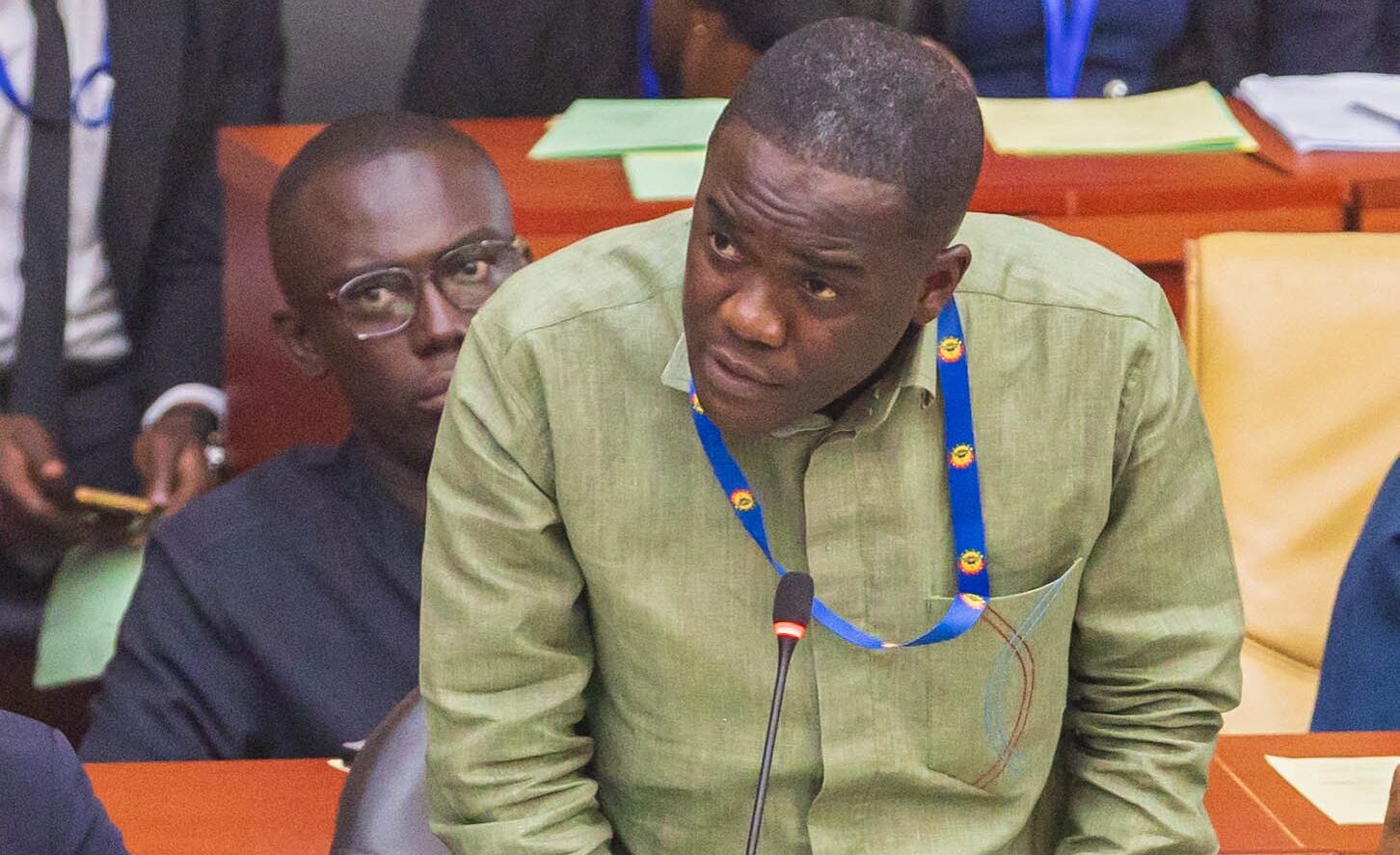
Speaking on Joy News’ PM Express on Monday, the Offoase Ayirebi Member of Parliament (MP) and key member of Dr Mahamudu Bawumia’s campaign team said the party must not fall into the trap of believing that internal cohesion alone would return it to power.
“As they say, with a broom, if you pull out one, it will break. But if it’s united, you have a formidable force,” he said.
“So, we are clear in our minds that when we are united as a party, we are a strong force, but that is only the foundation.”
“We are not under any illusion that all that we need is a united house. No, absolutely not,” he stressed.
Dr. Bawumia secured a decisive victory in the 31 January 2026 presidential primaries, polling 110,643 votes, representing 56.48 per cent of the total votes cast. Kennedy Agyapong came second with 46,554 votes (23.76%).
Dr. Bryan Acheampong finished third with 36,303 votes (18.53%). Dr. Yaw Osei Adutwum and Kwabena Agyei Agyepong trailed with 1,999 votes (1.02%) and 402 votes (0.21%).
The primary saw participation from over 195,000 delegates, who cast their ballots at 333 polling centres across all 276 constituencies.
Voting was conducted under tight security and under the close supervision of party officials to ensure a credible and transparent process.
Party officials and observers described the exercise as largely peaceful, with minimal incidents reported during voting and counting.
But Oppong Nkrumah says the bigger task ahead goes beyond party unity and internal celebration.
“For us, we think that the bigger challenge is how to win back the love and the trust of the average Ghanaian, especially the first time,” he said.
He explained that the process must begin with honesty and self-reflection.
“It starts with a lot of candour in what we did that went right, what we did that went wrong, and being able to communicate that to the Ghanaian people,” he said.
“That this is where we got it right. This is where we got it wrong. If we have an opportunity, this is what we’re going to do differently.”
According to him, work is already underway within the party to reposition it ahead of the next election cycle.
“There’s a lot of work behind the scenes that we are beginning to look into,” he said, adding that “to win 2028 or to give us a very strong footing in 2028, unity is only a foundation.”
Oppong Nkrumah highlighted ongoing internal reforms, particularly in policy development, as part of the reset.
“We are now going through a process of reorganising,” he said. “If you paid attention to our constitutional amendments, for the first time we’ve literally set up like a policy secretariat by constitutional fiat in the party.”
He said the party is working to ensure that the ideas it presents to Ghanaians in 2028 are widely accepted.
“We’re going through a process of ensuring that we populate it and ensure, therefore, that the ideas we come to 2028 with are ideas that also have a broader base of support within this ideology,” he said.
Addressing concerns about Dr Bawumia’s margin of victory, Oppong Nkrumah argued that the numbers should be seen within context.
“Every election is dynamic, and it’s different,” he said, noting that the structure of the contest itself had changed.
“That time you had four in the final. This time you had about five,” he explained. “Even the candidates were different.”
He said Dr Bawumia expanded his reach across the party. “He’s moved from 213 constituencies that he won to 232 constituencies,” he said.
More importantly, Oppong Nkrumah argued, the result forces humility and openness.
“For me, one of the good things is the fact that he doesn’t have, for example, a 95 per cent mandate in the party,” he said.
“That always causes you to listen and consider all of the other opinions and ideas that are being expressed,” he added. “You don’t go gung ho.”
For Oppong Nkrumah, that restraint could prove decisive. “It fine-tunes the ideas you go to the table with,” he said. “So, it is actually, for me, a blessing.”