
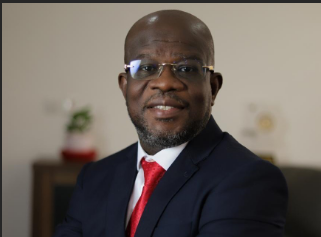
President John Dramani Mahama has directed all Chief Executive Officers of State-Owned Enterprises (SOEs) to submit their audited accounts and annual reports by the end of April 2026, warning of consequences for those who fail to comply.
The President made this known during an engagement with Ghanaians living in Zambia on Wednesday, 4 February 2026.
According to President Mahama, several state-owned enterprises have neglected their statutory obligations for years, undermining transparency and accountability in the public sector.
“There are many state-owned enterprises that for seven to eight years have never produced an annual report,” he said. “Meanwhile, it is obligatory for them to do it.”
He stressed that the current situation was unacceptable and would no longer be tolerated under his administration. President Mahama noted that clear timelines had been set to ensure compliance.
“This year, I said, woe betide any chief executive of a state-owned enterprise who, by the end of April, which is the target date, has not done your audits and presented your annual reports,” he warned.
Although the President did not spell out the specific sanctions, his remarks suggested firm action against defaulting heads of state institutions.
“I won’t say what will happen,” he added, reinforcing the seriousness of the directive.
The State Interests and Governance Authority (SIGA) is the central oversight body established by the Government of Ghana in 2019 to streamline the governance and performance of Specified Entities (SEs), including State-Owned Enterprises (SOEs), Joint Venture Companies (JVCs), and Other State Entities (OSEs).
SIGA was created to address long-standing challenges associated with fragmented oversight by providing a unified, accountable, and transparent framework.
This framework ensures fiscal discipline, policy harmonization, effective monitoring and evaluation, and improved information management across SEs.
In line with global best practices, SIGA also ensures a clear separation between the shareholder (the State) and policy/regulatory bodies, thereby promoting fair competition and eliminating undue advantages for SOEs.
The passage of the State Interests and Governance Authority Act, 2019 (Act 990), mandates SIGA to oversee and guide the operations of Specified Entities (SEs)—comprising State-Owned Enterprises (SOEs), Joint Venture Companies (JVCs), and Other State Entities (OSEs).
Their core responsibility is to ensure these entities operate efficiently, adhere to high standards of corporate governance, and contribute meaningfully to Ghana’s socio-economic development.
This includes acting on behalf of the State to manage and administer public interests in SEs, thereby ensuring a more coordinated and effective framework for ownership and oversight.
The State Interests and Governance Authority (SIGA) oversees 175 entities, including State-Owned Enterprises (SOEs), Joint Venture Companies (JVCs), and other state entities across key sectors like energy, transport, and finance.
Major SOEs include Ghana Water Company, Tema Oil Refinery, and Graphic Communication Group, while JVCs include GOIL, Ghana Manganese Company, and GHACEM.
Key institutions under SIGA, categorized by type, include: Key SOEs & Statutory Bodies: Ghana Water Company Ltd, Tema Oil Refinery (TOR), Ghana National Gas Company Ltd, Bulk Energy Storage & Transportation Company (BOST), Bui Power Authority, Ghana Ports and Harbours Authority (GPHA), State Housing Company Ltd, and Graphic Communication Group Company.
Joint Venture Companies (JVCs): Ghana Oil Company Limited (GOIL), National Investment Bank, GHACEM Limited, Ghana Manganese Company Limited, Ghana Bauxite Company Limited, and Perseus Mining (Ghana) Limited. Other Entities/Assets: State Hotels Corporation (SHC), Ghana Food Distribution Company (GFDC), and Neoplan Ghana Limited.
In a related development, President John Dramani Mahama says his administration is leading by example in its “Resetting Ghana” agenda by significantly reducing the size of government and restructuring debt to prioritize human capital investment.
Speaking to the National Assembly of Zambia, the President detailed the pragmatic steps his government has taken since his return to office to restore macroeconomic stability.
He revealed that the current administration now operates with just 58 ministers and deputy ministers, including regional ministers, as part of a broader commitment to fiscal discipline.
“We have chosen execution over excuses,” Mahama declared. He highlighted that these reforms are delivering tangible results, noting that Ghana’s inflation has plummeted from over 23.4% at the end of 2024 to a record low of 3.8% in January 2026.
Additionally, he cited the 32% appreciation of the Ghanaian Cedi in 2025 as evidence of restored currency stability.
The President also emphasized the government’s focus on the “Gold Board,” which has taken control of gold exports and increased artisanal and small-scale mining output from 63 tons to 104 tons in just ten months.
He stated that Ghana is moving toward local processing of manganese and bauxite to ensure the country captures the maximum value from its natural endowments.