

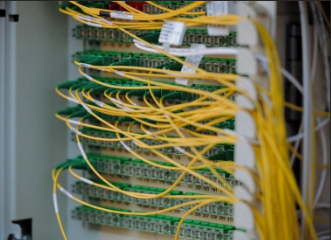
Three African telecom operators have agreed to build a high-capacity terrestrial fibre corridor linking the Red Sea to the Nile Basin, signalling a strategic shift in how the continent secures its digital connectivity.
Ethio Telecom, Djibouti Telecom, and Sudan’s Sudatel Group announced a tripartite agreement on Wednesday to develop the Horizon Fiber Initiative, a multi-terabit optical fibre backbone connecting Djibouti’s submarine cable landing stations through Ethiopia and onward to Sudan.
The deal reflects growing concern among African governments and operators about heavy reliance on subsea cables, which have suffered repeated disruptions from ship anchors, congestion, and geopolitical tensions, particularly around the Red Sea.
“This is not merely a contract; it is the building of a shared digital future,” said Frehiwot Tamru, chief executive of Ethio Telecom, at the signing ceremony. “By linking the submarine cable landing stations of Djibouti, passing through Ethiopia and extending to Sudan, we are creating a secure, diversified, and scalable terrestrial route that strengthens both regional and global connectivity.”
From ports to pixels
Djibouti is already one of Africa’s most critical internet gateways, hosting multiple submarine cable landing points linking the continent to Europe, the Middle East, and Asia. Ethiopia, Africa’s second-most populous country, is a fast-growing data and mobile market, while Sudan sits at a strategic crossroads between East Africa, the Horn, and North Africa.
The Horizon corridor is designed to merge these geographies into a single digital spine. The operators say the network will provide multi-terabit capacity, carrier-grade low latency, diversified cross-border routing, and higher reliability for operators, enterprises, and cloud providers.
In practical terms, this means faster data transit across borders, alternative routes when subsea cables fail, and a more competitive platform for cloud computing, fintech, e-commerce, and emerging artificial intelligence services.
Mohamed Assoweh Bouh, chief executive of Djibouti Telecom, described the project as both infrastructure and strategy. “The Horizon project opens a new chapter in the development and integration of telecommunications infrastructure in our region, with a common goal of progress and shared prosperity,” he said. “It demonstrates our ability to build world-class strategic infrastructure together, strengthen our digital sovereignty, and affirm our role on the global stage.”
Africa’s data traffic is expanding rapidly as cloud adoption, streaming, cross-border payments, and enterprise digitisation accelerate. While subsea cables provide scale, industry executives say route diversification is becoming essential for resilience.
For Ethiopia, the corridor aligns with Ethio Telecom’s “Next Horizon: Digital & Beyond 2028” strategy, which prioritises international bandwidth, data centres, and regional integration.
“What makes Horizon truly powerful is partnership,” Frehiwot said. “By combining our infrastructure assets, technical expertise, and shared vision, African operators can collaborate to solve real connectivity challenges and unlock new value for customers, enterprises, and hyperscalers.”
Beyond bandwidth, the project carries geopolitical weight. Digital infrastructure increasingly shapes trade, security, and diplomatic leverage, and African governments are seeking greater control over data routes and hosting.
Sudatel chief executive Magdi M. Abdalla Taha said the initiative could serve as a continental model. “Beyond infrastructure, Horizon stands as a living model of innovative partnership among African operators,” he said. “It shows what becomes possible when visions align and collaboration replaces competition.”