

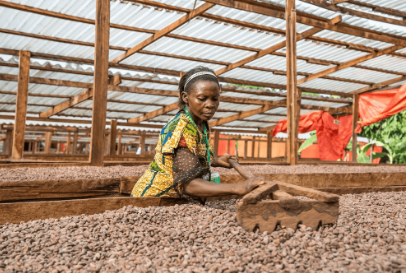
From unpaid farmers to debt-laden cocoa boards, Ghana and Côte d’Ivoire’s cash crisis is exposing the fragility of the world’s chocolate supply chain.
Unpaid cocoa farmers in West Africa are fast becoming the weakest link in a global chocolate supply chain already stretched by debt, climate shocks, and record price swings.
For decades, the world has taken cocoa from Ghana and Côte d’Ivoire for granted. Together, the two neighbours supply roughly 60% of global cocoa, anchoring a multibillion-dollar industry that feeds confectionery giants, luxury chocolate makers, and supermarket shelves worldwide. But behind the glossy wrappers, the system is now under acute financial strain — and farmers are feeling it first.
In Ghana, many cocoa growers say payments have been delayed for weeks or months, even as costs for fertiliser, pesticides, and labour keep rising. Some licensed buying companies (LBCs) complain they are struggling to pre-finance bean purchases while waiting for reimbursements, tightening cash flow all the way down to the farm gate.
The pressure comes after years of compounding shocks: crop diseases, erratic rainfall, ageing trees, and chronic underinvestment in farms. Add debt stress at cocoa boards and volatile global prices, and the result is a cash crunch that threatens not just farmers’ livelihoods but future supply.
Cocoa prices surged to historic highs in 2024 after a severe global deficit, with the International Cocoa Organization (ICCO) estimating a shortfall of nearly half a million tonnes in the 2023/24 season. Although prices have since eased, the financial aftershocks remain. When money does not reach farmers on time, essential farm work – pruning, spraying, replanting – is postponed or abandoned, quietly undermining the next harvest.
When farmers become the lenders
At the heart of the crisis is a simple imbalance: cocoa is still moving, but cash is not.
In Ghana, cocoa purchases depend on a tightly choreographed system of forward contracts, bank financing, state guarantees, and payments routed through the cocoa board. When any part of that chain slows, farmers effectively become unwilling lenders — delivering beans today in the hope of being paid tomorrow.
Ghana Cocoa Board chief executive Dr. Randy Abbey has acknowledged the strain. He says the sector is going through “difficult times” and that authorities are working to resolve the underlying debt challenges.
Côte d’Ivoire faces a different, but related, dilemma. The world’s largest cocoa producer operates a state-set farmgate price system designed to protect farmers from market volatility. While it offers income stability, it also leaves less flexibility when costs rise sharply or when global financing conditions tighten.
Across both countries, delayed or uncertain payments risk fuelling informal trade and cross-border smuggling, as farmers seek quicker cash elsewhere. That undermines traceability schemes and sustainability commitments that global chocolate brands increasingly rely on to meet environmental and labour standards.
For multinational grinders and manufacturers, the danger is not an immediate shortage of beans, but something more insidious: a slow erosion of confidence at origin.
“Cocoa is not just a crop, it’s a credit system,” said a commodities analyst based in London. “If farmers lose trust that they will be paid on time, production decisions change — and the global market feels it a season later.”
The stakes are high. Global cocoa consumption is estimated at more than 5 million tonnes a year, with demand growth strongest in Asia and the Middle East. Any sustained disruption in West Africa reverberates through futures markets, processing plants, and, ultimately, consumer prices.
Manufacturers have already responded to recent volatility with higher prices, smaller bar sizes, and recipe adjustments. Another supply squeeze — even one rooted in finance rather than weather — could lock in elevated prices for years.
In rural Ghana, the crisis feels less abstract. Farmers talk about school fees going unpaid, farmhands leaving for illegal mining or city jobs, and ageing cocoa trees left untended. “If the money delays, the farm suffers,” said one grower in the Western Region. “And when the farm suffers, the country will feel it later.”
Governments are under pressure to act quickly, but solutions are complex. Clearing arrears, restructuring cocoa board debt, and restoring confidence among banks and buyers all take time — and money. Yet the cost of inaction may be higher.
Cocoa has long been marketed as a resilient commodity, rooted in tradition and habit. The current cash crunch suggests otherwise. It exposes a fragile system in which millions of smallholders, earning only a fraction of the final chocolate price, are expected to absorb shocks originating far beyond their farms.
As West Africa enters another critical growing season, the question facing policymakers and global buyers alike is no longer just how much cocoa the world can produce — but whether the people who grow it can afford to keep going.