

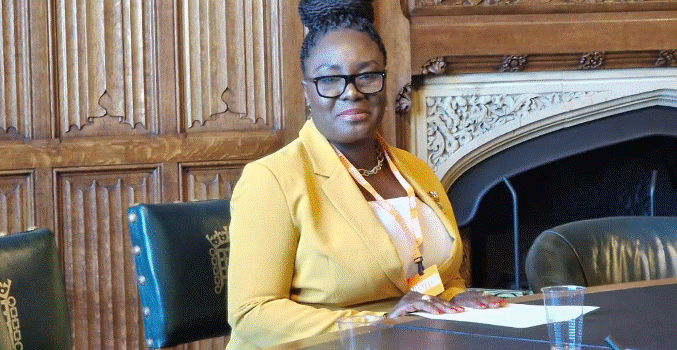
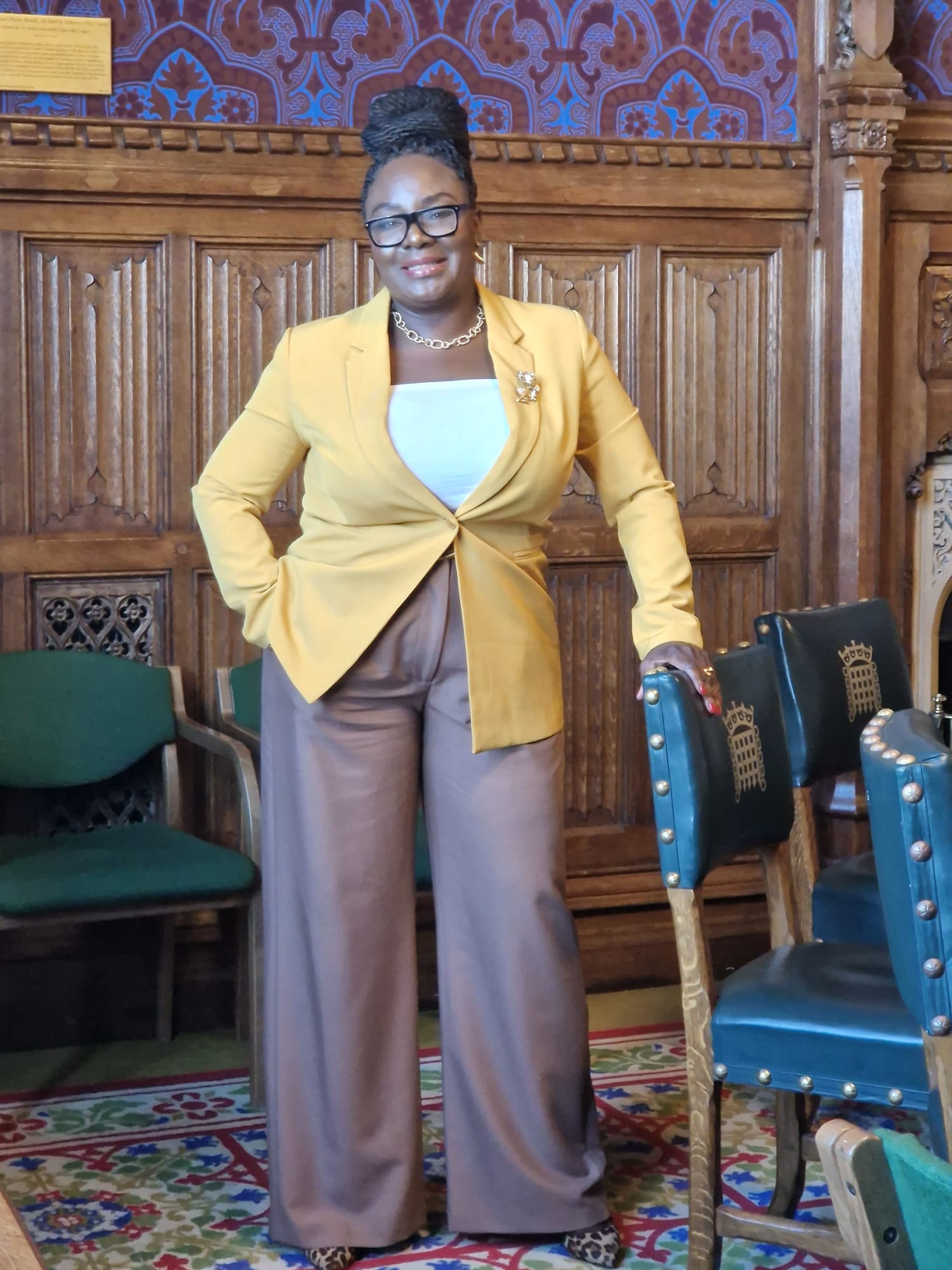
At the heart of British democracy, within the historic halls of the House of Commons at the Palace of Westminster, Nana Abena Owusuwah Hagan joined a group of distinguished women from Bradford to take part in parliamentary proceedings centred on women’s leadership and participation in governance.
The special engagement formed part of activities marking International Women’s Day, which celebrates the achievements of women while highlighting issues affecting their lives and opportunities worldwide.
Walking through the corridors of one of the world’s most influential democratic institutions, Nana Hagan represented more than herself. Her presence symbolized the intersection of tradition and transformation — a reminder that leadership spaces must reflect the diversity of the communities they serve.
Known for her work in community advocacy, Hagan used the opportunity to address an often-overlooked issue affecting many women of colour: postnatal depression.
Speaking during the session, she highlighted how postpartum depression remains widely misunderstood and rarely discussed within many minority communities. The condition, a mood disorder that occurs after childbirth, goes far beyond the commonly referenced “baby blues.”
Symptoms can include persistent sadness, anxiety, panic, irritability, sleep disturbances, appetite changes, and in severe cases, thoughts of self-harm or harming the baby. According to health research, postnatal depression affects approximately one in six mothers.
However, Hagan noted that women of colour are less likely to receive a diagnosis or adequate support. Cultural expectations of strength, stigma surrounding mental health, and systemic barriers often prevent many mothers from speaking openly about their struggles.
“For women of colour, postpartum depression is not just a mental health condition,” she explained. “It is silence layered with stigma, racism and expectation.”
She also pointed to several factors that make conversations about postnatal depression particularly difficult in minority communities. These include mental health stigma, fear of social services intervention, dismissal in healthcare settings, medical mistrust rooted in structural racism, language barriers, and cultural pressures that expect women to remain self-sacrificing.
Another challenge, she said, is the persistent “strong Black woman” stereotype, which can discourage women from admitting vulnerability or seeking help.
To address these challenges, Hagan proposed several solutions. Among them are expanding access to culturally competent mental health professionals who understand racial trauma and cultural nuances, creating safe spaces specifically for mothers of colour, and improving family awareness so loved ones can better recognize and support those experiencing postnatal depression.
She also emphasized the importance of acknowledging birth trauma and the systemic stressors that disproportionately affect minority women.
As conversations around women’s empowerment continue to evolve, Hagan believes the definition must broaden beyond leadership roles and boardroom representation.
“Empowerment is not just about occupying positions of power,” she said. “It is also about having the freedom to say ‘I am not okay’ and being met with care rather than judgment.”
Her message resonated strongly during the International Women’s Day event, underscoring the idea that supporting mothers ultimately strengthens families and communities.
“When mothers are supported, families heal,” she noted. “And when families heal, communities rise.”