
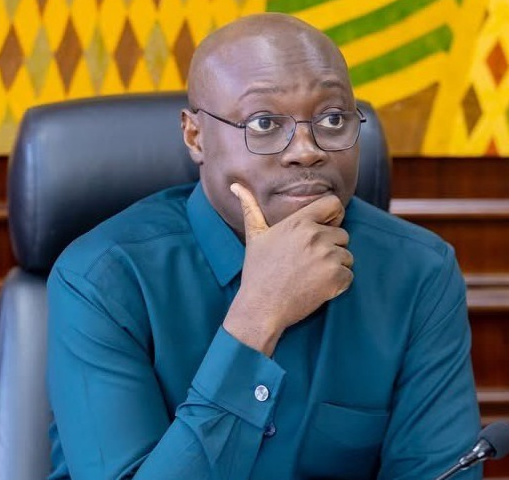
Finance Minister Cassiel Ato Forson has indicated that the government currently lacks the financial capacity to compensate customers whose funds remain locked up in financial institutions that went into receivership, sparking renewed frustration among affected investors.
Speaking on the issue on JoyNews’ PM Express, Dr. Forson questioned whether the state should continue assuming responsibility for liabilities arising from privately managed financial institutions.
“The money must come from somewhere. Tell me, am I going to stop paying for school feeding? Am I going to stop paying the capitation grant? Because the money must come from somewhere. Tell me, what am I cutting to pay the person who gave his investment to a private person to mismanage?
“So, I have fundamental issues with that. I think the government has no business going into that and taking those responsibilities to pay. In fact, we do not even have the money to do that,” he stated.
His comments come despite campaign assurances made by President John Dramani Mahama ahead of the 2024 general elections that an NDC administration would reimburse victims of the financial sector clean-up within its first year in office.
At the time, Mahama pledged that all locked-up funds belonging to customers of collapsed institutions would be paid.
However, 16 months into the administration, many affected customers say they have yet to see any clear roadmap toward compensation.
The remarks by the finance minister have drawn criticism from some aggrieved customers, particularly victims linked to collapsed fund management firms such as Gold Coast Fund Management.
Convener of the Aggrieved Customers of Gold Coast Fund Management, Charles Nyame, accused the government of backtracking on promises made during the election campaign.
According to him, customers relied on the President’s commitment and now feel abandoned following the Finance Minister’s remarks.
During the 2024 election campaign, then opposition leader John Dramani Mahama strongly criticized the handling of Ghana’s financial sector clean-up and repeatedly assured victims of collapsed banks and financial institutions that relief was coming under his leadership.
At the unveiling of his running mate in 2020, Mahama declared: “We shall, within one year of being in office, pay customers of the collapsed financial institutions all funds locked up.”
He went further and pledged: “I pledge on behalf of the NDC that we shall pay within one year all who have funds locked up with the collapsed financial institutions. Within one year. I promise!”
Those words resonated deeply with affected customers whose businesses collapsed, savings vanished, and livelihoods were destroyed during the banking sector clean-up.
Again in 2024, while campaigning for a return to power, Mahama doubled down on the issue. He promised to restore the licences of what he described as “wrongfully collapsed” financial institutions.
At another engagement, he reportedly assured owners of some collapsed banks: “I’ll give your banks back to you.”
These were not vague political statements whispered behind closed doors. They were loud, public, emotional campaign promises repeated before cheering supporters across the country.
Today, nearly one and a half years into his administration, many victims say they are still waiting for action.
For many affected customers, those comments felt like a painful contradiction of the confidence and certainty with which the promise was made.
This naturally raises serious questions:
Did the government fully understand the financial implications before making those promises? Was the pledge realistic from the beginning? Or was it simply politically convenient at the time?
Leadership is not only about winning elections with emotionally powerful promises. It is also about accountability, consistency, and keeping faith with citizens who believed your word.
The silence from President Mahama on this specific promise has become louder than the campaign applause that greeted it.
Thousands of affected customers are still watching. Still waiting. Still hoping that “Within one year. I promise!” was not just another campaign slogan.