

A dramatic legal reversal by the Attorney-General’s Department has triggered fresh political controversy at the Supreme Court after the state abandoned its original constitutional position and aligned itself with the National Democratic Congress (NDC) in the high-profile case challenging the delegate system in political party primaries.
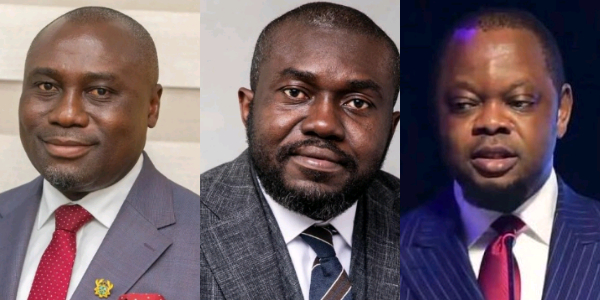
The case, brought by former Environment Minister Professor Kwabena Frimpong-Boateng, veteran politician Dr Nyaho Nyaho-Tamakloe, and former minister Christine Amoako-Nuamah, seeks to dismantle the delegate-based electoral system currently used by political parties to elect presidential and parliamentary candidates, as well as party executives.
The plaintiffs, represented by activist lawyer Oliver Barker-Vormawor, are seeking to have the Supreme Court declare that limiting internal party voting rights to delegates contravenes Article 55(5) of Ghana’s 1992 Constitution, which mandates that political parties adhere to democratic principles.
At the centre of the growing controversy, however, is the Attorney-General’s sudden change of legal position, which occurred just days after filing an earlier statement defending the legality of the delegate system.
Court records indicate that on May 15, 2026, the Attorney-General, acting on behalf of the Republic as the 5th Defendant in the suit, filed a detailed Statement of Case strongly opposing the plaintiffs’ demands.
In that original filing, the Attorney-General argued that the Constitution does not mandate universal adult suffrage or “one member, one vote” in internal party elections and maintained that political parties should be allowed considerable autonomy in designing their own electoral systems.
The state’s first position insisted that delegate systems were not inherently unconstitutional and that representative democracy through elected delegates remained a legitimate democratic practice recognised both within the constitutional framework and internationally.
The Attorney-General further argued that the Supreme Court should avoid imposing a rigid electoral model on political parties where the Constitution itself remained silent.
The filing also warned that abolishing delegate systems could create enormous financial, administrative, and logistical burdens for political parties, particularly smaller parties without state funding.
In that first Statement of Case, the Attorney-General additionally defended the Electoral Commission, arguing that the EC could not be faulted for supervising party constitutions that had never been declared unconstitutional by any court.
The Republic’s initial legal position was therefore clear: the plaintiffs’ interpretation of Article 55(5) should be rejected, and delegate systems should remain constitutionally permissible.
However, the legal and political dynamics of the case shifted after the National Democratic Congress, listed as the 2nd Defendant in the suit, filed its own Statement of Case on May 13, 2026.
In a surprising concession, the NDC admitted before the Supreme Court that its own delegate-based electoral college system does not fully comply with the democratic principles contemplated under Article 55(5) of the Constitution.
Although the NDC defended the autonomy of political parties to regulate internal affairs, the party ultimately supported the plaintiffs’ broader constitutional argument that all members in good standing should ideally be allowed to participate directly in presidential and parliamentary primaries.
The NDC argued that universal adult suffrage and equal voting rights are fundamental democratic principles that political parties ought not undermine internally.
The party consequently urged the Supreme Court to enforce broader internal democratic participation and direct political parties to adopt more inclusive electoral systems.
But the controversy deepened after the Attorney-General’s Department made a stunning legal U-turn barely days later.
On May 25, 2026, Deputy Attorney-General Dr Justice Srem-Sai publicly disclosed that the state had now filed arguments in support of the plaintiffs’ case, effectively abandoning the Republic’s original constitutional defence of delegate systems.
In a public statement and subsequent media interviews, Dr Srem-Sai described the case as one of the most consequential constitutional matters of the Fourth Republic and openly endorsed the plaintiffs’ demand for broader participation in party primaries.
“The three distinguished senior statespersons want the Supreme Court to declare that all registered members in good standing of a political party are entitled to vote in the party’s primaries,” Dr Srem-Sai stated.
“We believe that the declaration, if made by the Supreme Court, will considerably improve our democracy in many ways. We argued in support of the Plaintiff’s case,” he added.
The Attorney-General’s latest filing now reportedly argues that internal party elections form part of Ghana’s democratic governance structure and therefore must comply with broader constitutional standards of participation and accountability.
The new position relies heavily on Articles 42, 35(6)(d), and 55(5) of the Constitution to argue that every registered member in good standing should be entitled to participate directly in the selection of party leaders and candidates.
The sudden reversal has sparked accusations that the Attorney-General abandoned the Republic’s earlier constitutional interpretation to align politically with the governing NDC’s evolving position on internal party reforms.
Critics argue that the state’s initial filing represented a more cautious constitutional approach that respected political party autonomy and separation of powers, while the new position appears to adopt an openly political reform agenda.
Legal observers say the sharp contradiction between the Attorney-General’s two positions could become one of the most contentious aspects of the case itself.
The Supreme Court challenge has already generated intense debate across the political landscape because of the enormous implications any ruling could have on the internal structures of the NPP, NDC, CPP, and other political parties.
For decades, the major political parties have relied on delegate systems in which only selected party executives, constituency officers, polling station executives, and appointed delegates vote during primaries.
Critics of the arrangement argue that the system concentrates enormous influence in the hands of relatively small delegate blocs and encourages vote-buying, monetisation, and factional manipulation during internal elections.
Supporters of the delegate system, however, maintain that direct nationwide primaries involving all card-bearing members would be prohibitively expensive, difficult to manage, and vulnerable to infiltration and chaos.
The Supreme Court’s eventual ruling is expected to have far-reaching consequences for the democratic and constitutional future, particularly regarding the balance between political party autonomy and constitutional demands for internal democracy.