
Minority Leader, Alexander Afenyo-Markin, has criticised what he describes as a rising trend of unlawful arrests and interrogations linked to political expression, warning that such actions pose a threat to free speech and democratic accountability.
Speaking at the Ghana Journalists Association World Press Freedom Day 2026 Honours Night, the Minority Leader said there is increasing concern over the use of state institutions against critics and political opponents, particularly in matters involving public commentary.
He cited what he described as the “weaponisation” of provisions under Section 76 of the Electronic Communications Act, 2008 (Act 775), which addresses the publication or transmission of false information, as well as Sections 207 and 208 of the Criminal Offences Act, 1960 (Act 29), which deal with offensive conduct conducive to breaches of the peace and the publication of false news.
According to him, although these laws were enacted to safeguard public order and protect communication integrity, their application in some instances has extended beyond their original intent.
“These laws, enacted to preserve public order and protect the integrity of communication, are now being applied in ways that extend beyond their original intent, I dare submit.
One such case is that of David Isandoh, organizer of the NPP in Agona West constituency, who reportedly made a statement that, quote, ‘Dumsor is back,’ end quote, and was picked up by the Bureau of National Investigation officials.
“Similarly, Baba Amando was also picked—picked in relation to his public statement on his social media handle. These, among other cases, are a pattern in which political speech, particularly from opposition figures, attracted unlawful arrest, detention, and interrogation” he said.
Afenyo-Markin further warned that such developments risk creating a chilling effect on democratic participation, adding that when arrests become a first response to political expression, it undermines democratic engagement.
“The essence of the ruling I quoted supra is clear: democracy cannot function if opposition fear punishment for expressing political views.” he added.
In a related development, the government has reiterated its commitment to press freedom under the leadership of President John Dramani Mahama, stressing that Ghana remains one of the most open media environments on the Africa continent.
Speaking on behalf of the President also at the Ghana Journalists Association (GJA) World Press Freedom Day 2026 Honours Night, the Minister for Communication, Digital Technology and Innovations, Samuel Nartey George, said the administration remains firmly committed to protecting media freedom and freedom of expression.
He said President Mahama holds the view that a free press is central to democratic governance and national development, adding that the government does not see media scrutiny as a threat.
“It is with a deep sense of honour and profound humility that I stand before this distinguished gathering. I bring you the warmest greetings of President John Dramani Mahama. He is a man who has always believed, with conviction, that a nation’s press is the heartbeat of its democracy,” he said.
According to him, the President welcomes criticism and scrutiny as part of democratic accountability.
“He has always chosen to respond not with intimidation, not with harassment, and not with the heavy hand of the state. Instead, he responds with the quiet confidence of a leader who knows that criticism is the price of democratic leadership,” he stated.
Samuel Nartey George further noted that under the current administration, no journalist has been killed or forced into exile for carrying out their duties, while no media house has been shut down for expressing critical views.
“I am proud to stand before you tonight and make this declaration: under President Mahama’s tenure, not a single journalist in Ghana has been killed for doing their job. Not one journalist has been forced to flee this country out of fear. Not one media house has been shuttered for daring to speak inconvenient truths to power,” he said.
He added that the government continues to engage the media fraternity through regular communication and dialogue, describing such engagement as a democratic duty rather than a favour.
The remarks come amid renewed national conversations on media freedom, professional standards, and the role of journalism in safeguarding democracy, especially in an evolving digital information space.
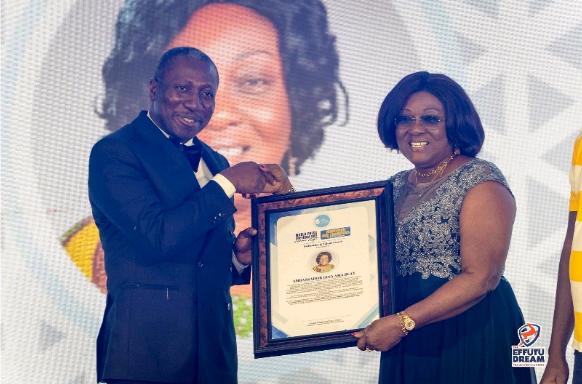
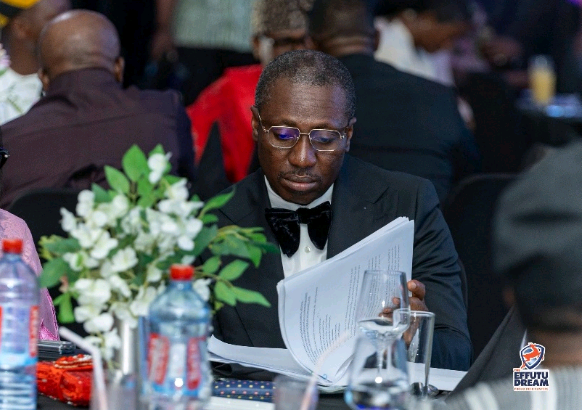
The GJA Honours Night brought together media practitioners, civil society actors, and government officials to celebrate World Press Freedom Day and recognise journalists for their contribution to Ghana’s democratic development.