

The New Patriotic Party (NPP) has challenged the government to account for promises made in the 2025 and 2026 Budgets before announcing a new US$10 billion “New Economy” programme in the 2027 Budget.
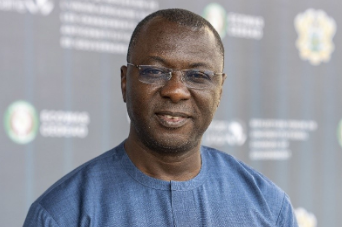
Speaking at a press conference held in Accra on Tuesday, November 4, 2026, ahead of the Budget presentation by Finance Minister Dr Cassiel Ato Forson on Thursday, November 12, 2026, former Finance Minister Dr Mohammed Amin Adam said the Budget must pass a fiscal test: has government spent what it budgeted, paid what it owes, delivered its flagships, and created the jobs it promised?
“Before the applause is organized, the NPP sets out, plainly and with Government’s own figures, the test this Budget must pass,” the statement said.
24-Hour Economy: Promises Made, No Results Delivered
The NPP said the 24-Hour Economy was presented as the heart of the NDC’s economic plan, launched in July 2025 with a projected US$4 billion investment, US$300 million to US$400 million seed capital, and a promise of 1.7 million jobs by the end of 2028 under the “1-3-3” model.
According to the party, the US$4 billion was not raised. The 2026 Budget allocated only GH¢110 million, which the Institute for Economic Research and Public Policy described as insignificant.
What the Secretariat presents as US$5.5 billion Joint Development Agreements are agreements on paper, not money mobilized. The 1-3-3 jobs did not materialize.
On October 19, 2026, the Chief Programme Officer of the Secretariat could not give a figure for total jobs created. Cited achievements are 268 filling stations and 33 manufacturers running shifts, yet filling stations in Accra and Kumasi were open at midnight long before this government.
The 160,000 jobs announced are jobs “expected” from four projects, one of which, the Buipe solar project, will not generate power until Q3 2027.Even the 24-hour markets have been renamed.
On October 5, 2026, the Minister for Local Government redesignated them as “District Economy Markets”, re-scoped them into two phases and pushed completion to 2028, financed from the District Assemblies Common Fund.
The NPP argued the proposed New Economy – covering commercial agriculture, energy, critical minerals, textiles and garments, tourism and pharmaceuticals – overlaps with projects already listed under the 24-Hour Economy and Feed Ghana.
“It is the same promise with a new label and a fresh starting point from which the Government can measure itself,” the party said.
It also asked government to reconcile conflicting figures: the 2027 Fiscal Strategy Document sets out about 1.5% of GDP annually for four years, while the President has described US$2 billion annually for five years.
Other Outstanding Commitments
The NPP listed several programmes it says have under-delivered:
Big Push: GH¢30bn promised for roads and bridges in 2026, GH¢6.5bn or 21.6% spent by mid-year
Women’s Development Bank: GH¢51.3m in 2025 plus GH¢401m more in 2026 – not lent a single cedi, still awaiting banking licence
National Coders Programme: GH¢100m, target 300,000 trainees in 2026 – 40,000 enrolments, about 28,000 completed one module
Agenda 111: Complete 10 hospitals in 2026 with GH¢100m – projects remain incomplete
Feed Ghana / Nkoko Nkitinkiti: Poultry phase called an “abysmal failure”, livestock components not started
Capital spending: GH¢36.6bn in H1 2026, GH¢22.2bn spent, 39.3% short; arrears clearance only 38.2% executed
Adwumawura: Support 10,000 youth businesses yearly – only 475 grants by March 2026
National Apprenticeship Programme: About 14,000 apprentices reached, about 26% of half-year allocation released
Accra-Kumasi Expressway: No contract awarded, procurement still at pre-qualification in October 2026
MahamaCares: GH¢2.3bn in 2026 – a 50-patient pilot costing about GH¢4.8m, since extended to 29 hospitals
Financing Question
The NPP asked three questions:
If government could not mobilize US$4 billion for the original 24-Hour Economy, how will it raise US$10 billion?
How can a government cutting capital expenditure raise US$2 billion a year? Capital spending fell 39.3% short in H1 2026, and GH¢5 billion was cut at mid-year to fund gold purchases by GoldBod?
How can a government unable to pay teachers and cocoa farmers fund a new programme?
Teachers struck from September 25 over unpaid arrears, and cocoa farmers were owed over GH¢10 billion when the producer price was cut by nearly 29% from GH¢3,625 to GH¢2,587 per bag on February 12, 2026.
“Until these questions are answered with a costed, published financing plan, the New Economy is a slogan, not a policy,” the party said.
Paper Economy vs Pocket Economy
Citing Flagbearer Dr Mahamudu Bawumia, the NPP distinguished between the ‘paper economy’ and the ‘pocket economy’. It said while inflation is reported at 5.5%, essentials have risen far higher: electricity up 28.7% combined since January 2025, water up 13.3%, transport up 14.1%, housing, rent and utilities up 10.5%, and school fees up 9.4% – all above the minimum wage rise of 19.9% since January 2025 and 9% in the last year.
The NPP said the Bank of Ghana locked away a record GH¢93.56 billion in 2025 to ‘manage demand’ and spent GH¢16.73 billion paying banks to hold cedis out of the economy.
“Inflation has been below the Bank’s 8% +/-2% target band for eleven months, from December 2025 to October 2026.”When there is no money in your pocket, you cannot buy, and inflation on paper falls,” it said.
It also pointed to credit: private-sector credit is under 8% of GDP, compared with about 32% in Kenya and 36% across Sub-Saharan Africa. Banks lend only about 36 pesewas of every cedi deposited.
On the cedi, the NPP said the government pumped about US$9.2 billion into the forex market between January and August 2026, with reserves falling from about US$14.5 billion in February to about US$11.1 billion by August.
The cedi had lost 9.5% by September and close to 10.5% by early November. It linked the dollars to GoldBod’s small-scale gold purchases, warning of galamsey impact, with no working traceability system.
What NPP Expects From 2027 Budget
The party called on the finance minister to:
Publish the full cost of BoG liquidity operations in 2026 and the recapitalization plan.
Publish monthly forex sales, how much is sourced from small-scale gold, and GoldBod’s traceability timetable.
Set 2027 minimum wage against cost of essentials
Disclose combined effect of regulated price increases in 2025 and 2026
Publish full financing plan for New Economy before a single cedi goes in
Publish verified jobs ledger programme by programme for 2025 and 2026
Set out a credible plan to get credit to traders, farmers and small manufacturers.
“An economy is not run for the statistician… Two years have passed. This Government has already taken GH¢650 billion of taxpayers’ money and has failed to deliver its flagship promises,” the NPP concluded.


