
The Ranking Member of Parliament for the Economy and Development Committee, Kojo Oppong Nkrumah, has charged Ghana’s newly established Fiscal Council to move beyond its inauguration and actively scrutinize government spending commitments and fiscal figures presented in the 2027 Budget.
He argues that the Council must play a more visible oversight role by examining inconsistencies in the government’s fiscal projections and determining whether budgetary announcements are backed by actual releases of public funds.
Speaking during the Minority’s press briefing on the 2027 Budget, the Ofoase Ayirebi MP stressed that the Council’s responsibility should not end with its inauguration, insisting that Ghanaians expect it to provide independent scrutiny of government fiscal commitments.
Go beyond inauguration
According to Mr Oppong Nkrumah, the establishment of the Fiscal Council is meaningful only if it actively examines government fiscal operations, identifies inconsistencies and communicates its findings to the public.
He maintained that whenever budgets are presented with questionable or inconsistent fiscal figures, the Council must intervene by interrogating the numbers and providing clarity on the government’s actual financial position.
“The job of a Fiscal Council is not just to be set up, inaugurated and then become silent,” he said.
He believes the Council must demonstrate its relevance by speaking up when discrepancies emerge in government budgetary announcements and fiscal commitments.
Instances
The former Information Minister particularly questioned the tendency to celebrate large government investment announcements without establishing whether the promised amounts have actually been released for their intended purposes.
Using the government’s Big Push infrastructure programme as an example, he argued that announcing a $30 billion allocation should not automatically be interpreted as evidence that the money has been made available or spent on the projects.
He insisted that the Fiscal Council must examine the actual disbursements and establish whether they correspond with the figures announced by the finance minister.
“The exercise where the Finance Minister announces that we have allocated $30 billion to Big Push and the majority goes away is meaningless if it is not backed by the actual releases,” he stated.
Demands
The Ranking Member said the Fiscal Council must help bridge the information gap between government budget announcements and actual expenditure.
He therefore called on the institution to scrutinise the 2027 Budget, examine the underlying numbers and provide Ghanaians with independent assessments of government fiscal performance.
“And so, it is time for the Fiscal Council to get into the numbers,” he declared.
Background
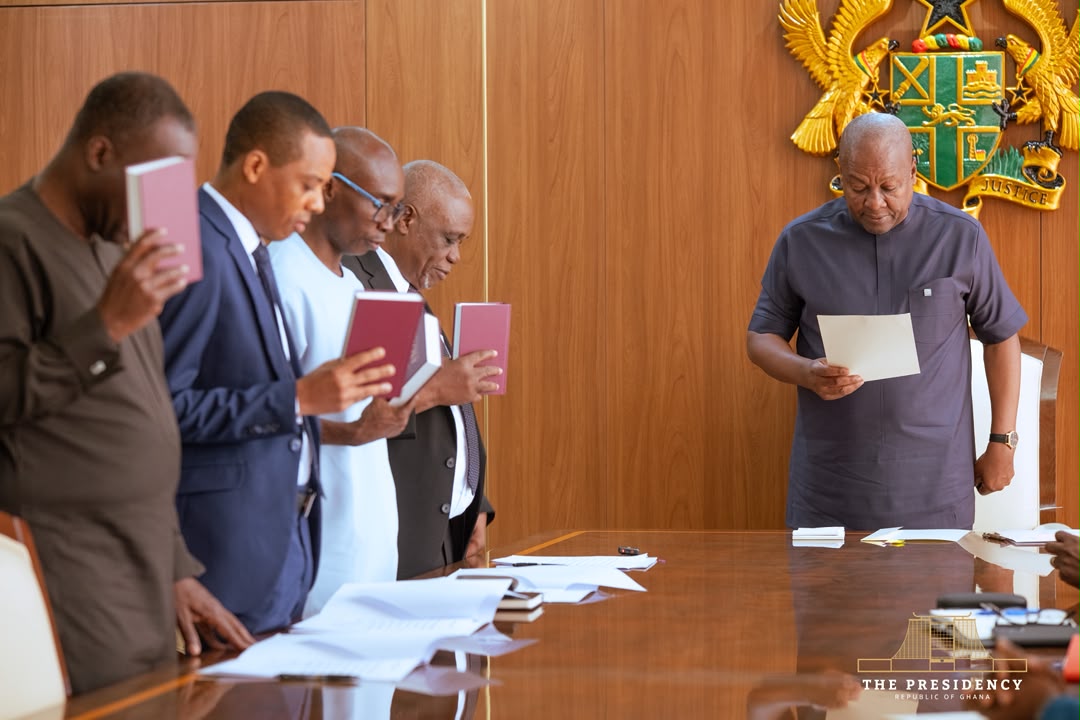
President John Dramani Mahama inaugurated a five-member Independent Fiscal Council on 8 September 2026, charging it with providing credible, objective, and non-partisan oversight of the nation’s fiscal policy.
At a brief ceremony at the Presidency, President Mahama said the Council’s oversight is vital to sustaining economic reforms, restoring investor confidence, driving inclusive growth, and improving public service delivery.
“Your responsibility is to scrutinise the government’s fiscal decisions, assess compliance with established rules, and provide sound recommendations in the national interest,” the president stated, adding that public demand for transparency and prudent financial management is higher than ever.
“Fiscal responsibility must not be regarded merely as a statutory requirement; it is a moral obligation to present and future generations,” he noted. “Your work must be guided by evidence and the national interest, without fear, favour, or political consideration.”
Backed by the Public Financial Management (Amendment) Act, 2025 (Act 1136), the Fiscal Council will enforce fiscal discipline, safeguard long-term debt sustainability, and enhance the credibility of public financial management.
The council, which will serve a four-year term, is chaired by Dr Emmanuel Oteng Kumah, an international economic consultant and former Board Chairman of Standard Chartered Bank Ghana.
Other members include Dr Henry Akpenamawu Kofi Wampah, a former Governor of the Bank of Ghana; Professor Patrick Opoku Asuming, Associate Professor at the University of Ghana Business School; Leslie Dwight Mensah, Economist and Policy Analyst; and J. Kweku Bedu-Addo, a Public Policy Expert.