

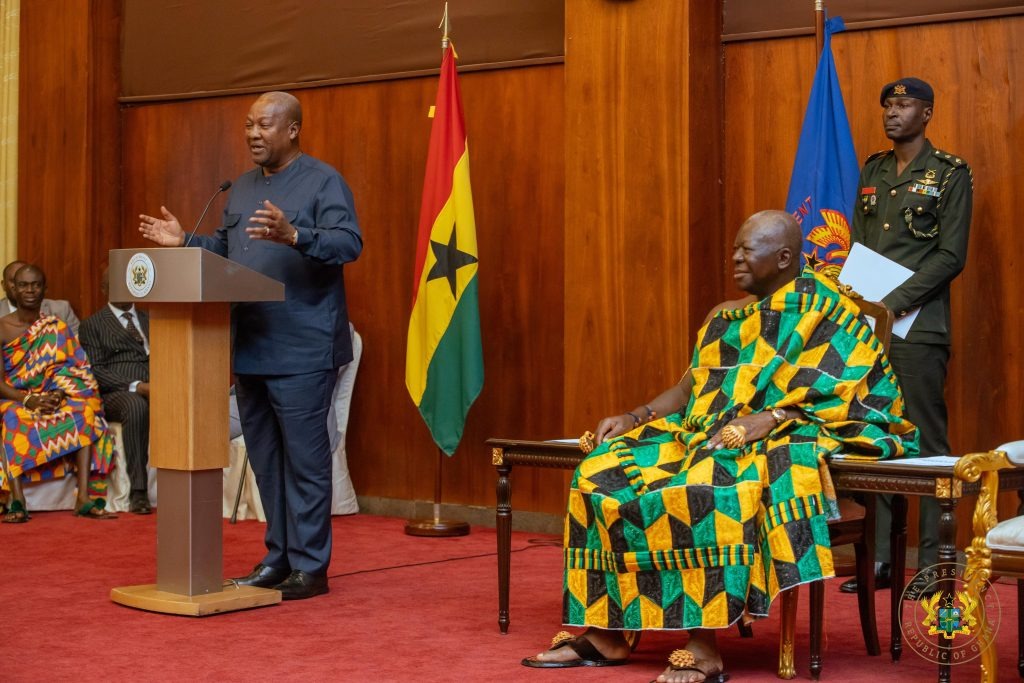
In a landmark development, Otumfuo Osei Tutu II, the Asantehene, on Sunday hosted the first direct encounter between the two opposing sides in the protracted Bawku chieftaincy conflict. The historic meeting, held at the Manhyia Palace Jubilee Hall in Kumasi, capped months of intensive behind-the-scenes mediation led by the Ashanti monarch.
A 30-member Mamprugu delegation, led by Chief Tarana John Wuni Gnumah and representing the Overlord of Mamprugu (Naayiri) Naa Bohugu Mahami Abdulai Sheriga, sat across from the team representing Bawku Naaba Zugran Asigri Aburgrago Azoka II and the Kusasi community, led by Naba Tambis Baalug, Paramount Chief of Pusiga. Former Bawku Central MP Cletus Avoka spoke for the Kusasi delegation, while Dr Issah addressed the meeting on behalf of the Mamprusi side.
After months of hearing the two sides separately, during which each presented its historical and legal arguments, the Asantehene concluded that the moment was appropriate for a direct discussion.
Sources at Manhyia described the engagement as “remarkably cordial,” noting that both delegations repeatedly highlighted their shared ancestry and emphasised that there is no justification for continued violence.
In his closing remarks, Otumfuo Osei Tutu II praised both parties for the maturity and respect they demonstrated throughout the mediation. He reminded them that the Mamprusi and Kusasi are “brothers and sisters” who must find a way to coexist peacefully and urged leaders to begin guiding their communities toward lasting calm.
The Asantehene announced that he will soon present a detailed report, including his findings and recommendations, to President John Dramani Mahama. He expressed hope that the President would promptly convene all stakeholders to communicate and implement the mediation outcome publicly.
The decades-long Bawku conflict—marked by significant loss of life and widespread displacement—centres on competing claims to the Bawku skin by the Mamprusi and Kusasi communities.
Sunday’s encounter represents the closest step toward a negotiated settlement in years, drawing wide praise for the Asantehene’s decisive and personal involvement. Traditional leaders, civil society groups, and residents of Bawku have welcomed the development with cautious optimism, urging both sides to adopt the recommendations that emerge in the interest of maintaining peace in the Upper East Region.