

In the late 1940s, communist authorities in Romania carried out what has since been described as one of the most disturbing political experiments in modern history: the Pitesti Experiment.
It was not a conventional prison programme. Its objective was not merely to detain opponents of the state, but to break their minds, turn them against one another, and ultimately erase the beliefs and loyalties that once united them.
What made Pitești uniquely chilling was that the prisoners themselves were gradually transformed into the enforcers of the system. Victims became perpetrators. Suspicion replaced solidarity. Self-hatred replaced conviction.
No system of repression has ever been more efficient than one in which people internalise the logic of their own destruction.
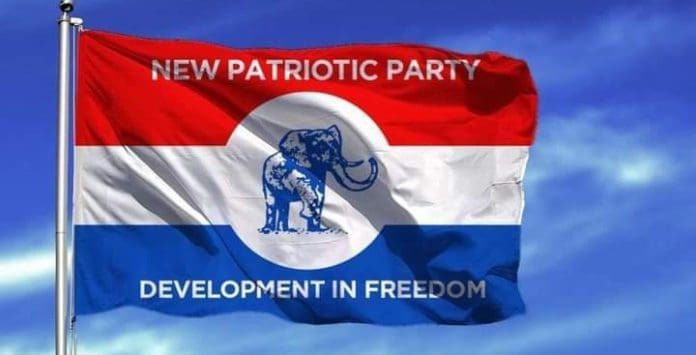
History matters not only for what it records, but for what it warns against. And, today, though in a vastly different and far less brutal context, elements of that same psychological dynamic can be observed in the political journey of Ghana’s New Patriotic Party (NPP).
The essence of Pitești: When perception replaces reality
At Pitești, physical violence was only one part of the system. The more devastating weapon was repetition of a narrative until it displaced truth. Prisoners were forced to confess to crimes they had not committed, denounce colleagues they trusted, and renounce values that once gave their lives meaning. Over time, resistance weakened. The lie became familiar. Familiarity became belief.
Eventually, the system no longer needed to apply force. The prisoners policed themselves. That is the enduring lesson of Pitești: psychological defeat always precedes total collapse.
The NPP in government: How a narrative took hold
Between January 2017 and January 2025, under Nana Addo Dankwa Akufo-Addo, a narrative was gradually and persistently embedded within the NPP’s own ecosystem:
“If you were not family, or part of a tiny inner circle, you were ignored.”
This story did not begin with the opposition. That would have been normal. What made it dangerous was that it was echoed and amplified from within, by party activists, communicators, even appointees, commentators, and social media influencers. It was repeated on radio panels, WhatsApp platforms, community discussions across the country, and even among the diaspora.
Repetition did the work. Soon, it no longer mattered whether the claim was accurate; the usual names could always be thrown out there to support it. It felt like the truth, the only truth. And, like all effective political warfare, it slowly turned members of the same family against one another.
When facts no longer matter
Once that psychological frame set in, something profound happened: facts stopped mattering.
It did not matter that under Akufo-Addo, Ghana built more roads than in any other eight-year period in its history. It did not matter that more Ghanaians, relative to population size, gained access to education than at any comparable period since Independence.
It did not matter that his government invested more in health, agriculture, infrastructure, digital infrastructure, and undertook the painful but necessary rescue of the banking sector.
It did not matter that tourism was deliberately repositioned into a major foreign-exchange earner. It did not matter that an economy inherited at 3.7% growth, the lowest in a generation, was handed over to the same President they took it from but at 5.7%.
Most importantly, it did not matter that, just as John Agyekum Kufuor used HIPC to reset Ghana’s economic foundations, invested heavily in both physical and social infrastructure and handed a cleaner slate to John Evans Atta Mills in 2009, Akufo-Addo’s debt restructuring has today left John Dramani Mahama and the National Democratic Congress (NDC) with one of the least-indebted starting positions since that period.
Yes, the global cost of living crisis hit Ghanaians too hard. Yes, Akufo-Addo’s biggest error was that he was in too much of a hurry to achieve so much within his two-terms.
Yet, it did not matter to Ghanaian voters that the split parliamentary situation of not controlling the legislature (under an NDC Speaker) and pre-existing vulnerabilities of the Ghanaian economy left Ghana totally exposed to the global challenges, causing that major economic crisis.
But, it did not matter to people that the Akufo-Addo government did not waste the crisis. Thanks to the sacrifices of the people, notably bondholders, the Ghanaian economy is now on a sounder footing.
Thanks to the Gold for Forex and Reserves initiatives, the macroeconomic landscape is better today. And, it must be acknowledged that thanks to the fiscal discipline so far displayed by the Mahama administration things are on track. We wait to see how long this discipline will hold. 2027 will tell.
These are not opinions. They are outcomes.
Yet within the NPP, the massive development gains made, sacrifices and creativity employed to fix the economy were all gradually treated as embarrassments rather than achievements.
Psychological disengagement and the 2024 election
The political consequence was inevitable. In the 2024 general election, nearly two million voters who had turned out for Akufo-Addo in 2020 did not vote for his successor, Mahamudu Bawumia. They did not overwhelmingly defect to the NDC. They simply withdrew.
That is the clearest indicator of psychological defeat. When belief collapses, mobilisation collapses with it. Just as at Pitești, where prisoners lost faith not only in their cause but in themselves, many NPP supporters had already disengaged long before polling day.
The exit of Alan Kyerematen to form a new party, which ultimately failed to impress in the polls, was not an isolated political calculation. It was a symptom of a deeper condition.
In Pitești, separation from the collective was framed as liberation. In the NPP, fragmentation was framed as self-preservation. Both emerged from internalised grievance rather than strategic clarity.
Opposition has not ended the experiment
Today, the NPP is in opposition, yet the psychological residue of that period remains. Five contenders are competing for the 2028 presidential ticket. Competition is healthy. But what is troubling is not ambition, it is the persistence of self-directed hostility.
We now see a paradox that would be politically comical if it were not so damaging:
- Opponents of Bawumia use the party’s eight-year record as a whip against him.
- Elements within Bawumia’s own camp seek to distance him from that same record, implicitly blaming Akufo-Addo.
In Pitești, prisoners were broken by being forced to confess to crimes until confession became habit. In the NPP, apology has become instinct, even where confidence is required.
The party has already been punished by the electorate for its mistakes. What it has not done is defend its record with conviction and use that as a credible platform to project a newer, confident vision for 2028 and one that will directly address the concerns and aspirations of the people.
You cannot win power by disowning power
No serious political tradition regains office by:
- Running away from its own achievements
- Treating governance as a liability
- Hoping voters will reward selective amnesia
- And, break the traditional 8 each of the two parties endures in opposition or enjoys in office.
Mistakes must be acknowledged, yes. But records must be defended. A party that behaves as though its last term in office was something to be ashamed of will never persuade the electorate to trust it again and, certainly, not after just four years.
The real test lies ahead
The NPP will elect a new leader in early 2026, whether by a landslide or a narrow margin, whether through a runoff or not. That contest will matter. But it is not the decisive test.
The real question is this:
“Will the NPP be self-loving enough to unite with sincerity, confidence, and belief in itself?”
The party has a whole year to heal, reorganise itself and even choose the majority of its parliamentary candidates for 2028. This can augur well, because from 2026 onwards, the NDC will begin to confront its own incumbency pressures, governance fatigue, grassroots disaffections, and internal leadership tensions.
Politics is cyclical. Opportunity always returns. But only parties that believe in themselves can seize it.
Learning from Pitești
The Pitești Experiment ended not because it succeeded, but because its cruelty eventually became undeniable. For the NPP, the lesson is clear. The most dangerous captivity is not physical, it is psychological. A party that turns against itself, exaggerates its own flaws, and internalises hostile narratives does its opponents’ work for them.
The road back to power does not begin with rebranding or slogans. It begins with recovering faith in oneself, defending achievements without apology, rebuilding internal solidarity and reclaiming credibility on the management of the economy.
Without that, 2028 will remain distant. With it, renewal is not only possible, it is inevitable. History has already issued the warning. Wisdom lies in recognising it before the damage becomes permanent.
By Nana Yaw Asare
_____________________