
Sources close to the Bank of Ghana (BoG) have pointed out that the central bank is set to stop financing GoldBod’s activities in the Gold-for-Reserves (G4R) programme, following the revelation by the International Monetary Fund (IMF) that the country has lost about US$214 million (0,2 percent of GDP) at the end of the third quarter of 2025 as result of the G4R programme.
The Bank of Ghana, according to sources familiar with ongoing discussions about the concerns raised by the IMF in their 2025 (Q3) report and subsequent responses from the chief executive officer (CEO) of GoldBod, Sammy Gyamfi, has resolved to stop the financing programme to avoid any further financial loss to the state.
The IMF’s report flagged financial risks, noting that losses from artisanal and small-scale gold mining transactions under the G4R program had reached approximately US$214 million by the end of September 2025, primarily due to trading losses and GoldBod off-taker fees.
The Bank of Ghana and GoldBod’s CEO had earlier disputed these figures, noting that the programme is a policy tool with significant macroeconomic benefits, including strengthening reserves and supporting currency stability.
Defiance
GoldBod, through its CEO, insists it has generated an operating income surplus in 2025 and that the IMF figures refer to programme-level trading outcomes across several years, not to GoldBod’s financial performance as an institution.
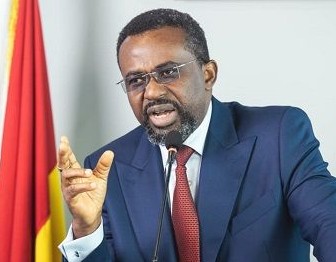
In a post on his X handle on Saturday, 27 December 2025, Sammy Gyamfi said the reporting on the alleged losses by GoldBod is a deliberate attempt to paint the Mahama administration in a negative light by persons who do not want to see the Mahama administration succeed.
“In their desperation to see the transformational GoldBod and the Mahama government fail, the doom wishers have created “by force” imaginary losses and are aggressively imposing same on the surplus-making GoldBod. How ridiculous.
“They have soon forgotten the objects, policy design, and COST associated with the DGPP they once touted, albeit with very little to show for. They have soon forgotten that the DGPP’s policy choices have always come with an intrinsic cost to the central bank.
“They have forgotten that the policy justification for the DGPP, despite its associated cost, lies in a holistic analysis of cost versus economic benefits, ” Sammy Gyamfi wrote on his X handle.
“Today, the doom-wishers are castigating the very administration of the BoG, which has delivered the most sterling economic record in Ghana’s recent history; the same administration of the BoG, that has delivered on their primary constitutional mandate of price stability and done for Ghanaians in one year, what they failed to do in 8 years.
“Well, their ‘jandam’ will collapse like a heap of sand when we make the time to engage the issues after the Yuletide. But for now, let’s make merry and enjoy our holidays in peace, while the desperate doom-wishers wallow in their imaginary GoldBod losses,” Sammy Gyamfi’s X post further read.
Independent opinion
Two social media commentators, Evron Rothschild Hughes and Bright Simmons, have joined the IMF’s red flag on the G4R programme, which is at the centre of the controversy.
Bright Simmons, in a post on his X handle in response to the claims of the GoldBod CEO, wrote, “The IMF report is emphatic that there have been losses. They even detail which program generated which loss. Have you, perchance, read the report? I have attached it again. The IMF says the losses arose from TRANSACTIONS with small & artisanal miners in DORE GOLD.
“There is a law which has made you the GoldBossu of Ghana, no? ONLY you are allowed to buy dore gold from small and artisanal miners in Ghana. Today, you do that on behalf of the Bank of Ghana, only because they have the cash. The only way losses can arise is on the buying and selling sides of the transaction.
“If we shouldn’t trust the IMF on these losses, when they have an agreement with the government to collect information directly from the government, then why should we trust ANYTHING ELSE they say about the economy, including the good stuff? Should we discount the IMF’s position that the economy is recovering too?
“You have the role of audit wrong, Mantse. It is NOT the duty of auditors to prepare the financial statements. It is the duty of management (or more strictly, the Directors). If there have been losses disclosed to the IMF, it can only be because there are management accounts disclosing those losses,” the post by Bright Simmons read in part.
Evron Rothschild Hughes, in a post on his Facebook Wall, also posted as follows: “First, whether from the Monetary or Fiscal side, losses of over US$200 million have occurred. (Let others argue why). That makes it a sovereign loss. A loss to the state of Ghana.
“Secondly, at issue, which has been a long-held position by the IMF when dealing with borrowing countries, from Europe to Africa, is that this type of sovereign loss – arising out of transactional activities of an SOE like Goldbod should properly be domiciled on the fiscal side of the books.
“The government, true to its track record, is trying to ‘hide’ the loss on the monetary side (on the books of the Bank of Ghana) so it can be treated as a normal loss arising out of the commercial/or trading activities of the Central Bank.
“This has happened on a large scale in the past when the pre-2017 NDC government hid lots of SOE debts on the books of the SOEs, away from the Central government, in a bid to show a much lower level of debt than there is,” Evron Rothschild Hughes post read.
“In the end, the NPP government had to “swallow” all of it as what were merely contingent risks crystalised, under the weight of COVID, and had to be one of the major causes of how deep the DDEP had to go.
“What the IMF is simply saying is this: this US$214 M loss should, properly treated, be added to the national debt (on the fiscal side). It is the result of the activities of an SOE similar to the Energy Sector SOEs and COCOBOD, whose debts became part of the total debt we had to absorb and restructure painfully.
“They are saying, please, don’t do this again. Don’t hide debts, which will come back and bite you as a sovereign. Ghana. Irrespective of which government is in office.
”Of course, we all know who messes it up and who cleans it up and gets politically punished for doing “good”). The IMF is helping Ghana avoid a future meltdown,” Evron Rothschild Hughes post further read.
Background
The Gold-for-Reserves programme was launched in November 2022 by the Akufo-Addo administration to strengthen the Bank of Ghana’s (BoG) gold reserves, reduce reliance on foreign exchange borrowing, and support the cedi’s stability.
The primary goal of G4R and related initiatives, such as the Domestic Gold Purchase Programme (DGPP), was to enable the Bank of Ghana to purchase gold locally, primarily from the artisanal and small-scale mining (ASM) sector, thereby building its own gold reserves without relying on external foreign exchange.
The Ghana Gold Board (GoldBod), established in 2025, serves as the central aggregator for this gold, formalizing the sector and channeling resources into official government reserves.
____________________