

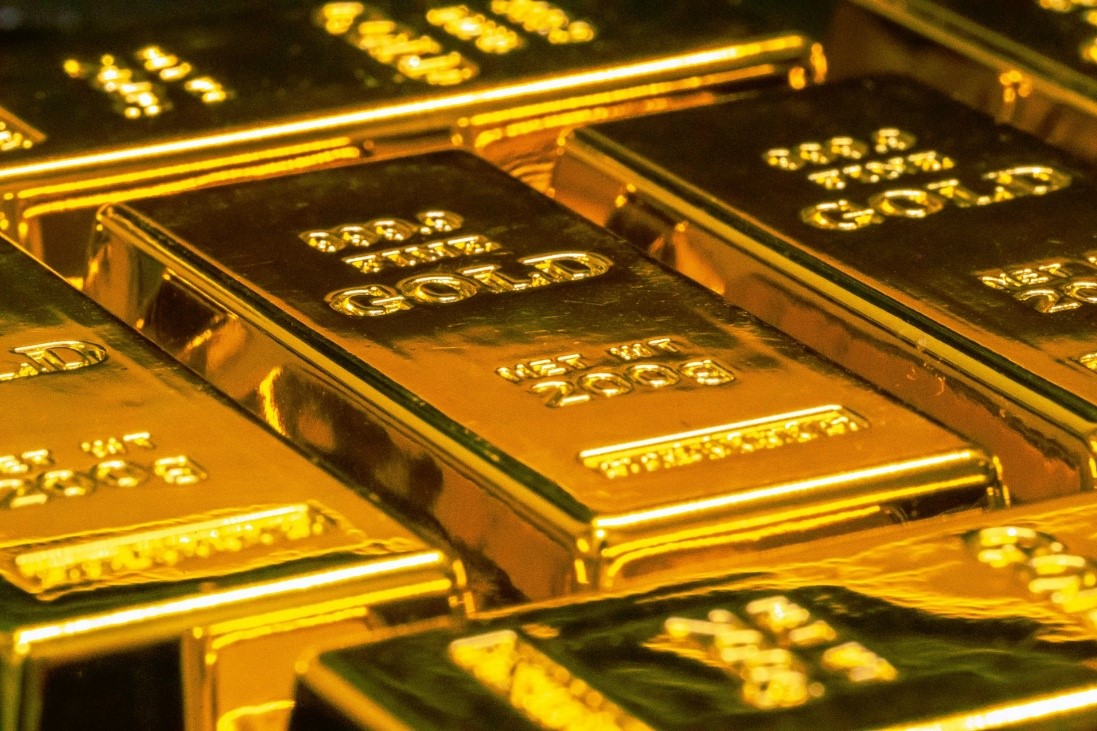
Sudan’s gold sector delivered a rare economic bright spot in 2025, producing 70 metric tons – 13% above target -despite ongoing conflict, generating about $1.8 billion in government revenue.
The performance underscores gold’s strategic role as Sudan’s primary source of foreign exchange and a key stabilizer for an economy under severe strain. It also highlights an industry that has rebounded sharply after war-related disruptions that crippled output in 2023.
Fighting between the Sudanese Armed Forces and the Rapid Support Forces in April 2023 initially devastated production, with output plunging to just two tons in the first five months. Operations gradually recovered in 2024, when production reached 64 tons. This year’s record output marks a further step forward, signalling operational resilience and tighter sector management despite persistent insecurity.
Gold continues to dominate Sudan’s non-oil exports. In 2022, the metal accounted for 46.3% of non-oil exports, valued at $2.02 billion out of total non-oil exports of $4.357 billion.
With oil revenues limited, gold remains the country’s most reliable source of hard currency, helping to cushion the balance of payments amid inflation, currency weakness, and fiscal stress.
The government has moved to consolidate these gains by tightening oversight and expanding formal operations. Minister of Minerals Nour Al-Daem Taha has directed the inclusion of new national projects in the 2026 mining development plan, a step aimed at boosting state revenue, strengthening regulation, and curbing illegal mining and smuggling, which have long drained public finances.
Sudan’s renewed focus on gold mirrors a broader shift across Africa, where governments are revising mining laws, raising royalties, and increasing state participation to capture more value domestically.
Analysts say such policies can lift revenues while attracting foreign investment into formalized mining, creating space for joint ventures, enabling better technology, and improving environmental standards.
African financial analysts argue that Sudan’s performance highlights the sector’s wider economic potential if managed prudently. “This performance highlights Sudan’s potential to leverage natural resources for sustainable growth,” Dr. Emmanuel Adeyemi, a Lagos-based economist, told Allen Dreyfus. The additional funds, he noted, could support social programmes and infrastructure if deployed transparently.
From a global commodities perspective, Sudan’s output adds a measure of supply stability at a time when investors are seeking alternative sources amid geopolitical uncertainty elsewhere. Maintaining production during political turmoil may reinforce confidence among international traders and fund managers tracking African gold flows.
The revenue outlook is also feeding into investor assessments of Sudan’s debt profile. Analysts say stronger and more predictable gold earnings could support debt servicing, help narrow yields on outstanding Eurobonds, and, over time, improve prospects for future market access by bolstering foreign exchange inflows.
For investors monitoring African debt markets, stable gold exports could serve as a buffer against external shocks, such as oil price fluctuations and regional instability, potentially improving secondary market liquidity.
Overall, Sudan’s 2025 gold performance illustrates how natural resources and policy reform can intersect even in fragile states. With sustained production, tighter regulation, and expanded state-backed projects, gold is emerging as a central pillar of economic recovery, offering cautious optimism to both domestic stakeholders and international investors.