

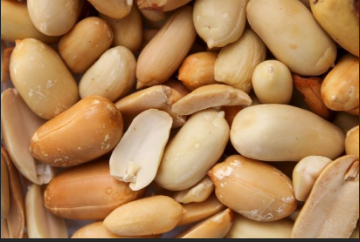
Senegal’s government has authorised the export of peanut seeds for the 2026 season, seeking to revive the struggling sector while triggering concern among farmers and analysts over prices and local processing.
The decision, formalised on Wednesday, January 14, follows a field visit by Prime Minister Ousmane Sonko to peanut-growing areas, notably Kaolack, and is presented by authorities as a response to producers’ expectations and mounting pressure in the countryside.
Officials say the move is intended to recognise farmers’ efforts and unlock demand in a sector long plagued by structural weaknesses, while still preserving the interests of domestic processors.
But producers say the price environment remains deeply unfavourable and that export authorisation alone does little to address their immediate losses.
“I think we cannot be satisfied given the extremely complicated situation,” said Cheikh Tidiane Cissé, secretary general of the National Association of Peanut Basin Farmers. “The seeds are not being sold, and they are being bought at very unfavourable prices.”
Cissé said prices have fallen sharply, contrary to expectations earlier in the season. “As you know, what was valued at 305 francs per kilogram is now being sold for 205 to 225 francs, while we lose 80 or even 70 francs sometimes,” he said. “The rural community is truly experiencing a decline in prices and enormous losses.”
The peanut sector remains a critical pillar of Senegal’s rural economy, employing hundreds of thousands of smallholder farmers and supporting local processing industries. Yet it has struggled in recent years with erratic pricing, limited storage, financing gaps, and competition from imported vegetable oils.
Storage gaps and fears of raw exports
Beyond prices, farmers say a lack of storage infrastructure leaves them vulnerable to market swings and weakens their bargaining power.
“Our storage capacity is practically non-existent,” Cissé said. “The previous system, after independence, had considered this, as there were seed banks (CECOS) in place.”
“There were at least 300 seed banks there to store the seeds,” he added. “If people could establish other storage facilities to hold all the seeds, it could at least mitigate some price fluctuations and contribute to better national organisation.”
Without such buffers, producers fear that authorising exports could expose them to what some describe as a “resource curse”, where raw commodities are shipped abroad with little value added at home, undermining local industry.
Agricultural economist Mountaga Kane said the government’s move carries risks but is not inherently damaging if handled carefully. “The authorisation for Senegal to export raw peanuts in 2026 is a warning sign, but not yet a curse,” Kane told Allen Dreyfus.
“It becomes a serious risk if it becomes a permanent policy without safeguards, as it undermines local industrialisation,” he said.
“On the other hand, if it is temporary, well-regulated, and integrated into a broader strategy to upgrade the sector, it could even be beneficial in the short term.”
Kane said the policy’s success would hinge on whether it strengthens or weakens domestic capacity over time. “The real test will be to see whether local processing capacity has increased or decreased in three to five years,” he said.
“The challenge for the government is not to give in to the ease of raw exports, but to use them as leverage to build a resilient peanut sector that creates added value within its borders,” Kane added.
Farmers also warn of potential exploitation by foreign buyers and renewed price volatility, though some remain sceptical that large-scale exports will materialise this season.
“From what I understand of the situation this year, I think they are bluffing, and that they won’t be able to go to the market to buy and export,” Cissé said. “Because, as you know, they told us that the world price of peanuts had fallen and that they cost around 225 to 250.”
For now, Senegal’s decision has reopened a long-running debate over whether export-led relief can coexist with the country’s ambition to deepen local processing and protect rural livelihoods.