

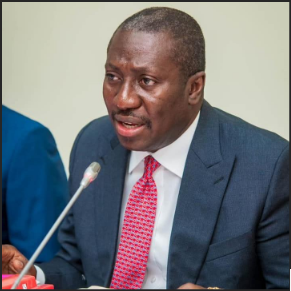
The Minority Caucus in Parliament has launched a sharp critique of the NDC Majority, accusing the governing side of relying on its 189-seat advantage while failing to demonstrate depth, rigor, and seriousness in debate and lawmaking.
The group warned the Majority side not to bring in any Bill under a certificate of urgency, as they did in the previous Session of the House, as they will no longer entertain such Bills.
Speaking at a media engagement in Accra on Monday, January 26, 2026, as part of the caucus’s one-year evaluation of the NDC government’s stewardship, the Minority Leader, Alexander Afenyo Markin, said the Majority’s strength is “only in numbers,” arguing that when it comes to substance, research, and quality argument, the Minority consistently outperforms them.
“We all became aware that their 189 only exist in numbers… They only talk numbers,” he said, insisting the Minority’s interventions are driven by evidence and preparation. “We do proper research, and we argue on facts supported with data.”
He also accused the governing side of replacing serious parliamentary engagement with messaging, alleging that what often passes for debate is “propaganda” rather than reasoned policy argument.
Afenyo-Markin warned that the Majority should brace for a far more combative Minority when Parliament reconvenes on February 3, 2026, saying his side will resist what it considers rushed processes and ensure government officials face tougher oversight.
“But come 2026… they will never have their way. We will hold their feet to the fire and ensure that each minister accounts for his stewardship,” he said, signalling tougher action through questions, motions , and committee work.
He further indicated that procurement and approvals will face heightened scrutiny, saying the Minority intends to examine “every contract” and scrutinise official documents, including submissions linked to state procurement processes.
On the economy, Afenyo-Markin suggested the 2026 Budget will meet stiff resistance, describing it as a “chop chop budget” and insisting it will not pass without deep interrogation of spending priorities, assumptions, and value-for-money.
The Minority believes that the NDC’s parliamentary dominance must not be used to bulldoze decisions, highlighting that Parliament’s credibility depends on scrutiny—not speed.
Transport Sector
The Minority Caucus also strongly criticized the government for lacking ideas in managing the transport sector. According to the group, the transport crisis in major cities across the country demonstrates the government’s lack of vision for the industry that drives the economy.
“When Parliament resumes, we will call on the Minister of Transport to explain why they sat for a year without beefing up Metro Mass Transit Limited’s fleet”, the Minority Leader, Alexander Afenyo Markin, said, stressing that this “exposes the Minister’s lack of clear vision for the transport sector”.
In 2022, high fuel prices led many private vehicle owners to park their cars and use commercial vehicles, easing congestion. Now that fuel prices have fallen, private cars are back on the road, causing congestion and longer travel times.
Some attribute the congestion to inadequate public buses and poor urban transport management. The new management of Metro Mass Transit Limited (MMTL) accused the previous management of auctioning unserviceable buses at low prices, depriving the company of funds to retool.
Markin called this “propaganda” and vowed to haul the transport minister to Parliament to address the crisis. “We would bid our time and put together a paper by the appropriate committee and hold the minister accountable when Parliament resumes”, he asserted.
Lithium Withdrawal
The Minority Caucus on the government’s decision to withdraw the lithium agreement from the House noted that it is a blunt admission of policy failure, accusing officials of mishandling a strategic national asset and attempting to escape scrutiny after publicly defending the deal.
According to the Minority, the government’s posture on the lithium deal has been contradictory from the start.
They said the governing side, while in opposition, criticised an earlier version of the agreement, but after taking office, returned with a new arrangement which the Minority claims was weaker and offered Ghana less protection and value.
The caucus said what makes the episode more troubling is that the Majority side defended the agreement on the floor of Parliament, projecting confidence and insisting the deal was sound, yet later, they (Majority) turned around and withdrew it. They now claim the new lithium agreement required further consultation, Markin revealed.
To the Minority, that sequence is not consultation but rather confusion. The Minority further alleged that, after intense public and parliamentary pressure on the Minister of Lands and Natural Resources, Emmanuel Armah-Kofi Buah, and government officials, “came through the back door” to withdraw the agreement—an approach they averred reflects a lack of transparency and respect for Parliament.
The Minority questioned why a government that believed in the agreement’s merits would be unable to proceed with open and credible justification. To the Minority, the withdrawal raises serious concerns about “whether due diligence was done; whether the terms were properly negotiated; and whether the national interest was truly prioritised”.
“This is how countries get short-changed,” the caucus warned, arguing that critical mineral agreements require discipline, coherence, and a clear policy framework— not trial-and-error decision-making.
The NPP MPs additionally noted that lithium and other strategic minerals are not ordinary resources; therefore, they must be governed by strong national safeguards – covering transparency, value-for-money, local content, environmental standards, and long-term industrial planning – rather than short-term deal-making.