

Ten years after it came online, the luxury smartwatch category may be about to log off. During that decade, high-end Swiss watch companies, including TAG Heuer, Hublot, Montblanc, and Louis Vuitton, followed tech giants Apple, Samsung, and Garmin into the wearables market with their own, more expensive takes on the smartwatch.
But last year, only TAG Heuer renewed its product lineup. And the rest? It appears they have disconnected.
“The war is over,” Oliver R. Müller, the founder of the watch consultancy Luxe Consult near Lausanne, Switzerland, wrote in an email. “It’s a niche, loss-generating business with no emotional context and no prospects. The train has left the station, and it’s now out of reach.”
But for Antoine Pin, who served until recently as TAG Heuer’s chief executive, there is plenty of life in the category and in the company’s Connected luxury smartwatch. (LVMH Moët Hennessy Louis Vuitton, TAG Heuer’s parent company, announced on Jan. 16 that Mr. Pin, who was interviewed in November, had left the company.)
“The Connected has given us an opportunity to speak to a clientele that wouldn’t necessarily go for traditional watches,” he said. “Business size-wise, it’s a single-digit percentage, not a significant one, but it’s a real contribution to our business. It’s a recruitment tool that drives traffic to our stores.”
Most brands keep sales figures closely guarded, so the luxury smartwatch category is difficult to quantify. But it likely accounts for a tiny fraction of the Swiss luxury watch industry’s global sales, which Morgan Stanley estimated at about 50 billion Swiss francs (about $62.4 billion) in 2024.
In contrast, global smartwatch sales (from all watchmakers worldwide, luxury and otherwise) totalled $53.2 billion in 2024, according to estimates from the market research company IMARC Group.
And it said that global smartwatch sales would reach nearly $219 billion by 2033, driven by consumer appetite for the watches’ health and wellness trackers and by the sales of Chinese wearable brands such as Huawei and Xiaomi.
Even so, luxury watchmakers should steer clear of the category because, Mr. Müller wrote, “They would remain niche in a market segment where the leaders are selling tens of millions of watches per year.
“The profitability isn’t there because the life cycle of any connected product is a lot shorter than for any conventional watch. Hence, you are in a perpetual chase for novelty due to the technical innovations that clients want to see on the next model they might buy.”
He noted that such a chase would involve high research and development expenses or similarly expensive royalties for white-label products, the term used for items made by one company to be sold and rebranded by another.
“And the end effect is the margins are rarely positive,” he concluded.
Previous smartwatches made by luxury brands include Louis Vuitton’s Tambour Horizon Light Up and the Hublot Big Bang e, both now discontinued, and Montblanc’s Summit, which has not been updated since 2022.
What seems very clear, though, is the impact connected wrist-worn devices have had on traditional watchmakers.
In 2015, 18.6 million of the 28 million watches exported by Swiss watchmakers had an export value of less than 500 Swiss francs, roughly half the eventual retail value, according to the Federation of the Swiss Watch Industry. But by 2024, the industry’s total exports had dropped to nearly half the 2015 level, and export volumes of watches in the same value category had fallen to 10.7 million.
Consider Tissot, a Swatch Group manufacturer of entry-level watches with the Swiss Made label, an official guarantee of origin, quality, and craftsmanship. It has a T-Touch watch that offers connected features such as notifications, but the brand does not categorize it as a luxury smartwatch. It retails for $1,150 to $1,350 but is not thought to contribute significantly to the company’s overall revenues. (Swatch does not disclose the sales of its individual brands, and Tissot did not reply to requests for comment.)
According to Morgan Stanley estimates, however, Tissot’s revenues fell by nearly 25 percent, to 760 million Swiss francs in 2024 from 1 billion Swiss francs in 2020.
“Sales of smartwatches have destroyed the entry level of the Swiss watch industry and also impacted the mid-priced brands,” Mr. Müller wrote. “The impact was devastating for the Swiss watch industry, because smartwatches were offering usefulness with functionalities that no conventional watch can compete with.”
A Major Step Forward
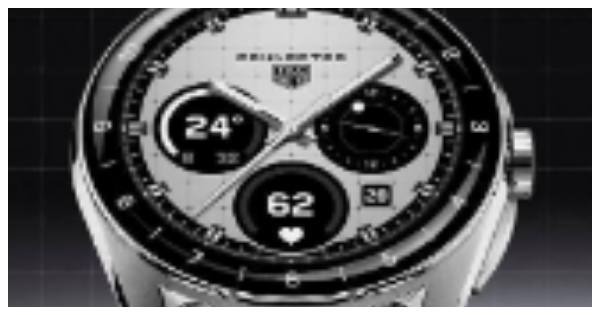
TAG Heuer’s Connected E5. Introduced in October, the timepiece was the first to run the company’s proprietary operating software.
In October, TAG Heuer introduced the Connected E5, its fifth-generation luxury smartwatch. Depending on the specifications, it costs $1,600 to $2,400. In comparison, the Apple Watch Series 11, released in September, starts at $399.
The E5 is the first to run TAG Heuer’s proprietary operating software, a development project that indicated the brand’s commitment to the sector. (La Côte, a Swiss newspaper, reported this month that the brand had invested 200 million to 250 million euros — about $230 million to $290 million — in the Connected project since 2015.)
“Ten years is what you need to build your expertise in new technologies, and the fifth Connected is a major step forward,” Mr. Pin said. “This gives us independence. It’s a big bet, but it’s a form of maturity.”
Industry commentators said the new watch was a step in the right direction for TAG Heuer. “The watches have looked more and more watch-y and less and less like wearable tech,” said Andrew McCutchen, the founder of Time+Tide, a media brand and watch community, who attended the Connected E5 unveiling in Boston.
“Initially, the watches were enormous, whereas now they’re perfectly disguised. I’d be hard pressed to pick the silhouette of a TAG Heuer smartwatch from its Carrera.”
Mr. Pin said TAG Heuer’s smartwatch program had delivered client insights that the brand’s competitors did not have.
“When it comes to health and golf, we’ve learned about our customers,” he said, referring to the brand’s proprietary health and golf tracking apps. “We know a high percentage use their watch every week, and a very low rate gives up using their watch. It has become a tool and a companion for people in measuring their performance.”
But Mr. Pin also acknowledged the market challenge. “We are dealing with competitors with huge resources, so we need to focus on few services but do them really well, less but better.”
He did acknowledge, however, that the brand’s smartwatches were not as profitable as its traditional watches. “We are not where we would like to be,” he said. LVMH Moët Hennessy Louis Vuitton does not disclose individual brand performance.
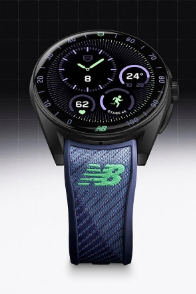
In addition to its standard Connected E5, TAG Heuer issued a 3,000-piece limited-edition smartwatch with performance apps developed in collaboration with New Balance.
In a bid to raise its profile, the TAG Heuer E5 range includes a 3,000-piece limited edition model with performance-related apps developed in collaboration with New Balance, the U.S. footwear and apparel brand.
“It’s the best version of a smartwatch by a luxury brand yet because it catches a lifestyle that’s streetwear and fashion-adjacent,” Mr. McCutchen said. “TAG Heuer has been really smart in hitching its wagon to New Balance.”
Even so, he noted, “There’s no such thing as a high-status smartwatch. It’s a democratized object and devoid of hierarchy. It’s a category that struggled to stick, and success is elusive.”
(Mr. McCutchen is scheduled to open a Time+Tide Discovery Studio watch store in February in the SoHo neighborhood of New York City, but said he would not be selling luxury smartwatches.)
Mr. Pin, however, said TAG Heuer would stay the course because it had identified a market gap.
“Affluent people don’t want the same connected watch as everybody else,” he said. “We want to bring the emotional side of luxury to a connected watch and make the best of both worlds. A tool, but an aspirational tool.”