
Botswana’s annual inflation climbed to 4.1% in January, driven by higher transport and food costs, complicating the policy outlook ahead of next week’s central bank meeting.
The increase from 3.9% in December marks the third consecutive monthly rise, following readings of 3.8% in November and 3.9% in December, according to Statistics Botswana (StatsBots). The latest figure is the highest since June 2023, when inflation reached 4.6%.
“The major drivers of the annual inflation rate were the Transport group… followed by Miscellaneous Goods & Services and Food & Non-Alcoholic Beverages,” the agency said.
Transport alone accounted for 1.6 percentage points of the headline figure — the largest single contribution. Food and non-alcoholic beverages, along with miscellaneous goods and services, each contributed 0.9 percentage points.
However, housing-related costs provided some relief. “The Housing, Water, Electricity, Gas & Other Fuels group applied a moderating effect on overall inflation,” the agency noted.
Broad-based food pressures
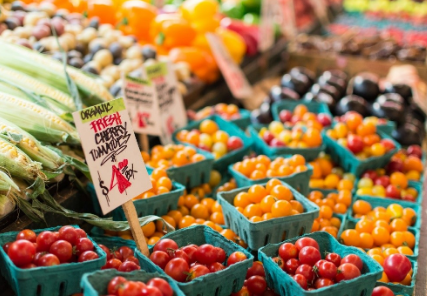
Food inflation was widespread across subgroups. “The upward movement in the food group was broad-based, reflecting price increases across all constituent sections,” StatsBots noted.
Fish prices rose 2.9%, coffee, tea and cocoa increased 2.2%, while meat prices climbed 2.1%. The data indicate persistent pressure in protein and staple categories — a trend likely to weigh on household consumption.
Inflation also varied by location. In “urban villages”, the rate increased from 4.1% in December to 4.3% in January. In “cities and towns”, inflation rose to 3.7% from 3.6%. In “rural villages”, it edged up to 4.2% from 4.1%.
On a month-on-month basis, the national consumer price index rose 0.6%, from 139.6 in December 2025 to 140.5 in January. The “cities and towns index” increased 0.6% to 139.7, while the “urban villages index” rose to 140.9 and the “rural villages” index advanced to 141.1.
Education costs added to the pressure as the school year began. The education index rose 2.0% from December, attributed to “increases in school tuition fees” across primary, secondary, and tertiary levels.
Core inflation, which excludes regulated and volatile items, edged up from 4.5% to 4.6%.
The data comes ahead of the Bank of Botswana’s first Monetary Policy Committee meeting of the year.
The central bank held its benchmark rate at 3.5% in December, with Governor Lesego Moseki saying “the economy is expected to continue to operate below full capacity” and that its outlook “supports maintaining a broadly accommodative monetary policy stance”.
While GDP rebounded 10.9% in the third quarter of 2025 after a 3.5% contraction in the previous quarter, the recovery remains fragile.
The diamond market — the country’s main foreign-exchange earner — has yet to fully recover, and since the third quarter of 2022, the economy has contracted 7 times.