

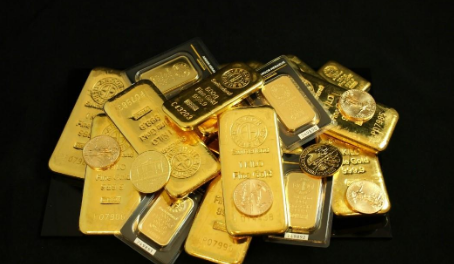
The Democratic Republic of Congo has launched its first pilot gold refinery in Kalemie, marking a significant step toward strengthening transparency and value addition in the country’s vast mining sector.
The facility, located in Tanganyika Province, has a monthly refining capacity of 500-600 kilograms and produces bullion with 99.9% purity, according to officials overseeing the project.
Authorities say the refinery has already enabled the country’s first export of refined gold, a development expected to benefit thousands of artisanal miners and small-scale producers who form the backbone of Congo’s gold industry.
The refinery is operated by DRC Gold Refinery S.A., a joint venture between the state-owned DRC Gold Trading S.A. and private mining company Lunga Mining.
Officials say the initiative marks an important shift for a country historically known for exporting raw minerals rather than processed commodities.
The refinery integrates the entire gold value chain — from purchasing raw gold to refining and producing bullion — while introducing mechanisms designed to curb fraud, smuggling, and opaque pricing practices.
A push for transparency and value addition
The government sees the refinery as part of a broader strategy to formalise the gold sector and capture more value from one of the country’s most important natural resources.
For decades, large volumes of gold from artisanal mines in eastern Congo have been smuggled across borders or sold through informal networks, depriving the state of significant revenue.
By creating a domestic refining capacity, authorities hope to establish transparent pricing mechanisms, improve traceability of gold supplies, and strengthen oversight of the sector.
Minister of Mines Louis Watum Kabamba described the project as a turning point in the country’s management of its mineral wealth.
“The Democratic Republic of Congo has established its first mineral processing facility which will produce strategic minerals through transparent operations while offering fair pricing to both artisanal miners and commercial traders,” he said.
He added that the refinery should become the foundation for a more formalised gold sector.
Kabamba urged miners and traders to abandon illicit trade channels and participate in the official system, saying the new facility represented an opportunity to build a more transparent and sovereign mining industry.
Analysts say the refinery’s initial output remains modest compared with established refining hubs such as Switzerland, Dubai, and South Africa.
However, they argue that Congo’s entry into the refined gold market could signal a broader shift in Africa’s mining sector.
Market experts believe the development reflects a growing trend among resource-rich African nations seeking to move up the mineral value chain rather than exporting raw commodities.
If replicated across other countries, domestic refining initiatives could gradually alter global supply dynamics and diversify the locations where bullion is processed.
For Congo, the refinery also represents a symbolic transformation.
A country long associated with exporting unprocessed minerals is now positioning itself as a participant in the global refined gold market — a move that could reshape both its economic strategy and the broader perception of Africa’s role in the global commodities trade.