

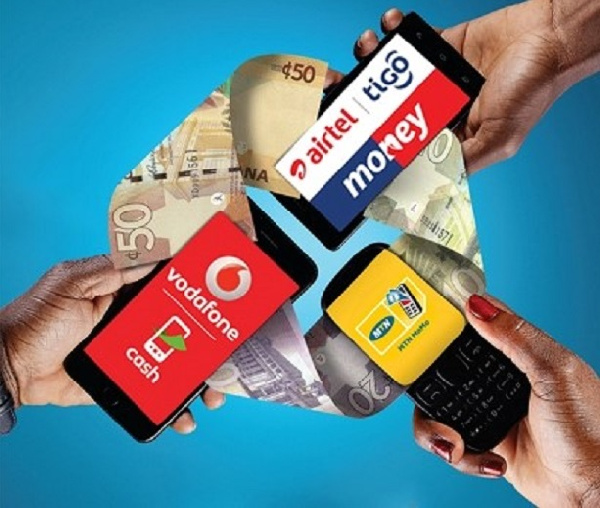
Ghana’s mobile money sector has reached a landmark moment, recording a historic GH¢518 billion in transaction value in December 2025 — a powerful signal of the country’s accelerating shift toward digital payments and a cash-lite economy.
The milestone highlights the deepening dependence on mobile money platforms for daily financial activities such as transfers, bill payments, merchant purchases, savings, and government-related transactions. What started as a basic person-to-person transfer service has evolved into a core pillar of Ghana’s financial architecture.
Data from the Bank of Ghana’s latest Summary of Economic and Financial Data shows December posted the highest monthly mobile money transaction value on record, further cementing digital wallets as the driving force behind Ghana’s retail economy.
Much of the spike was linked to increased consumer spending during the Christmas and New Year period. Transaction volumes rose sharply to 982 million in December, up from 892 million in November, as households and businesses leaned heavily on mobile money for festive purchases and payments.
Yet the figures point to more than seasonal activity. The mobile money ecosystem continues to expand at a structural level. Active accounts climbed to 26.7 million from 25.5 million in November, while total registered accounts surpassed 80.5 million. Mobile wallet balances also reached a 2025 peak of GH¢39.6 billion, indicating growing confidence in digital platforms not only for payments but also for storing value.
The dominance of mobile money over traditional payment channels is becoming increasingly pronounced. While mobile money transactions exceeded GH¢518 billion, cheque transactions lagged far behind at GH¢37.3 billion. Even fast-growing electronic options such as GhIPSS Instant Pay, which recorded GH¢73.3 billion, trailed significantly.
Analysts attribute the sustained expansion to rising smartphone penetration, an extensive network of 491,000 active agents, and stronger interoperability across mobile networks. Interoperable transfers alone reached GH¢5.8 billion in December, reflecting increased cross-network usage.
As Ghana advances toward a digital-first economy, mobile money is firmly established as the engine of everyday commerce — supporting everything from small informal purchases to high-value business payments.
The growth also underscores mobile money’s role in deepening financial inclusion, particularly for unbanked and underbanked populations. Millions of Ghanaians who once had limited access to formal banking can now send, receive, and store funds securely using their phones.
Businesses, especially small and medium-sized enterprises, are increasingly integrating mobile money into their operations for payments, payroll, and customer transactions. This shift has boosted efficiency, lowered cash-handling risks, and broadened market access.
As the country pushes further into the digital era, the GH¢518 billion milestone stands as clear evidence of mobile money’s transformative impact on Ghana’s financial landscape.