
President John Dramani Mahama has called for restraint and constructive dialogue in the ongoing national debate on LGBTQ+ issues, emphasizing that while the matter is significant, it is not the country’s most urgent priority.
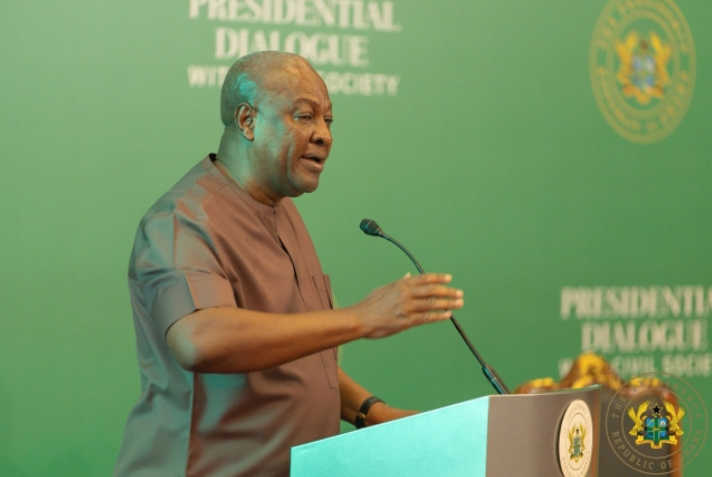
Speaking during a Presidential Dialogue with Civil Society Organisations at Jubilee House in Accra on Monday, March 30, the President described the issue as sensitive and emotionally charged—even in societies with long-standing liberal traditions. He urged all stakeholders to approach the conversation with calmness and respect for Ghana’s values.
“I explained during my recent engagement with the World Affairs Council that it is not the most important issue we face as a nation.
“We are still grappling with the provisions of basic needs of education, health care, jobs, food, clothing, and shelter,” he stated.
The President stressed that the government remains focused on addressing key socio-economic challenges, including improving access to essential services and creating employment opportunities.
He noted that the ongoing debate over a private member’s bill in Parliament reflects a wide spectrum of views within Ghanaian society, adding that any outcome must be guided by the Constitution and respect for human rights.
“While there are strong and differing views within our society, we believe that issues must be addressed through democratic processes, our core values, dialogue, and the rule of law,” he said.
President Mahama also acknowledged international reactions to Ghana’s handling of the issue, including decisions by some foreign institutions, and underscored the need for continued constructive engagement.
“These developments underscore the importance of continued engagement and mutual respect, and of situating our national decisions within our constitutional and cultural context. Ghana will continue to uphold its democratic values while engaging constructively with the international community,” he added.
The remarks come at a time of heightened public debate on LGBTQ+ rights in Ghana, with civil society groups, religious bodies, and policymakers expressing divergent views on the proposed legislation.