
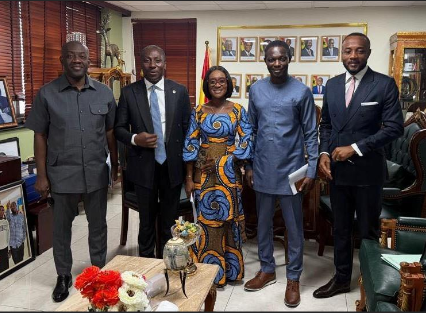
The New Patriotic Party Minority Caucus in Parliament on Monday met with officials of the International Monetary Fund (IMF) to provide feedback on recent economic developments in Ghana.
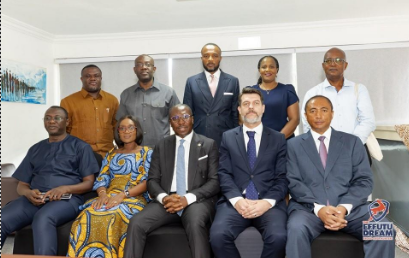
The engagement, requested by Mr. Alexander Kwamena Afenyo-Markin, the Minority Leader, afforded the Caucus an opportunity to discuss Ghana’s economic situation with the IMF delegation led by Adrian Alter, Resident Representative, accompanied by Razafimahefa Ivohasina Fizara, Coordinator of AFRITAC West 2, and Osa Ahinakwah, Economist at the IMF Country Office.
A statement signed by Mr. Afenyo-Markin said members of the Caucus in attendance included Mr. Jerry Ahmed Shaib, Second Deputy Minority Whip; Dr. Mohammed Amin Adam, Ranking Member on the Finance Committee of Parliament; Mr. Kojo Oppong Nkrumah, Ranking Member on the Economy and Development Committee of Parliament; Mr. Kweku Agyeman Kwarteng, Chairman on the Budget Committee of Parliament; and Madam Abena Osei-Asare, Chairperson of the Public Accounts Committee of Parliament.
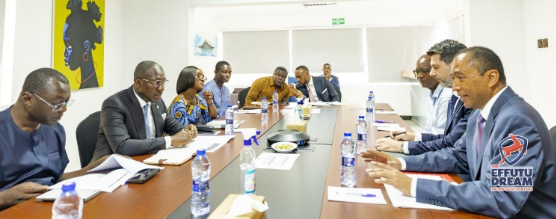
The others were Mr. Collins Adomako-Mensah, Deputy Ranking Member on the Energy Committee of Parliament, and Dr. Antoinette Tsiboe-Darko, Deputy General Secretary of the New Patriotic Party (NPP), who represented the Party.
“The discussions were constructive and mutually beneficial to both sides as stakeholders in Ghana’s governance,” the statement stated. It noted that the meeting allowed the Minority Caucus to engage with the IMF on Ghana’s economic developments and governance issues.
In a related development, Mr. Paschal Donohoe, Managing Director and Chief Knowledge Officer of the World Bank, has commended Ghana for the progress made in improving its national finances.
He gave the commendation during a meeting with Dr. Cassiel Ato Forson, Minister for Finance, as part of his first official visit to Africa. The meeting focused on Ghana’s economic transformation and the next phase of the country’s development agenda.
Mr. Donohoe said the World Bank remained ready to continue supporting Ghana, including through a Jobs and Growth Analysis to identify new opportunities for job creation and promote long‑term economic growth.
He reaffirmed the Bank’s commitment to supporting Ghana’s economic agenda. Dr Forson said the government had spent the past year focused on resetting the economy and placing it firmly on a path towards sustainability.
He noted that although progress had been made in stabilising the economy, unemployment, particularly among the youth, remained one of Ghana’s most pressing challenges.
Dr. Forson said Africa’s rapidly growing youth population meant that public-sector employment alone could not provide sufficient opportunities, stressing the need for deliberate policies to support job creation.
He said the government was implementing major policies and programmes to sustainably create jobs and expand opportunities for the youth.
Dr. Forson welcomed the continued partnership with the World Bank, noting that the collaboration would be important as Ghana worked to create jobs, expand opportunities, and secure a more prosperous future for its people.