
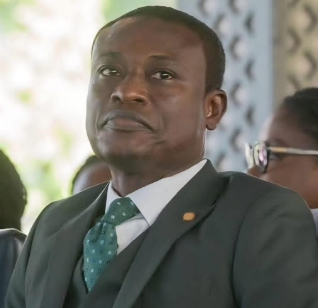
The Special Prosecutor, Kissi Agyebeng, has raised concerns about political interference in the Office of the Special Prosecutor‘s (OSP’s) operations, noting that the institution has become a target of politicians who are constantly seeking to limit its work.
Speaking at the National Dialogue on the Focus of the Special Prosecutor on Tuesday, March 31, he attributed the office’s continued existence to the goodwill of President John Dramani Mahama, amid a bill reportedly drafted by the Majority in Parliament to scrap the institution.
He noted that without the support of the current President, the OSP could have been dismantled. He warned that politicians consider the OSP as “bad news” for their interests, making it a frequent target of efforts to undermine its authority.
According to him, this persistent threat underscores the need for strong backing from civil society and the general public.
Mr. Agyebeng stressed that the independence of the office should not depend solely on the goodwill of any sitting President and called for constitutional safeguards to secure its permanence and autonomy.
“We must build this office for the ages,” he said, “so that future Special Prosecutors do not spend most of their time fighting for survival instead of executing their mandate.”
Kissi Agyebeng, in his statement, also appealed to civil society organisations (CSOs) to safeguard the Office of the Special Prosecutor (OSP), highlighting their critical role in the institution’s survival and effectiveness in the fight against corruption.
He underscored the level of public confidence in the office since its establishment. He noted that a significant majority of Ghanaians supported the creation of an independent anti-corruption body, separate from the Attorney-General’s office, with many expressing greater trust in the OSP than other institutions.
According to him, this level of public trust reflects the impact of the office’s work and reinforces the need to sustain it.
“More than 70% of the populace wanted an independent institution to fight corruption, separate from the Attorney-General’s office. More than 50% trust the Office of the Special Prosecutor more than any other institution in this fight. With this, my job is done,” he stated.
Agyebeng also signalled his readiness to leave office, describing his tenure as one guided by purpose and reflection. He stressed that the responsibility of maintaining the OSP should not rest solely on its leadership but must be driven by civil society and the broader public.
“I have started counting my days as Special Prosecutor. When I become the former Special Prosecutor, I want to look back and say civil society forged this office and preserved it. It is your handiwork, do not let it die,” he urged.
In a related development, the Director for Public Engagement and Partnerships at the Ghana Center for Democratic Development (CDD-Ghana), Dr. Kojo Pumpuni Asante, has raised concerns over what he describes as persistent and disproportionate attacks on the Office of the Special Prosecutor (OSP), warning that it reflects a deeper inconsistency in Ghana’s fight against corruption.
Speaking at a National Dialogue on the Office of the Special Prosecutor on Tuesday, March 31, Dr. Asante noted that, unlike other state investigative bodies, the OSP has faced continuous resistance from its inception, including legal and political challenges to its existence.
He observed that institutions such as the Financial Intelligence Centre, Economic and Organised Crime Office (EOCO), and the Criminal Investigations Department (CID) of the Ghana Police Service, which perform related functions, have not been subjected to the same level of scrutiny and opposition.
According to him, the trend exposes a disconnect between the country’s public stance on fighting corruption and the actual commitment to strengthening independent institutions.
“Interesting and curiously, we have not seen the same sustained attack on the Financial Intelligence Centre, EOCO, or the Police CID, even though their work is not dissimilar to the OSP. So, what exactly is the problem? It says one thing: our country’s rhetoric and practice are far apart.
“Every election, parties insist that corruption prosecution is biased and the function must be made independent, and then they turn around and undermine their own interventions,” he said.
Dr. Asante cautioned that any attempt to revert to the pre-2018 anti-corruption arrangement, where there was no OSP, would significantly weaken Ghana’s governance framework, describing it as a step backward.
He stressed that global trends point towards strengthening independent anti-corruption institutions, adding that Ghana’s current trajectory with the OSP aligns with best practices.
“The debate as to whether we should have the function of prosecuting corruption, especially by PEPs, handled by an independent person other than the Attorney General, has been settled after 22 years. For me, it is settled. We are very clear that we need an independent office,” he added.