

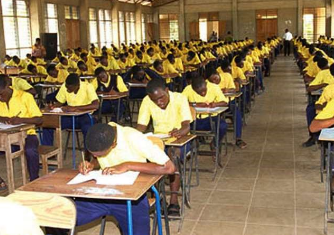
Education stakeholders have called for sweeping reforms across Ghana’s pre-tertiary system, warning that the country’s declining examination outcomes signal deep structural weaknesses rather than isolated student failure.
The call was made at an education dialogue convened by the Ghana Reads Initiative and the Educational Times Newspaper following widespread concern over candidates’ performance in the 2025 West African Senior Secondary School Certificate Examination (WASSCE).
The meeting, held at the Ghana Library Authority in Accra’s Airport Residential Area, on 26 January 2026, brought together civil society groups, parents, students, and representatives from education-focused institutions to examine the causes of the results and propose corrective measures.
In a communiqué issued at the end of the dialogue, participants described the results as a “national learning alarm” that exposes longstanding problems in foundational learning, discipline, teacher motivation, assessment practices, and examination integrity.
Foundational gaps
Stakeholders identified weak literacy and numeracy at the basic education level as a key contributor to poor performance at the secondary stage.
They noted that overcrowded classrooms, inadequate learning materials, and uneven school resourcing continue to undermine learner preparedness, particularly in rural and peri-urban communities.
Participants also raised concerns about what they described as a declining study culture among students, citing excessive mobile phone use, social media distractions, absenteeism, and weak enforcement of school rules.
Teacher and assessment concerns
The dialogue further highlighted teacher-related constraints, including delayed payment of intervention allowances, limited access to continuous professional development, and the use of underqualified or temporary teachers in low-performing schools.
Instructional quality, they said, is suffering as a result.
During the assessment, participants noted a perceived mismatch between what is taught in classrooms and what is tested in examinations administered by the West African Examinations Council.
They argued that some learners demonstrate partial competence but still fail certification because assessment systems do not adequately account for differentiated abilities.
Examination malpractice — including organised cheating and collusion involving some schools and parents — was also flagged as a persistent threat to the credibility of results.
Recommendations
The group urged the Ministry of Education and other agencies to implement targeted learning recovery programmes, particularly in Mathematics, English Language, and Integrated Science.
Stakeholders also called for improved academic and career guidance to help students make informed subject and vocational choices.
Call for collaboration
The communiqué noted the absence of some key education institutions at the meeting, stressing that broader participation would be critical to meaningful reform.
Despite this, participants pledged to support the government through research, advocacy, and social accountability initiatives.
“The 2025 WASSCE results represent a national learning alarm rather than a verdict on learner intelligence,” the statement said, adding that coordinated action by government, schools, parents, and communities is essential to restore confidence in Ghana’s education system.
Founded in 2023, the Ghana Reads Initiative promotes literacy and inclusive education through reading interventions, book donations, and advocacy, while the Educational Times focuses on policy engagement and education discourse.