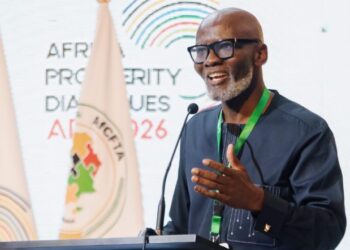


A new survey by the Institute of Economic Affairs (IEA) has revealed that seven out of every 10 Ghanaians remain deeply concerned about rising food prices and the escalating cost of living, even as inflation stands at 3.8%.
The poll, conducted in December 2025, sampled more than 1,000 respondents across all regions of the country. According to the findings, 71% of respondents said they were very concerned about the price of food and other consumer goods.
The survey paints a picture of persistent economic anxiety among households, despite signs of macroeconomic improvement and strong approval ratings for President John Dramani Mahama.
Beyond the rising cost of living, unemployment, and illegal mining also ranked high among national concerns.
About 46% of respondents identified unemployment as one of the most pressing challenges facing the country, while 30% cited illegal mining as a major issue.
The IEA explained that the survey was designed to gauge public opinion on prevailing socio-economic pressures one year after the 2024 general election and to assess perceptions of President Mahama’s job performance since assuming office.
President Mahama was sworn into office on January 7, 2025, amid high public expectations and significant economic challenges, including elevated public debt, inflationary pressures, a depreciating currency, unemployment, and concerns about the size of government.
Despite respondents’ concerns, the President continues to enjoy substantial public support.
The survey found that 68% of Ghanaians approve of the way he is handling his job, while 22% disapprove and 10% express no opinion.
According to the IEA, while key economic indicators such as inflation appear to be improving, many households continue to experience financial strain in their daily lives.
The findings reflect what the Institute describes as a mixed national mood — strong approval of the President’s performance on one hand, and sustained anxiety over living costs and household economic pressures on the other.
In a related development, another report released by Glima Research, a consulting firm, estimates that Ghana’s growing urban mobility crisis, in which commuters spend long hours in traffic during peak periods, is costing the economy about GH¢4.5 billion every year.
The study found that traffic congestion, particularly along major gridlock hotspots in Accra, has become a major setback to worker productivity, draining incomes and significantly affecting the quality of life in the capital.
The report, titled “The cost of gridlock: a policy brief on Ghana’s Urban Traffic Crisis,” was co-authored by Andy Sevordzi, a lead research analyst, and Franklin Owusu-Kwakye, a seasoned geodetic engineer. Other team members were Yusif Mohammed, a statistician, and Rudolph Djirackor, a biochemist.
In terms of breakdown, the findings showed that time lost in traffic accounted for approximately GH¢3.2 billion annually, representing about 71% of the total estimated losses.
Fuel waste contributed GH¢434 million, or roughly 10%, while productivity losses linked to stress and fatigue amounted to GH¢815 million, representing about 18% of the total cost.
The research centered on the heavily congested Madina–37 corridor in Accra as a case study to project its national implications. The corridor was analysed through data modelling to quantify time losses, fuel waste, and productivity impacts, which were then scaled nationwide using Gilma’s traffic multiplier model.
“Traffic congestion, particularly in Accra, is more than just a nuisance; it is a massive economic sinkhole quietly draining productivity, income, and quality of life. This crisis is far from static; it is escalating. As Ghana’s urban population continues to rise, especially in key growth areas, so will the number of vehicles, the hours lost to traffic congestion, and the economic damage caused by traffic paralysis,” the report highlighted.
Describing the situation as escalating rather than static, the report warned that Ghana’s rapidly growing urban population, particularly in key growth corridors, will only intensify congestion if urgent interventions are not implemented.
Beyond the economic toll, the environmental impact is equally alarming. The study estimated that preventable fuel waste from vehicle idling in traffic results in approximately 73,000 metric tons of excess carbon dioxide emissions nationwide each year, an environmental burden equivalent to wiping out the climate benefit of 3 million trees annually.
The study further revealed that congestion-induced stress and fatigue reduce effective productivity by about 30 minutes per commuter per day. On the Madina–37 corridor alone, this translates into an annual loss of GH¢72.8 million in reduced work output.
Other heavily congested routes, including Spintex Road, Mallam–Kasoa, and Circle–Achimota, face similar, if not worse, gridlock, particularly during peak hours, while several regional capitals grapple with varying degrees of traffic congestion, further compounding the national economic impact.
To address the situation, the report proposed a number of interventions, including widening roads along critical segments, upgrading inner and feeder roads to reduce pressure on major highways, and deploying smart traffic lights.
“Urban mobility investments are no longer optional but urgent, high-return economic priorities essential to safeguarding Ghana’s productivity, environmental sustainability, and long-term development,” the report stated.
While widening can provide immediate relief, the report noted that sustainable improvements will require a comprehensive, multi-pronged approach that anticipates future growth rather than merely responding to current pressure.
Other recommended interventions include graveling or concreting alternative routes in residential areas, as well as decentralizing government services and business centers to reduce travel demand.