

When self-driving cars began carrying commercial passengers in San Francisco two years ago, they were not met with enthusiasm. Protesters took to the streets demanding that the vehicles be removed, citing concerns about safety and the loss of people’s jobs.
Then an autonomous car operated by Cruise, a subsidiary of General Motors, ran over and dragged a pedestrian, not long after another Cruise vehicle collided with a fire truck.
The company’s vehicles were eventually taken off the road. The future of self-driving cars in the home of the tech industry’s artificial intelligence boom looked like it was on the rocks.
But Google’s Waymo, a self-driving-car company with a more cautious approach, stuck around, and today the situation has flipped. San Francisco has, to the surprise of many and the continuing aggravation of a few, become “Waymo-pilled.”
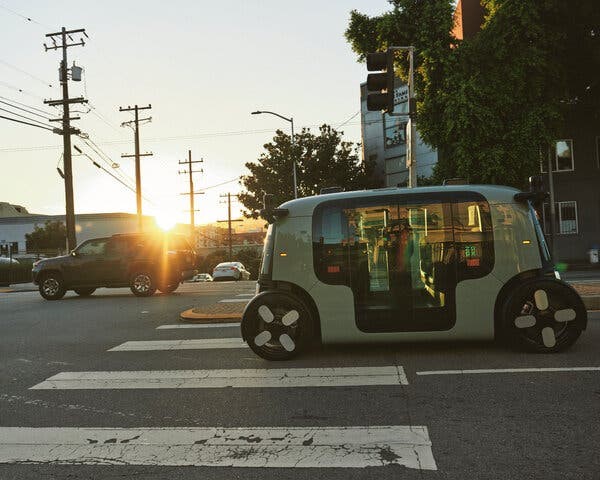
Now Waymo is getting another significant competitor in San Francisco. Amazon announced on Tuesday that it was beginning a free test program in the city for Zoox, its boxy, carriage-shaped robot taxis.
The company has also been testing its robot taxis in Las Vegas since September and plans to expand to Miami and Austin, Texas. But San Francisco is the first city where the companies will compete head-to-head
Amazon’s San Francisco rollout marks the beginning of a long competition with Waymo, said Bryant Walker Smith, a professor in the University of South Carolina’s law and engineering schools who specializes in emerging transportation technologies.
“San Francisco is the place where companies are determined to be dominant,” he said. “I see this playing out very vigorously.”
The day-to-day experiences of people here — both good and bad — offer a preview of what other cities can expect in the coming years. But first, a look at the new competitor:
Our ride began on a sunny afternoon in San Francisco’s Mission District, where Zoox’s founder, Jesse Levinson, used the Zoox app to summon a car to the Tartine Manufactory, a famous bakery.
After a few minutes, an arriving Zoox vehicle parked on a street around the corner rather than in front of the bakery. That move was by design: The robot taxis are programmed to pick people up only from zones deemed safe, Mr. Levinson said, meaning riders may occasionally have to walk to their car.