

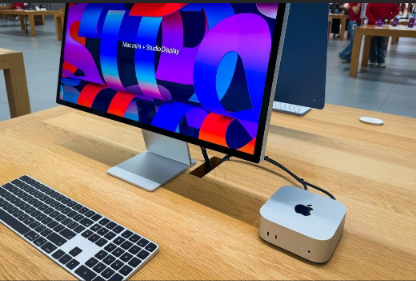
Matt Shumer’s home computer setup is a little weirder than most. He and his roommate each have a mini-Apple computer in the kitchen, both silently toiling away in the background.
All Shumer has to do is give the virtual assistant running on his Mac Mini a broad task, and it handles the rest. That includes actions that would usually require typing, clicking, and scrolling, such as browsing websites and signing into accounts.
It may be strange to his friends outside of tech, but for hobbyists like himself, “you’re like, ‘Oh, of course there’s a computer using itself,’” he said.
Shumer, an AI investor and author of a viral February essay on AI and jobs, is one of many tech enthusiasts who recently purchased a Mac mini to run the buzzy AI agent OpenClaw.
AI dabblers have been snatching up Apple’s petite silver desktop because it has all the right ingredients to run AI agents: a convenient design, processing power, and a relatively affordable price at a time when memory prices are surging. Apple declined to comment for this story, but analysts told CNN that Mac shipments grew last year.
The Mac mini has become a status symbol among AI tinkerers, and some analysts say the device’s growing popularity may preface a broader shift in how people use computers.
“We think we’re in this highly transformative phase for the PC industry,” said Linn Huang, an analyst for the International Data Corporation who follows the PC market. “Not only are we talking about hardware changing, but we’re also talking about the user experience itself vastly changing.”
An ‘OpenClaw machine’
Apple’s puck-shaped Mac mini, essentially a tiny version of a computer tower designed to connect to an external keyboard and monitor, has been around for years. The latest version was released in 2024.
But the excitement over OpenClaw, an autonomous AI agent that can operate a user’s device to accomplish tasks, has made Apple’s tiny desktop a hot commodity over the past few months.
Shipping estimates for certain Mac mini configurations are 10-12 weeks, with the earliest Apple Store pickup date in New York City in mid-July.
Shumer said an Apple Store employee even referred to the Mac mini as an
“OpenClaw machine” when he recently visited a New York City location.
It’s difficult to say whether OpenClaw has boosted Apple’s bottom line, since the tech giant doesn’t break out sales by individual product, and OpenClaw only launched in November.
Still, tech market research firm Omdia estimated Mac mini shipments grew by double digits in 2025 compared to 2024. Kieren Jessop, a research manager for Omdia, described the Mac mini’s anecdotal popularity in tech circles as “real” and “durable” in an email to CNN.
Huang also said Apple’s Mac desktop sales grew more than its laptop sales in 2025.
Why the Mac mini is getting so much love right now
A Mac mini isn’t required for OpenClaw, but there are a few reasons why many prefer it.
Running AI models on a computer versus in the cloud is usually more private, since information doesn’t have to leave the device. Using a separate computer for OpenClaw is also more secure, since users can choose to preload the device with only the information they want the agent to access.
Starting at $599, it’s also relatively affordable given the soaring cost of memory.
The Mac mini’s design also appeals to some OpenClaw users. The AI agent can perform tasks autonomously without constant questions or commands, so it doesn’t need a computer with a built-in display and keyboard, like a laptop.
Most people hook up their OpenClaw agent to services they can access on their phones, such as messaging apps. Roy Derks, a principal product manager at IBM, has OpenClaw set up on his home Mac mini and communicates with it through an app like WhatsApp or Telegram. He mostly uses the AI agent to research personal matters while at the office, such as toys for his child.
“It’s running in the background, doing things that I’m not doing at work,” he said.
App developer Clément Sauvage told CNN he has three Mac minis running OpenClaw: one for managing personal operations, like his emails and to-do list; another for development and projects; and a third that acts as a “central brain” to coordinate tasks between the machines.