

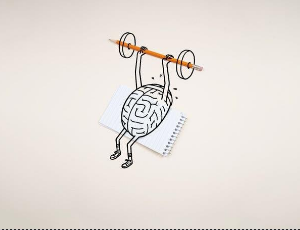
Today, we take for granted that diet and exercise are vitally important for our health and well-being. But we didn’t always think this way. Much of this awareness emerged in a remarkably short time during the middle of the last century.
In 1955, President Dwight Eisenhower suffered a heart attack after playing golf in Denver. This event shocked the nation. The president was just 64 years old and projected American strength and vitality. The surgeon general at the time said that hearing the news about the heart attack was like learning about the bombing of Pearl Harbor.
Instead of retreating into secrecy, the White House flew in Dr. Paul Dudley White, a leading cardiologist who helped found the American Heart Association. He set a standard for transparency. When he spoke to the press, he went beyond explaining the president’s condition and sought to educate the public about cardiac events more generally.
“Heart attacks became less mysterious and less frightening to millions of Americans that day,” explains a New England Journal of Medicine article, “and White gave them the message that they could take steps to reduce their risk.” The idea that diet played a large role in mortality soon entered the national consciousness.
Some 10 years later, Dr. Kenneth Cooper, a military doctor who conducted fitness research for NASA, published a book titled “Aerobics.” He advanced a novel argument: cardiovascular exercise was critical to health.
In an era when people increasingly had sedentary jobs and lived car-based lifestyles in the suburbs, he emphasized the need to set aside time specifically for exercise as a key component of longevity.
This was a radical idea in a culture where voluntary exercise was primarily associated with the Army or sports. “Aerobic” became a best seller, and millions of people began exercising.
According to Dr. Cooper, when his book was first published, less than 24 percent of the adult population engaged in regular physical activity, and there were fewer than 100,000 joggers. Within 16 years, close to 60 percent of the population exercised, including 34 million joggers.
The larger point is that transformations in understanding can unfold quickly. Just decades after Eisenhower and Dr. Cooper, we got the food pyramid, the term “low fat,” the running craze, and Jane Fonda videos. Americans would never think about food and exercise the same way again.
In our current moment, we face a new crisis, one that affects our minds more than our bodies: the negative impact of digital technology on our ability to think.
Is it time for a new revolution?
When I published my book “Deep Work” 10 years ago, I argued that email and instant messages were degrading our ability to concentrate on hard mental tasks.
I recommended setting aside long stretches of time for uninterrupted thinking and treating this cognitive activity as a skill you can improve through practice. The term “deep work” quickly entered the vernacular, and I started to hear people and companies use it without even realizing its source.
But the problems I focused on in “Deep Work,” and in my writing since, have been getting steadily worse. In 2016 my main concern was helping people find enough free time for deep work. Today I think we’re rapidly losing the ability to think deeply at all, regardless of how much space we can find in our schedules for these efforts.
The data backs up this claim. Research from Gloria Mark, a professor of informatics at the University of California, Irvine, indicates that our attention spans are about one-third as long as they were in 2004, with the biggest drops happening around 2012.
Long-running surveys reveal that the share of U.S. adults who struggle with basic reading or math has risen markedly over the past decade, while the percentage of 18-year-olds who report difficulty thinking and concentrating jumped in the same period. A Financial Times article about these findings proposed a shocking but relevant question: “Have humans passed peak brain power?”
Many of these declines in cognitive skills became notable starting in the mid-2010s, exactly the period when smartphones became ubiquitous and the digital attention economy exploded.
An increasing amount of research implies that this timing is no coincidence. A meta-analysis released last fall showed that consuming short-form video content, as delivered by apps like TikTok and Instagram, is associated with poorer cognition and reduced attention, and a clever 2023 experiment found that the mere presence of participants’ smartphones in a room significantly reduced their ability to concentrate.
The growth of A.I. has brought new cognitive concerns. A study from January, based on surveys and interviews with more than 600 participants, revealed a “significant negative correlation between frequent A.I. tool usage and critical thinking abilities.”
Another recent study, which tracked the brain activity of research subjects who were writing with the help of large language models, found that “brain connectivity systematically scaled down with the amount of external support.”
The loss of our ability to think is a big deal. Close to 40 percent of the U.S. gross domestic product comes from so-called knowledge and technology-intensive industries, from aerospace manufacturing to software development to financial and information services.
Companies in these fields alchemize advanced human thought into revenue; as we weaken our brains, we also threaten to weaken our economy. It is notable that productivity growth in the private business sector stagnated during the 2010s, when technology became measurably more distracting.
A diminished ability to use our brains also has concerning personal effects. Thinking is what lets us make sense of information in a complicated world.
As president, Abraham Lincoln regularly retreated to his cottage on the grounds of the Soldiers’ Home on the heights above Washington to find the solitude needed to think deeply about the decisions facing him as commander in chief.
A contemporaneous letter from a Treasury employee visiting Lincoln at the cottage during these years describes finding the president “reposed in a broad chair, one leg hanging over its arm. He seemed to be in deep thought.”
Thinking is also an engine for making sense of our lives and cultivating our moral imaginations. In 1956, as the Montgomery bus boycott careened into national prominence, Martin Luther King Jr. clarified his life’s purpose through a long session of quiet reflection one memorable night at his kitchen table, when he remembers his thoughts finally forming into a clear directive: “Martin Luther, stand up for righteousness. Stand up for justice. Stand up for truth.”
In an era when technologies relentlessly disrupt our lives, it can seem that this cognition crisis is a fait accompli — a side effect of innovations that cannot be stopped. But do we really have to accept this steady loss of our thinking ability as inevitable? In a short time, we transformed the way we thought about health. I’ve come to believe that a similarly rapid revolution is possible in how we respond to our diminishing ability to think.
By Cal Newport
The writer is a professor of computer science at Georgetown University and the author of “Deep Work.”