

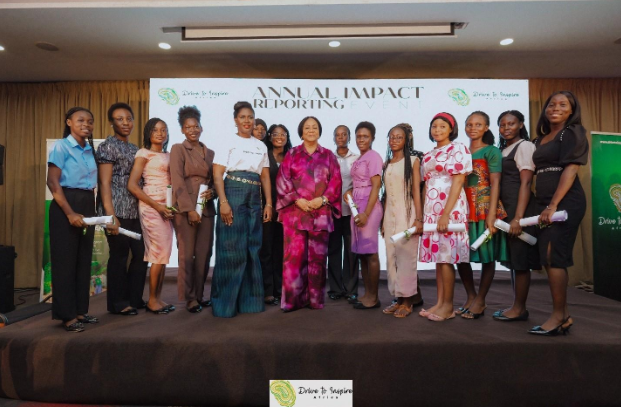
Drive to Inspire Africa (DTI-A) has awarded scholarships to a new cohort of young women for the 2025/2026 academic year, supporting their studies across a wide range of disciplines in leading tertiary institutions in Ghana and beyond.
The scholarships were presented to recipients during Drive to Inspire – Africa’s Annual Impact Reporting Event, held under the theme “Building Africa’s Future, One Young Person at a Time,” at the Alisa Hotel, North Ridge, on Thursday, March 19, 2026.
The beneficiaries, drawn from different academic backgrounds, are pursuing programmes in health sciences, business, law, education, technology, and the humanities, reflecting the organisation’s commitment to holistic youth development and empowerment.
According to the details captured in the organisation’s 2025 Impact Report, students have been enrolled at top institutions, including the University of Ghana, the University of Cape Coast, the University of Education, Winneba, the University for Development Studies, and the University of Energy and Natural Resources.
Other beneficiary institutions include the University of Professional Studies, Accra, the University of Media, Arts and Communication (UNIMAC), the University of Environment and Sustainable Development, and the Ghana School of Law.
The scholarship recipients are undertaking programmes such as BSc. Health Administration Education, Mathematical Science, Computer Science, Biological Science, Nursing, Midwifery, and Occupational Therapy, among others.
In addition, several students are pursuing programmes in business and the social sciences, including the Bachelor of Commerce (Human Resource Management) and the BSc. Administration, Accounting and Finance, and Family and Child Studies.

The cohort also features students enrolled in specialised areas such as Translation, Fashion Design and Textile Education, Food and Nutrition Education, Environmental and Public Health, as well as English, Theatre Arts, and Psychology.
Notably, the beneficiaries span different academic levels, including Level 100 entrants and continuing students in Levels 200 and 300 who are receiving support to complete their programmes. A professional law student at the Ghana School of Law is also among the awardees.
Significant Milestone
Giving her remarks and issuing a call to action, Nana Adjoa Hackman, founder of Drive to Inspire Africa (DTI-A), announced the expansion of the organisation’s scholarship programme beyond Ghana. She revealed that the initiative now includes its first international beneficiary at Victoria University, Kampala, where the student is pursuing Social Work and Social Administration.
According to Hackman, this development represents a significant milestone in DTI-A’s ambition to extend its impact across Africa by supporting young women in multiple countries.
The DTI-A founder emphasised that the scholarship programme remains a central pillar of its work, designed to remove financial barriers and enable talented but underprivileged young people to access higher education.
She reaffirmed DTI-A’s commitment to expanding the programme in 2026 through strategic partnerships, creating opportunities for more applicants to benefit from the initiative.
She also expressed deep appreciation to its partners and sponsors, highlighting that their continued support has been instrumental in providing life-changing opportunities to scholarship recipients.
She reiterated DTI-A’s mission to empower Africa’s youth through education, mentorship, and skills development, equipping them to contribute meaningfully to national development and the continent’s broader transformation agenda.
Rigorous DTI-A Selection Process
Nana Adjoa Hackman, in her address, detailed the organisation’s stringent and highly competitive scholarship selection process, emphasising that it begins as early as September each year to ensure only the most deserving candidates are supported.
She explained that the process is carefully structured to manage the overwhelming number of applications the organisation receives annually from young women seeking support to pursue tertiary education.
She indicated that applications open in September, immediately setting in motion a multi-layered selection procedure that includes shortlisting, interviews, and final evaluations by an independent committee.
According to her, a first-level committee of about 10 members is established to review applications and produce an initial shortlist, and the committee is typically chaired by a senior corporate executive to ensure transparency and credibility.
She added that following the release of academic results, shortlisted candidates are invited to participate in interviews and further assessments, which ultimately determine the final beneficiaries.
Nana Adjoa Hackman noted that the process is not only rigorous but also necessary due to the high volume of applications received each year, stressing that the organisation is often compelled to select only a fraction of qualified applicants.
She explained that while many applicants demonstrate strong academic performance and potential, limited resources require the organisation to make difficult choices, prioritising those with the greatest need and promise.
Highlighting the outcomes of the most recent selection cycle, she revealed that the majority of beneficiaries for the 2025/2026 academic year are first-year university students, while others are continuing students who had previously been forced to suspend their education due to financial constraints.
She observed that some applicants had completed Level 100 or Level 200 but were unable to continue their studies until they received support from the organisation, enabling them to return to school and progress to higher levels.
She added that all selected beneficiaries have already commenced their academic programmes, having enrolled in January following the completion of the selection process.
Beyond the selection process, Nana Adjoa Hackman reiterated the organisation’s broader mission of empowering young women through education, mentorship, and personal development.
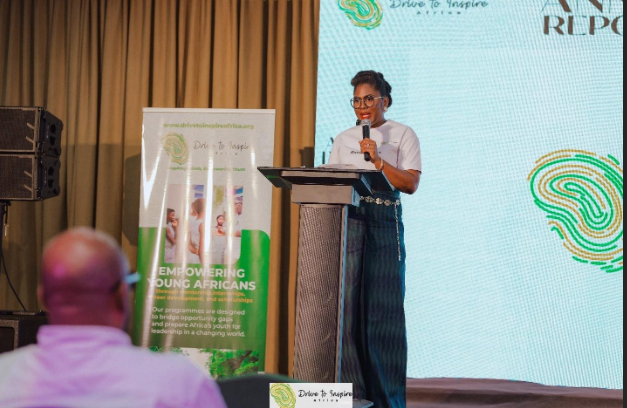
She reflected on the journey of establishing the organisation, noting that running a charity had not initially been part of her personal ambitions, but has since become one of the most fulfilling aspects of her life.
She also highlighted the impact of the organisation’s mentorship programmes, sharing stories of beneficiaries who have overcome significant challenges through guidance and support.
One such example, she noted, involved a mentee who, after failing to secure employment following a mentorship programme, went on to establish her own business with encouragement from her mentor.
According to her, such stories underscore the importance of combining financial support with mentorship and skills development to achieve sustainable impact.
She stressed that the organisation’s work is driven by a commitment to resilience and perseverance, encouraging young people not to give up in the face of challenges.