

The opposition New Patriotic Party (NPP) has mounted a strong critique of the administration of John Dramani Mahama, arguing that the government has failed to build on what it describes as a recovering economy inherited in January 2025.
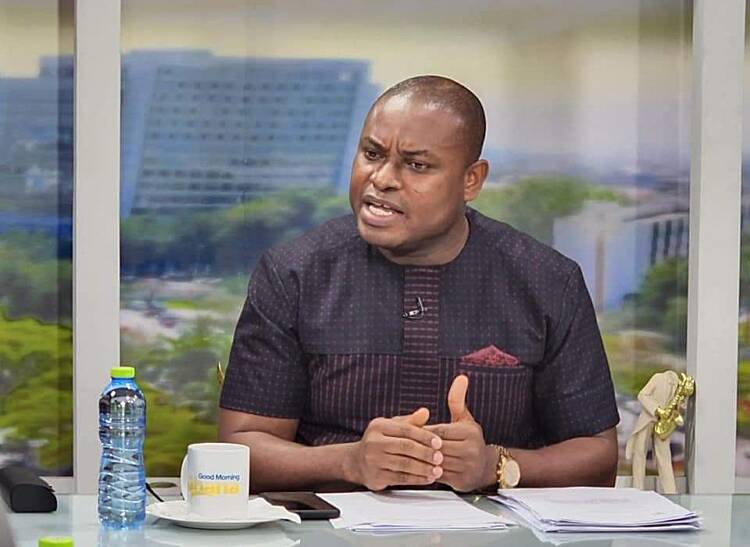
Addressing a press briefing on March 24, 2026, the party’s Director of Communications, Mr. Richard Ahiagbah, speaking on behalf of the NPP and its flagbearer, Mahamudu Bawumia, framed the central question as one of stewardship and accountability.
He stated that “the central issue today is this: What did President John Dramani Mahama inherit in January 2025, and what has he done with it?” emphasizing that the matter “demands answers for the good of all Ghanaians.”
The NPP contended that, contrary to the National Democratic Congress (NDC)’s earlier claims of economic collapse, available data pointed to a period of recovery before the transition of power.
The statement asserted that “by the end of 2024, data showed inflation had fallen from over 54 percent in December 2022 to the mid-20s, GDP growth projections exceeded 3 percent, and the exchange rate had stabilized,” adding that “these figures signal a period of stabilization and recovery.”
According to the party, the Mahama administration has failed to sustain these gains. The statement maintained that “it is inarguable that President Mahama inherited a recovering economy, but has failed to sustain and translate that recovery into improved living conditions,” pointing to what it described as worsening conditions in key sectors, including cocoa, youth employment, and fuel prices.
In the cocoa sector, the NPP accused the government of mismanaging a window of opportunity created by rising global prices. It claimed that “the Cocoa Board hesitated and missed the chance to secure a good forward sale contract,” and criticized the subsequent policy response, noting that “the Cocoa Board imposed a price haircut of about 29 percent,” which it said translates into losses for farmers.
The statement questioned the fairness of the decision, asking, “How is this fair to cocoa farmers?” and describing the move as “misgovernance on steroids.”
The party further argued that the government’s handling of employment has fallen short of campaign promises, particularly the much-publicized 24-hour economy policy. It noted that “over a year in office, little action has been taken,” and alleged that instead of job creation, “the main move was passing a law to create bureaucracy and allocate benefits to cronies.”
The NPP also challenged the credibility of job creation figures announced by the President, stating that “Ghana Statistical Service records suggest only 330,000 jobs in 2025,” contrary to higher claims.
Rising fuel prices also came under criticism, with the NPP attributing the increases to weak economic management despite global pressures. The statement observed that “fuel prices in Ghana have risen rapidly in a short time, driving up transportation costs and spilling over into food prices,” and argued that “the lack of a clear mitigation plan would worsen the burden on Ghanaians.”
On environmental governance, the opposition claimed the situation had deteriorated, particularly regarding illegal mining. It stated that “increasing reports of galamsey activity, water pollution, and weak enforcement indicate a decline in regulatory effectiveness,” contrasting this with earlier criticisms the NDC had made while in opposition.
The briefing also highlighted tensions within the public sector, citing multiple industrial actions as evidence of strained labour relations. According to the statement, “public sector workers are essential to policy implementation, and strained relations… can undermine administrative effectiveness, service delivery, and staff morale.”
Concerns about governance ethics and potential conflicts of interest were also raised. The NPP referenced “allegations regarding the President’s brother’s involvement in strategic sectors such as gold,” as well as the “use of a private jet linked to him by the president for official purposes,” arguing that such developments “create the perception of blurred lines between public authority and private interests.”
The party warned that these issues collectively undermine public trust, stating that “when public power becomes too closely tied to private interests, trust diminishes, impunity increases,” and called for a clear separation between official duties and private affiliations.
In conclusion, the NPP maintained that the current administration has reversed earlier gains and failed to deliver on its promises. It asserted that “this government inherited an economy on the path to recovery, but in just over a year, Ghanaians are worse off,” adding that “this is not just a failure to deliver; it is a betrayal of trust.”