
Morocco has secured a landmark financing deal for its Noor Atlas solar programme, signalling a shift in how Africa funds its energy transition.
Morocco reached financial close on January 13, 2026, for the Noor Atlas programme, a portfolio of six solar power plants with a combined capacity of 305 megawatts. The project is backed by a hybrid financing structure combining commercial loans and concessional debt, totalling 2.8 billion dirhams.
The financing was structured by Bank of Africa and Masen, with concessional funding supported by German development bank KfW and the European Investment Bank (EIB).
The deal was underpinned by power purchase agreements (PPAs) signed between Masen and Morocco’s national utility, ONEE, reinforcing the project’s bankability. Commissioning is expected by July 2027.
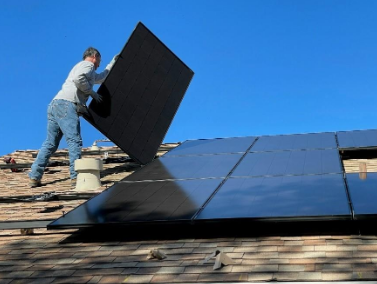
The Noor Atlas programme marks a strategic pivot for Morocco, moving away from large-scale flagship solar complexes such as Noor Ouarzazate towards smaller, decentralised plants. This approach is designed to improve grid integration, enhance resilience, and expand energy access across regions.
A New Financing Blueprint For Africa
Energy experts say the structure could serve as a template for renewable investments across the continent, particularly as African countries grapple with currency volatility and financing constraints.
Mauritanian energy expert Abdoul Lamine Ghazouani argues that traditional financing models are under strain. “The historical model (PPPs indexed to the dollar) is becoming unsustainable because it places the exchange rate risk on consumers and states whose currencies are depreciating,” he said.
He pointed to Kenya’s recent move to index public-private partnerships (PPPs) to local currency as part of a broader continental shift. “The desire for protection (as exemplified by Kenya) is a powerful driver, but its widespread adoption will depend on the maturity of local financial markets. We will therefore have a multi-speed landscape in Africa,” he added.
Ghazouani emphasised that moving away from dollar-denominated contracts does not eliminate investment viability. “The shift to local currency does not eliminate bankability; it changes the tools,” he said, advocating hybrid PPAs, currency hedging mechanisms such as TCX, and local currency financing from development banks.
He also stressed the need for structural reforms, including the development of domestic capital markets, public guarantees, and stable regulatory frameworks to attract long-term investment.
Beyond financing, Ghazouani criticised the replication of foreign energy models across Africa, arguing they often fail to reflect local realities. He called for a shift towards “co-creation” between governments, institutions, and local innovators.
This includes adapting regulations, introducing innovation “sandboxes”, enforcing local content requirements, and simplifying procedures for smaller, decentralised projects. He also highlighted alternative business models such as pay-as-you-go solar and community mini-grids as critical to expanding energy access.
The Noor Atlas deal also demonstrates how blended finance — combining concessional and commercial capital — can unlock private investment. “To move from single-project financing to portfolio financing, we create platforms (like Zafiri) that group several small projects. Patient public capital absorbs initial losses, reassuring private investors who then provide the remaining funding,” Ghazouani said.
For higher-risk markets, he outlined the need for stronger risk mitigation tools, including technical assistance, partial guarantees, and currency risk hedging.
Development finance institutions, he added, are evolving beyond traditional lenders into catalysts for private capital. Their role increasingly involves absorbing early-stage risks, providing long-term funding, supporting project preparation, and signalling credibility to investors.
As Morocco advances its decentralised solar strategy, the Noor Atlas programme is emerging as a “textbook case” for financing Africa’s energy transition — one that could redefine how renewable projects are structured across the continent.