
Debate over Ghana’s proposed anti-LGBTQI+ legislation has intensified, with new polling data showing strong public support for the bill’s passage, while religious leaders and political actors continue to push competing views on national priorities.
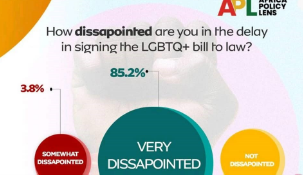
A survey by Africa Policy Lens (APL) found that 86.4% of respondents believe the Human Sexual Rights and Family Values Bill should be signed into law immediately, while 84.6% said they felt misled by the government’s handling of LGBTQI+ policy.
Details
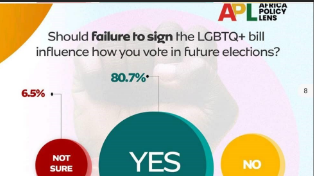
The poll also indicated that 80.1% of respondents said the issue had eroded trust in leadership, and 80.7% said it could influence their future voting decisions.
“Should the government fail to act, 57.5% of respondents advocate voting them out,” the report said.
The findings come as Ghana’s Catholic leadership weighed in on the debate, urging policymakers not to separate moral considerations from economic development.
“A nation truly prosperous is the combination of the pursuit of both economic excellence and the upholding of moral values,” said Michael Quaicoe, Director of Governance, Justice and Peace at the Ghana Catholic Bishops’ Conference.
“So, it is not one over the other. It is more a question of this and that,” he added.
Bagbin reacts
The legislative debate has also been reinforced by comments from Parliament, where Speaker Alban Bagbin said lawmakers remain prepared to pass the bill once it is formally reintroduced.
“I’m not a man of words. I’m a man of action,” he said, adding that the bill had previously completed all legislative stages but failed to receive presidential assent.
The proposed legislation, which has been reintroduced in the current Parliament, seeks to prohibit LGBTQI+ activities, advocacy, and funding, and includes penalties, including custodial sentences, for violations.
Not a priority
President John Dramani Mahama has previously indicated that while the bill is important, it is not among Ghana’s most urgent national priorities, a position that has drawn criticism from supporters of the legislation.
Human rights groups and some international actors continue to oppose the bill, warning it could have implications for civil liberties and Ghana’s global standing.
In a related development, LGBTQ+ issues could play a decisive role in shaping Ghana’s 2028 general elections, according to the survey, which highlights the subject’s growing political significance.
The Africa Policy Lens study found that public opinion on LGBTQ+ issues is increasingly shaping voter attitudes, positioning the issue as a potential determinant of future electoral outcomes.
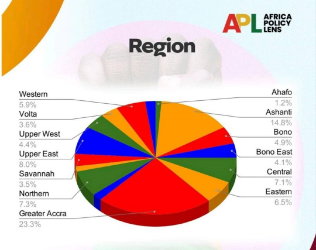
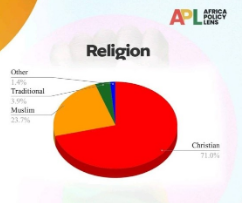
The findings are based on a post-election survey conducted between April 9 and April 11, 2026, which sampled voters across all 16 regions through a bulk SMS system.
A total of 6,796 responses were recorded from 300,000 contacts.
Researchers concluded that the prominence of LGBTQ+ discourse in national debates is likely to shape campaign messaging, policy priorities, and voter decision-making ahead of the 2028 polls.
The report suggests that political parties and candidates may need to clearly define their positions on the issue, as it continues to draw strong public interest and divergent views.
The study comes amid ongoing national conversations around LGBTQ+ legislation and rights, which have sparked intense reactions from civil society groups, religious bodies, and policymakers.
Analysts say the findings point to a shifting political landscape in which social issues are becoming increasingly central to electoral strategy and public engagement.