

Social media sellers are reshaping Côte d’Ivoire’s e-commerce landscape, challenging formal platforms and exposing tensions between innovation, regulation, and youth employment.
What began as a marginal activity in the early 2010s has evolved into a sprawling informal digital economy, powered by smartphones, delivery networks, and a generation of young entrepreneurs bypassing traditional retail structures.
When Jumia launched in Côte d’Ivoire more than a decade ago, online shopping was largely unfamiliar and mistrusted. Consumers preferred physical stores, and digital transactions struggled to gain credibility. Today, however, the sector has transformed dramatically — though not entirely as early investors envisioned.
While Jumia has survived a slow start and expanded its footprint, it now faces competition not from conventional rivals, but from a diffuse and largely invisible network of informal sellers operating entirely on social media platforms.
At the centre of this shift are individuals like 26-year-old Malick Touré, who sells mobile phones across Abidjan without a physical shop or formal registration.
“Social media has changed everything. You source your goods, not even the physical goods. I contact wholesale phone sellers to forward the factory images of their latest products.
The factory images are high-quality and very attractive. I publish those images on my Facebook page and WhatsApp group and wait for orders or further inquiries,” Touré tells Allen Dreyfus.
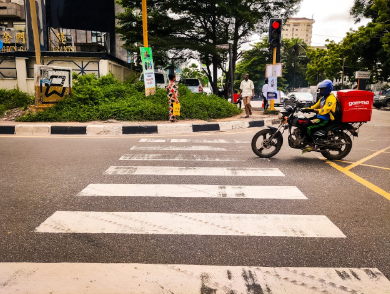
“When I get orders, I call my delivery service man, who comes and pick up the order and goes to deliver it. I pay him 1000 CFA ($1.78) per trip, which is the standard fee in Côte d’Ivoire, although it was not fixed by any authority but by us sellers.”
Touré is far from alone. An estimated 50,000 individuals operate similar businesses across the country, according to figures cited by the commerce ministry. They sell a wide range of products — from electronics and fashion to food and furniture — using platforms such as Facebook, WhatsApp and TikTok.
For many, this model offers a low-cost entry into entrepreneurship in a country where formal business setup remains expensive and bureaucratic.
“What I see here is that these folks have democratised ecommerce in Côte d’Ivoire. Not only here though, as it is happening across the sub region – in Burkina Faso, Senegal, Togo, Benin, etc. What usually takes a huge amount of money and a lot of paperwork to establish has been demystified by social media,” says Albert Kouakou, a social media consultant.
The rise of an “invisible” economy
The growth of this informal digital marketplace is creating both opportunities and tensions.
Formal e-commerce companies that comply with tax and regulatory requirements increasingly view the phenomenon as unfair competition. These concerns have been raised repeatedly with the authorities, who acknowledge the challenge but appear constrained in their response.
“We are aware of this phenomenon – this rude method of doing business online. We know it is embarrassing, but it is not as easy to eradicate as critics claim,” says Cédric Lobué, spokesperson for the commerce ministry and assistant director of pilot projects.
“We are dealing with invisible people, mostly young people, who hide behind their phone or laptop screens to sell products. They don’t have physical locations or real names. But we are doing our best to inject sanity into this emerging sub-sector of the online commerce and the wider digital economy of our country,” he says.
Some experts argue that enforcement challenges are overstated. They suggest that authorities have the tools to track and regulate these sellers, but may be reluctant to act aggressively given the employment benefits the sector provides.
“We know most of them use pseudonyms online and hardly use their real photos on their social media pages, but municipal police, which are closest to the population, could be trained to infiltrate the sector by pretending to be legitimate buyers,” says Charles Yapi, a retired field operator at the directorate of economic and financial police.
“Once they lay their hands on the deliverer, it would be easier to locate the seller. But I get it. I understand. This business has created a solution that favours the authorities – curbing unemployment. Many young folks – school graduates, undergraduates, young girls – all sell online using this pattern. So, what are you going to do?”
The employment dimension is significant. Youth unemployment among graduates stands at 15%, compared with 2.6% for the overall population and 4.8% among young people, according to the latest report from the Ministry of Youth and Sports.
Against this backdrop, social media commerce is functioning as a de facto employment buffer — absorbing labour that the formal economy cannot accommodate.
At the same time, structural barriers continue to push entrepreneurs online. Renting a physical shop in Abidjan remains prohibitively expensive for many.
Monthly rents range from 25,000 CFA ($45) to 50,000 CFA ($90) in modest areas, often requiring an advance payment of 10 to 12 months. In prime locations, rents can reach 500,000 CFA ($890) per month with a full year’s deposit.
For young graduates like 27-year-old Clemence Ake, these costs make traditional retail unattainable.
“After my graduation with an economics degree from Cocody University in Abidjan, I had wanted to work at a bank, but couldn’t land a job for three years. I had been observing the social media commerce, and eventually decided to join the train,” she says.