

Democracy Hub is calling on President John Dramani Mahama to take urgent action by immediately releasing the full Constitution Review Committee report and providing a clear, time-bound roadmap for constitutional reforms.
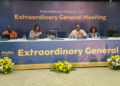
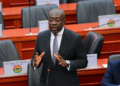
Speaking at a press briefing in Accra on Tuesday, April 21, the Director of Policy and Research at Democracy Hub, Kirchuffs Atengble, said the Youth Platform on Constitutional Reform is pushing for transparency and swift implementation of the proposed changes.
He argued that releasing only a summary report is not enough to enable meaningful public engagement.
He noted that while the group conditionally supports key proposals—including lowering the presidential age requirement, capping ministerial appointments, restructuring the judiciary, and strengthening decentralization—its support depends on the publication of the full report, broad national consultations, and concrete implementation steps to avoid another stalled reform process.
“We demand that the government publish the full unabridged report of the Constitutional Review Committee, without further delay and reduction as indicated earlier,” he said.
The eight-member Constitutional Review Committee set up by President John Dramani Mahama in January 2025 to identify gaps in previous constitutional reforms and recommend amendments to improve Ghana’s governance submitted its report to the President on Monday, 22 December 2025.
President Mahama, after receiving the final report of the Committee, chaired by Prof H. Kwasi Prempeh, at a ceremony held at the Jubilee House, accordingly directed the publication and release of the abridged version of the Report to the public.
Key among the proposals is an extension of the presidential term of office from four to five years, as part of recommendations to strengthen governance and policy continuity.
Other proposals include changes to local governance, such as the election of Metropolitan, Municipal, and District Chief Executives and the inclusion of traditional chiefs in local government structures.
“We think we are ready as a country to make a historic move in the way in which our local government is structured,” Prof Prempeh said during the presentation.
Under the proposals, chiefs would initially take part in the legislative and deliberative work of district assemblies. Over time, they would assume more direct governing roles at the sub-district level in towns and villages.
The committee also recommends establishing a Devolution Commission to oversee the phased introduction of MMDCE elections, rather than holding them in all 261 districts at once. Districts that meet clearly defined benchmarks would begin the process, with others joining later.
On the presidency, the report proposes extending the presidential term from four years to five years, alongside limits on campaign activities.
It suggests a defined campaign period, outside which political parties and candidates would not be allowed to engage in activities such as rallies, posters. “We hope that if this is accepted, we will have a political or electoral environment where we do not run 24-hour, 24-seven, four-year campaigns,” Prof Prempeh explained.
The committee is also calling for an end to what it describes as the hybrid relationship between the executive and the legislature, in favour of clearer separation between the two arms of government.
Changes are proposed for the public sector to reduce partisan influence. The report suggests placing state-owned enterprises under constitutional oversight through a body akin to the State Interests and Governance Authority.
“We believe that we need to protect the state sector from over-politicization,” Prof Prempeh said, adding that the economic weight and systemic risks of such enterprises justify closer constitutional regulation.
Under the proposals, the Council of State would receive expanded authority, moving closer to its original 1969 conception as a co-guarantor in presidential appointments.
The report also recommends the creation of a new anti-corruption commission to bring together corruption prosecution functions currently spread across several agencies. Under this arrangement, the Commission on Human Rights and Administrative Justice would concentrate on human rights and ombudsman duties.
The Attorney General’s role would also be adjusted, with some responsibilities reassigned to reduce the office’s burden.
Receiving the report, President Mahama described it as “a beautiful Christmas gift” and commended the committee for its integrity and credibility.
He announced plans to establish an implementation committee early in 2026 and said some members of the review body would be invited to serve to ensure continuity into the next phase.
“As soon as we resume early next year, we are moving from the constitutional review process into the implementation process,” the president said.
He acknowledged that some of the proposals were far-reaching but said they were needed to strengthen Ghana’s democratic order, especially at a time when constitutional governance in parts of the sub-region was under strain.
President Mahama said the report would be published soon, adding that he did not want it “kept like a nuclear secret,” though he did not give a publication date.
Prof Prempeh said the committee visited 10 regions and held engagements with academics, trade unions, and citizens across the country. He said the consultations revealed strong public demand for change