

Q: I’m trying to reduce my exposure to microplastics. How concerned should I be about dental products?
It’s almost impossible to avoid microplastics altogether. These tiny plastic particles are regularly ingested, inhaled and absorbed from our environment and have been found in our hearts, brains and other organs.
Plastic bottles, cutting boards and food containers are well-known culprits, but researchers are increasingly finding that dental products — like toothbrushes and floss — can shed microplastics, too.
Some researchers speculate that microplastics could disrupt the microbial balance of the mouth, cause inflammation and damage DNA. But it’s not clear how many are actually released by dental products or whether exposure translates into meaningful health problems, said Dr. Bapanaiah Penugonda, a dentist at New York University.
Experts say that brushing and flossing are still essential for oral health and that, if you’re worried about microplastics, you should focus on more established sources like household dust, synthetic fabrics and plastic kitchen tools. But they also had a few ideas on how to limit your exposure to dental microplastics.
Why do dental products release microplastics?
Most everyday dental products are made of plastic. Toothbrushes often use nylon bristles, and dental floss is essentially a plastic thread. As you brush and floss, the friction can leave tiny fragments or fibers in your mouth, said Dr. Federica Di Spirito, an oral surgeon at the University of Salerno in Italy.
For toothpaste and mouthwash, the concern revolves around their packaging. Plastic tubes and bottles are often made by heating and forming plastic, which can cause microplastics to leach inside, said Sanjay Mohanty, an environmental engineer at the University of California, Los Angeles. (Many toothpastes used to contain plastic microbeads, tiny balls that helped scrub and polish teeth, but those were banned in the United States in 2015.)
Still, researchers can’t say if dental products are a major source of microplastics, compared to other sources, Dr. Di Spirito said. In theory, microplastics could enter your body through tiny breaks in the gums, by passing through tissues in your mouth or by simply being swallowed, she added. But it’s unclear how much this actually happens, or whether most of them are spat out.
“Just because microplastics are released doesn’t mean that they’re going into our body,” Dr. Mohanty said.
Are there nonplastic alternatives?
Experts generally don’t recommend any particular toothbrush, floss, toothpaste or mouthwash to reduce your microplastics exposure. There simply hasn’t been any robust testing on how much different dental products release, said Dr. Dimitrios Michelogiannakis, an orthodontist at the University of Rochester.
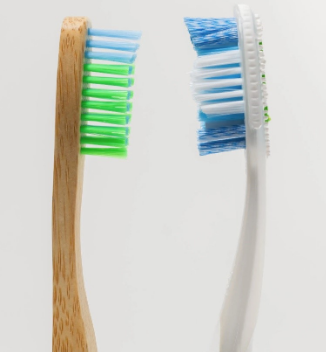
And nonplastic alternatives tend to vary in cost, comfort and performance. With toothbrushes, for example, you can opt for bamboo handles, which can reduce plastic waste but doesn’t really change what’s happening inside your mouth. While some toothbrushes use boar hair bristles, these can be harsh, potentially causing gum damage, and don’t dry as well, which risks bacterial growth, Dr. Michelogiannakis said.
Some people also use silk floss, but in one study comparing it to three plastic flosses, the silk one was rated the least comfortable and pleasant to grip, as well as the most likely to fray, shred and snap.
Mouthwashes and toothpaste are sometimes sold as dissolvable tablets or in aluminum tubes and glass bottles. This might help reduce exposure to microplastics, but the experts couldn’t say by how much or if it’s worth the often higher price.
What to do to reduce your exposure to microplastics?
The benefits of brushing and flossing — preventing cavities, gum disease and even tooth loss — are well-established, Dr. Di Spirito said, while the risks of microplastics from dental products are still unknown. So keep prioritizing dental hygiene, but you can also consider a few simple changes that might reduce your exposure, although research is limited.
Brush and floss softly. Be thorough but gentle, Dr. Michelogiannakis said, since rough, aggressive motions can damage your gums and potentially leave more microplastics behind. To that end, using a toothbrush with soft bristles might help. And when flossing, slip the thread in, curve it around one tooth, gently slide it up and down, and then repeat on the neighboring tooth.
Replace your toothbrush regularly. Plastic bristles break down over time, so swap your toothbrush at least every three to four months, or sooner if you notice fraying or splaying, Dr. Michelogiannakis said.
Avoid the sun and heat. Plastics can degrade faster when exposed to ultraviolet light and high temperatures, Dr. Mohanty said. So keep dental products out of direct sunlight and avoid cleaning your toothbrush with UV light or very hot water. (Warm or cold water is perfectly fine, Dr. Michelogiannakis said.)
Spit well. After brushing or flossing, spit out any toothpaste or gunk. Dentists don’t typically advise rinsing after brushing, since you want the fluoride in toothpaste to stay on your teeth. But rinsing with a little water — like a sip from your hand — might help wash away leftover grit or potential microplastics, Dr. Mohanty said.
You can try a few of these tweaks, but don’t stress too much. “The key message is risk management rather than panic,” Dr. Di Spirito said.