

Since Ghana’s return to multiparty democracy in 1992, no presidential candidate, except Jerry John Rawlings, has won a presidential election on their first attempt. Rawlings’s exceptional case is not difficult to explain.
He transitioned from military leadership under the Provisional National Defence Council (PNDC) to civilian rule under the National Democratic Congress (NDC) and presided over the political processes that culminated in the 1992 Constitution, which ushered in Ghana’s Fourth Republic.
Rawlings had first come to power briefly in June 1979 as chairman of the Armed Forces Revolutionary Council (AFRC), which overthrew the Supreme Military Council. Although he handed over to a civilian government led by Hilla Limann in September 1979, he returned to power on 31 December 1981.
Consequently, by the time he contested the 1992 presidential election, Rawlings was already a household name and a dominant political figure.
He had been a constant presence in Ghana’s political landscape for over a decade, led the incumbent government, appended his signature to the 1992 Constitution, and benefited from overwhelming control of state machinery.
Unsurprisingly, he won the 1992 election with 58.4 percent of valid votes, while his closest challenger, Albert Adu Boahen, secured 30.29 percent.
In the 1996 presidential election, the NDC again presented Rawlings, who won with 57.37 percent against the New Patriotic Party’s (NPP) new candidate, John Agyekum Kufuor, who obtained 39.67 percent.
Although Kufuor improved the NPP’s performance by nearly ten percentage points, many political analysts believed that retaining Adu-Boahen might have yielded an even stronger outcome.
Prior to 1992, Rawlings enjoyed a near-untouchable personality cult, often described as the “culture of silence,” which Adu-Boahen courageously challenged.
This culture began to erode following opposition activism, notably the 1995 Kume Preko demonstrations, as well as widespread economic hardship and public resistance to the brief introduction of Value Added Tax (VAT). These factors weakened Rawlings’ dominance and laid the groundwork for future opposition victories.
In the 2000 presidential election, Kufuor, retained by the NPP led the first round with 48.4 percent against John Evans Atta Mills, the incumbent Vice-President, who secured 44.8 percent.
In the run-off, Kufuor expanded his share to 56.9 per cent, while Atta Mills fell to 44.64 percent. Although the opposition parties formed a “Great Alliance” against the NDC, Kufuor’s victory was largely attributable to consistency, familiarity, and sustained political relevance.
Having appeared on the ballot in 1996, he was easier to market than Atta Mills, who was contesting for the first time. Additionally, public fatigue with the Rawlings administration worked against the incumbent Vice-President.
The pattern of consistency persisted in the 2004 presidential election, when both major parties retained their candidates. Kufuor defeated Atta Mills in the first round with 52.45 percent against 44.65 percent.
Opinion polls strongly favoured Kufuor, largely due to major social interventions such as the introduction of the National Health Insurance Scheme (NHIS). Nonetheless, the NDC continued with Atta Mills, who many Ghanaians perceived as politically weak at the time.
In the 2008 election, Atta Mills, contesting for the third time defeated Nana Akufo-Addo of the NPP. Despite the advantages of incumbency favouring Akufo-Addo, defeating a consistent three-time contender and former Vice-President proved difficult.
Sympathy votes played a significant role, as many voters rewarded Atta Mills’ perseverance and long-standing public service.
Following the death of Atta Mills, John Dramani Mahama, the incumbent President, won the 2012 election against Akufo-Addo, largely due to national sympathy and a desire for continuity. The NDC’s campaign messaging appealed strongly to public emotion during a period of national mourning.
However, in 2016, Akufo-Addo, then contesting for the third consecutive time won decisively against Mahama, benefiting from voter fatigue and the Ghanaian electorate’s tendency to alternate power after two terms. Akufo-Addo went on to secure re-election in 2020 against Mahama, who was contesting for the second time.
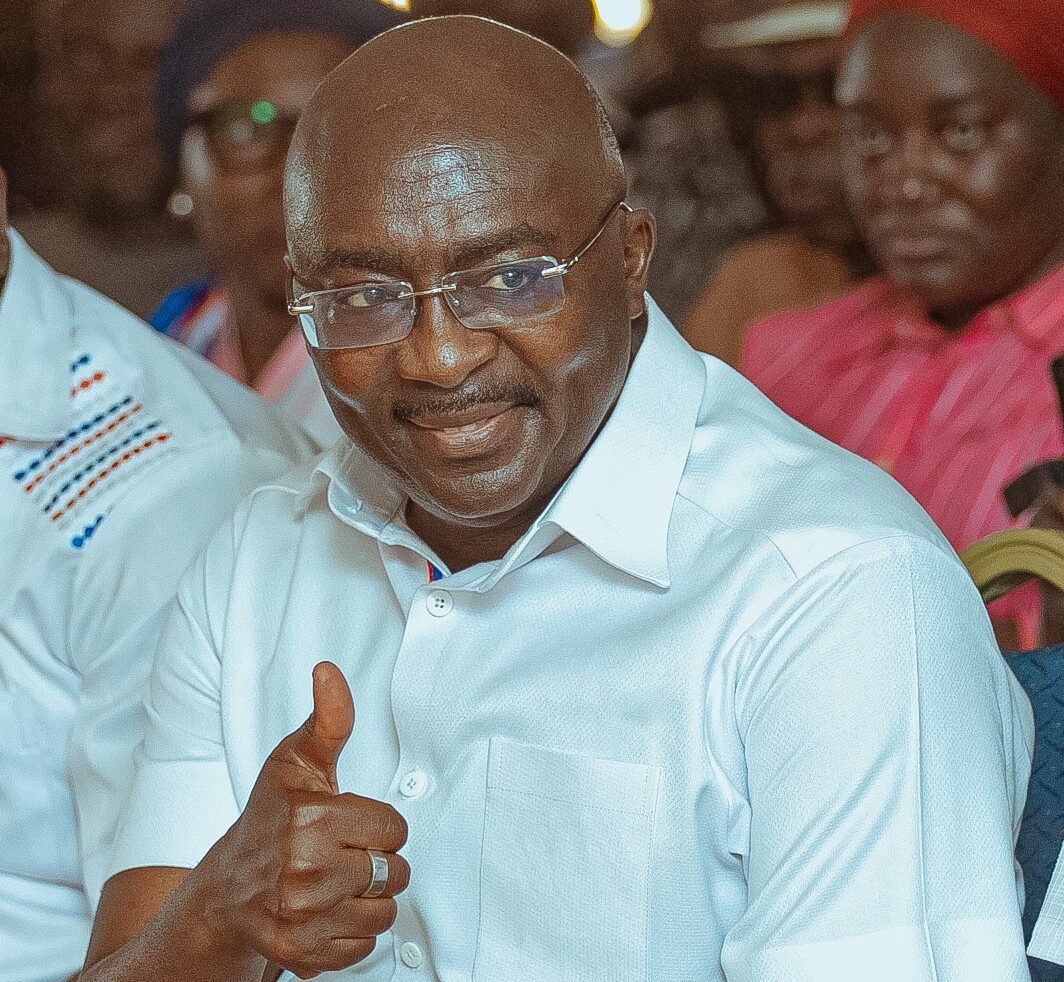
In the 2024 presidential election, the NPP’s candidate, Mahamudu Bawumia, despite access to state resources, faced significant incumbency disadvantages.
Internal fractures within the ruling party were evident, with Members of Parliament publicly criticising economic management and calling for the removal of the Finance Minister.
Additionally, several unpopular policy decisions, including the Electronic Levy (E-Levy), pension fund restructuring, the National Cathedral project, and persistent allegations of corruption, illegal mining (galamsey), neglect of party grassroots supporters, currency depreciation, and perceived arrogance of power, severely eroded public trust. Under such circumstances, it was highly unlikely for any NPP candidate to secure victory.
By contrast, the NDC applied the principle of consistency by retaining Mahama, a former Member of Parliament, Vice-President, President, and third-time contender, to face Bawumia, a first-time presidential candidate. Predictably, Mahama won with 56.4 per cent of the vote.
Notwithstanding the loss, Dr Bawumia’s contributions to Ghana’s development remain significant. His policy initiatives, including the national digital identity system (Ghana Card), digitalisation of public services, Zipline medical delivery, and the Gold-for-Oil programme have left a lasting imprint on Ghana’s governance architecture.
Any objective account of Ghana’s recent currency stabilisation efforts would be incomplete without acknowledging his role.
Looking ahead, Dr Bawumia remains the NPP’s strongest prospect for the 2028 elections. He has achieved high national visibility, brand recognition, and political familiarity.
With Mahama constitutionally ineligible to contest again, any NDC candidate in 2028 will likely be a firsttime entrant, an advantage that historically favours experienced contenders.
Empirical studies consistently indicate that Bawumia’s electoral loss was not driven by religion, ethnicity, or personal disposition, but rather by broader structural and incumbency factor.
Andrews Kwame Perprem
The author is a Development Consultant, Political Analyst, UBB-Co-founder & Antwerp Secretary, NPP.
____________________