

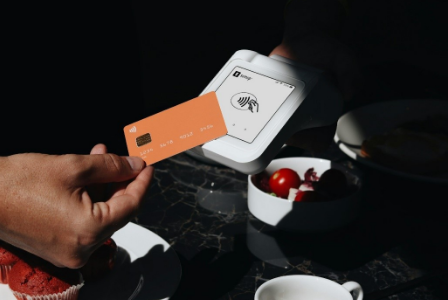
West Africa is edging towards a cashless future, not through policy design but through a fintech-led shift transforming how money is stored, moved, and spent.
A few years ago, the Central Bank of West African States (BCEAO), which serves the eight countries sharing the CFA franc, laid out an ambitious vision: to reduce reliance on physical cash and push the region towards a cashless economy.
The logic was compelling. Digital payments, policymakers argued, would deepen financial inclusion, improve transparency, reduce corruption, and enhance security through traceable transactions. But from the outset, critics warned that the region’s financial ecosystem — and its citizens — were not ready for such a leap.
Commercial banks across the West African Economic and Monetary Union (WAEMU) quietly conceded that the project was premature. Too few adults held formal bank accounts, and digital infrastructure remained patchy. The gap between policy ambition and on-the-ground reality was simply too wide.
Across major urban centres in the region, cash remains dominant but no longer unchallenged. Digital transactions are spreading rapidly, cutting across demographics, income levels, and social classes. The shift is not uniform, but it is unmistakable.
Instead, mobile money has emerged as the central force reshaping financial behaviour — altering not just transactions, but attitudes towards money itself.
“People love to hold and use physical cash because of the confidence and freedom attached to it. However, digital money, which is now widely known as mobile money, presents valuable advantages to folks, like the fast sending and receiving of money anywhere at even odd hours when banks are closed,” Antoine Beugré, former director of the Ivorian centre of economics and social sciences (CIRES), told Allen Dreyfus.
For years, telecom giants such as MTN and Orange dominated the mobile money ecosystem in the region. Their services — MTN Money and Orange Money — were inspired by Kenya’s Mpesa model and introduced millions to digital wallets.
“MTN Money and Orange Money (as the mobile money products of both companies are referred to) changed the way people handled money in these countries.
“They act mostly like digital wallets, where you can store funds and withdraw when you need cash, but they did not quite solve the problem or bring us nearer to a cashless society because cash was still flowing,” said Habib Diallo, a Dakar-based financial expert and former adviser at the ministry of finance and budget.
Users relied on mobile money primarily to send funds and withdraw cash, not to make purchases. Merchants, meanwhile, were reluctant to accept digital payments due to high transaction fees — often between 6% and 10% — and unreliable network services.
The result was a hybrid system in which digital finance existed, but cash still ruled.
The turning point came in the early 2020s, when a Senegalese-founded fintech, Wave Mobile Money, entered the market with a radically different proposition.
Wave cut transaction fees to around 1% and eliminated withdrawal fees entirely — a move that directly addressed one of the biggest barriers to adoption. It also introduced a simplified payment system built around QR codes, allowing users to transact by scanning rather than navigating complex menus.
Wave saw gaps in digital financial services and others’ offerings and developed a technology suitable for all demographics. It is the easiest and simplest financial service I have ever seen.
And backed by its marketing strategy to crush fees, they quickly emerged as users favourite,” said Dr Ismael Samaké of the faculty of legal and economic sciences of the University of Bamako.
Unlike earlier models, Wave’s system worked for everyone — literate and illiterate users, urban professionals and informal traders alike. It reduced friction to near zero and made digital payments intuitive, fast and affordable.
The result was not just increased usage, but a fundamental shift in behaviour.
Across cities such as Abidjan and Dakar, mobile money is now used for everyday transactions — from groceries and transport to school fees, healthcare payments, and informal services. Merchants widely accept digital payments, aided by QR code badges distributed by Wave.
Nearly four out of five adults in the region now hold a Wave account, and acceptance among service providers is close to universal in major urban areas.
For the first time, the idea of going through an entire day without handling physical cash is no longer hypothetical — it is increasingly routine.
“A cashless economy is very difficult to achieve. Even in Europe, cash is still used despite the penalties. But we have seen huge progress towards that direction in WAEMU thanks to mobile money, mostly Wave,” Beugré said.
Yet, even as the market moves ahead, policy is struggling to keep pace.
“However, these corporate efforts need to be backed by legislation if the authorities really want to see an effective cashless economy in place. We need laws to limit how much money people can carry on them or spend on shopping, for example. That is still not the case. Mobile money runs in parallel as one of the options, but it should be the main option.”
The evolution of digital payments in West Africa reveals a deeper structural shift: innovation is outpacing regulation.
While central banks set the initial ambition, it is fintech companies that have delivered results. In doing so, they have redefined the trajectory of financial inclusion and exposed the limits of traditional policy tools.