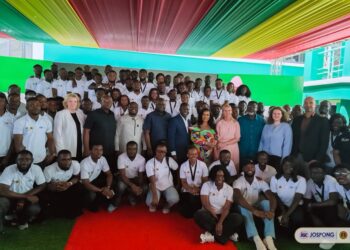


My recent visit to Hunan Province was both inspiring and instructive. It was inspiring because it showed what sustained leadership, disciplined institutions, and long-term commitment can achieve when vision meets diligent execution.
Today, Hunan stands as a permanent, functional ecosystem supporting Africa’s engagement with Chinese and broader Asian markets—a tangible result of strategic planning and persistent effort. The leadership of Hunan Province deserves recognition for this remarkable accomplishment.
At the same time, the visit was instructive because it highlights a lesson for Ghana and Africa: influence in today’s global economy is not achieved through statements alone—it is built through institutions, coordination, and the ability to act at scale.
Those who invest early in durable infrastructure quietly shape the rules of engagement for decades.
The Vision Behind Hunan
The success of Hunan did not happen overnight. It was nurtured over many years of dialogue and diplomatic engagement, including initiatives supported by the Ghana Embassy in Beijing during my tenure as Ambassador.
African colleagues who shared the conviction that Africa required structured, permanent platforms—beyond episodic engagements and short-term commercial missions—were central to this early effort.
I want to acknowledge Ambassador Mbwela K. Kariuki, then Tanzania’s Ambassador to China and now accredited to the United Kingdom, whose collaboration was essential to this shared African outlook.
Leadership in Action
This early vision has been carried forward with remarkable resolve by Hunan’s leadership. Special recognition is due to Ms. Gong, Director General of Hunan Province, and the President of the Council, who previously served as Director-General of the Hunan Ministry of Commerce.
Their dedication and tenacity helped pool stakeholders, mobilize resources, and translate ideas into functioning institutions, such as the China–Africa Economic Council and the Economic and Trade Cooperation Center. Leadership matters, and sustained follow-through matters even more.
Lessons for Ghana and Africa
While the visit was encouraging, it was also sobering. Hunan’s achievement underscores a broader lesson: influence is exercised not through declarations, but through permanent, well-coordinated institutions capable of acting at scale. Vision alone is not enough.
Ghana has long sought to serve as a gateway to Africa. Hosting the AfCFTA Secretariat and promoting industrialization, value addition, and regional leadership are all legitimate aspirations.
Yet, aspiration without institutional backing limits impact. Too often, African businesses operate individually in global markets—under-capitalized, under-coordinated, and without the enduring platforms or depth of talent needed to anchor their presence.
Participation without ownership is not a partnership. Visibility without institutional infrastructure does not translate into influence.
Africa’s future depends on deeper, more sophisticated integration into global value chains—but engagement must evolve from access to agency, and from transactions to strategy.
Three Strategic Priorities
Invest in African-owned, permanent trade and exhibition platforms in key markets.
These should be commercially driven institutions supported by public facilitation, development finance, and private-sector participation. A gateway role requires permanent gates.
Prioritize structured joint ventures that support industrial transformation. Sectors like agro-processing, manufacturing, logistics, and light industry should embed skills development and technology transfer from the outset.
Leverage Ghana’s position within AfCFTA strategically
Hosting the Secretariat should translate into trade aggregation power through regional export consortia, pooled financing mechanisms, and harmonized standards that enable African producers to negotiate at scale.
Conclusion: From Vision to Agency
If Ghana truly intends to lead Africa’s economic transformation, its vision must be complemented by institutions, coordination, and permanence. Ghana must choose to be more deliberate—it must become a co-architect.
Hunan has shown what is possible when vision meets institutions and persistence. Africa’s future will be defined not by ambition alone, but by the platforms we build to turn that ambition into lasting influence.
By Ambassador Edward Boateng