

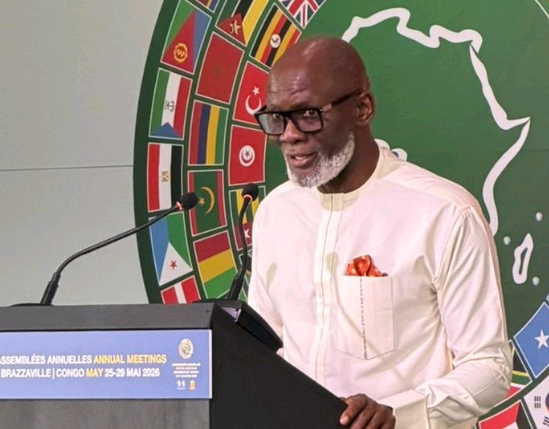
Executive Chairman of the Africa Prosperity Network (APN), Gabby Asare Otchere-Darko, has called for urgent acceleration of African economic integration, including visa-free travel, digital trade systems and mutual recognition of professional qualifications across the continent.
Speaking at the inaugural Integrate Africa Forum on the sidelines of the African Development Bank (AfDB) Annual Meetings in Brazzaville on Thursday (28 May), Otchere-Darko said Africa’s economic transformation depended on moving beyond agreements on paper to concrete implementation.
He cited the example of Brazzaville and Kinshasa, two capitals separated by the Congo River but linked by lengthy border procedures, as a symbol of Africa’s wider integration challenges.
“Two great African capitals facing each other across a narrow stretch of water,” he said, noting that travel between them can take hours due to bureaucratic bottlenecks, despite the planned construction of a bridge expected to reduce crossing time to minutes.
Otchere-Darko said the project reflected the kind of continental transformation needed to ensure the free movement of people, goods, services and ideas.
Institutional fragmentation
He argued that Africa already has the necessary frameworks, including the African Continental Free Trade Area (AfCFTA), but implementation remained slow due to institutional fragmentation and lack of political urgency.
“For too long, Pan-Africanism has remained largely trapped in summit halls, intellectual debates, treaties and communiqués,” he said, calling for broader public mobilisation behind integration efforts.
The Africa Prosperity Network, he said, was working to mobilise private sector actors, youth, women and civil society to push for faster economic integration.
Otchere-Darko welcomed recent steps by some African countries towards visa-free travel for Africans and praised initiatives aimed at easing movement across the continent.
Constraints
He said Africa’s economic potential was being constrained by fragmented markets and disconnected value chains, making it difficult for industries to scale across borders.
Citing mobile money growth, he said Africa had already demonstrated capacity for large-scale digital financial integration, processing about $1.4 trillion in transactions in 2025, but warned that cross-border payments remained inefficient.
He also pointed to youth unemployment as a major challenge, noting that millions of young Africans enter the labour market each year while job creation remains insufficient.
“If we fail to industrialise rapidly and integrate our economies, we risk producing a generation of frustrated and disconnected youth,” he said.
Borderless Africa
Otchere-Darko proposed three priority reforms: visa-free movement across Africa, seamless digital payments and trade systems, and mutual recognition of skills and standards.
He argued that such measures would unlock trade, boost industrialisation and strengthen investor confidence.
“Integration is not dangerous. Fragmentation is,” he said, adding that Africa must move from diagnosing challenges to implementing solutions.
He called on stakeholders to support a campaign dubbed “Make Africa Borderless Now,” aimed at pushing African leaders to implement existing continental agreements.
“History will not judge us by the number of protocols we signed,” he said. “History will judge us by whether Africans could finally live, move, trade, work and prosper because of them.”