

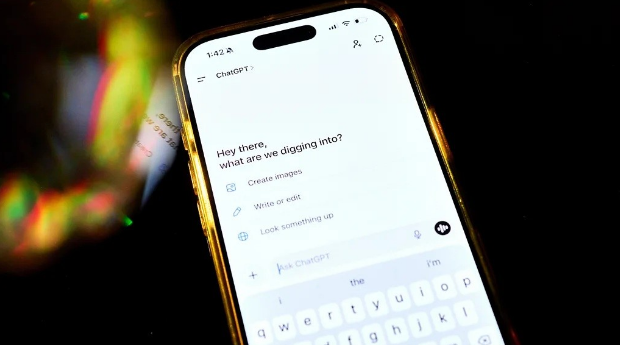
As large language models take over more and more cognitive tasks, researchers warn that this mental outsourcing comes at a cost.
When research scientist Nataliya Kosmyna was looking for interns, she noticed that the cover letters she received were suspiciously similar. They were long, polished, and after introductions would often jump to an abstract and arbitrary connection to her work.
It was obvious to her that applicants were using large language models (LLMs) – a form of artificial intelligence that powers chatbots such as ChatGPT, Google Gemini, and Claude – to write the letters.
At the same time, during lessons on campus at the Massachusetts Institute of Technology (MIT), Kosmyna, who studies human-computer interaction, noticed that many students were forgetting content more easily than a few years ago.
With the increasing reliance on LLMs, she had a hunch that this might be affecting her students’ cognition and sought to understand more about it.
The concern that researchers like Kosmyna have is that if we become too reliant on AI, it could affect the language we use and even our ability to do basic cognitive tasks.
There is now a growing body of research suggesting that this “cognitive offloading” to AI can have a corrosive effect on our mental abilities. The consequences could be alarming and may even contribute to cognitive decline.
It’s well known that the tools we use can change how we think. With the advent of the internet for instance, tasks that once required deep research could be found by plugging a simple query into a search box. As the use of search engines increased, research found that we became less likely to remember details, a phenomenon dubbed “the Google effect“.
(Some argue, however, that the internet also serves as an external memory system that frees up our brains to do other tasks.)
But there is growing alarm that, as we offload even more of our thinking to LLMs and other forms of AI, the effects on our memories and our ability to solve problems could worsen.
Artificial intelligence tools can write convincing poetry, give financial advice, and provide companionship. Students are increasingly outsourcing their own work to AI tools as well.
Studies have already shown that young people may be particularly vulnerable to the negative effects of AI use on key cognitive skills, such as critical thinking. Kosmyna, however, wanted to dig deeper into the potential effects.
Reduced mental effort
She and her colleagues at MIT Media Lab recruited 54 students to write short essays and split them into three groups. One was instructed to use ChatGPT. A second could use Google search, with AI-generated summaries turned off. The third didn’t use technology. Each student’s brainwaves were measured while they worked.
The essay topics were deliberately open-ended, meaning little research was needed for the task, with prompts including questions around loyalty, happiness, or our daily life choices.
The results haven’t been published in a scientific journal yet, but they were nonetheless eye-opening, according to Kosmyna. Those who used their own minds had a brain that was “on fire”, showing widespread activity across many parts of the brain, she says.
The search engine-only group still showed strong activity in the visual parts of the brain, whereas the ChatGPT group showed notably less activity, reduced by up to 55%.
“The brain didn’t fall asleep, but there was much less activation in the areas corresponding to creativity and to processing information,” says Kosmyna.
ChatGPT also affected people’s memories. After submitting their essays, people in the AI group were unable to quote from them, and several felt they had no ownership of the work.
Other studies have also shown that people become less able to retain and recall information when they use AI tools such as ChatGPT.
While the findings are still undergoing peer review, they echo those from other studies. One study by researchers at the University of Pennsylvania suggests that some people undergo something they term “cognitive surrender” when using generative AI chatbots.
This means they tend to accept what the AI tells them with minimal scrutiny and even allow it to override their own intuition.
Similar effects can be found outside the world of AI chatbots, too – even in life-or-death situations. A recent multinational study team found that medical professionals who used an AI tool to screen for colon cancer for three months were subsequently worse at spotting the tumours without it.
Outsourcing work to AI also risks losing much of the creativity that produces original work, warns Kosmyna. The essays that students in her study wrote with ChatGPT looked very similar and were described by the teachers as “soulless”, lacking originality and depth, Kosmyna says.
“One of the teachers asked if students were sitting next to each other because the essays were so similar.”
While studies such as these illustrate the short-term effects LLMs can have on the brain, the long-term impacts are far less clear. The study by Kosmyna and her colleagues provides a glimpse.
Four months after the initial study, they asked the students to write another essay, but this time, those who had used ChatGPT were told to work without LLM support.
The neural connectivity in their brains was lower than that of those who switched the opposite way, perhaps indicating that they had not engaged with the topics properly in the first place.
Cognitive decline
Yet LLMs can be a positive tool to aid thinking, but only if we don’t rely on them by outsourcing our mental tasks, says computational neuroscientist Vivienne Ming, author of Robot Proof. She’s concerned, though, that this is not how most people interact with this technology.
Her reasoning comes from research she conducted for her book, during which Ming asked a group of students at the University of Berkeley to predict real-world outcomes, such as the price of oil. She found that the majority of participants simply asked AI and copied the answer.
She measured their brains’ gamma wave activity – a marker of cognitive effort – and found very little activation. Again, her research is yet to be published, but Ming worries that if her findings are borne out in further studies, it could have long-term implications. Other research, for example, has linked weak gamma wave activity to cognitive decline later in life.
“That’s really worrying,” Ming says. “If that is a natural mode for people to interact with these systems – and these are smart kids – that’s bad.” Deep thinking, she says, is our superpower. “If we don’t use it, the long-term implications for cognitive health are pretty strong.”
That’s because when we rely on LLMs, it requires very little cognitive effort, Ming adds, which is exactly what’s needed for a healthy brain.
A small subset of participants, though – less than 10% – worked differently, using AI as a tool to gather data they then analyzed themselves. These individuals made more accurate predictions than other participants and also showed stronger brain activation.
Almost two decades ago, Ming predicted that within 20 to 30 years, we would see a statistically meaningful rise in dementia rates directly related to our overreliance on Google Maps.
“I meant it to be provocative,” Ming says. “If you don’t have to think about navigating, then there’ll be some detectable effect.”
While we don’t have data on this specific prediction, increased GPS use has been linked to poorer spatial memory over time, according to a study of 13 people conducted over three years. And poor spatial navigation may be a potential predictor of Alzheimer’s Disease, according to another study.
It’s clear that the more active our brains are, the more protected they are from cognitive decline. LLMs, then, Ming says, could not only reduce creativity but could harm cognition and potentially increase the risk of dementia.
As use of AI tools increases, we need to work with them in ways that benefit us rather than harm us. Ming suggests that ultimately, the goal could be a form of “hybrid intelligence” where humans and machines “do the hard stuff” together.