

The Ranking Member of Parliament for the Economy and Development Committee, Kojo Oppong Nkrumah, has questioned whether the Bank of Ghana’s aggressive efforts to bring inflation down could be affecting job creation and economic growth, arguing that monetary policy must not focus excessively on inflation figures at the expense of the real economy.
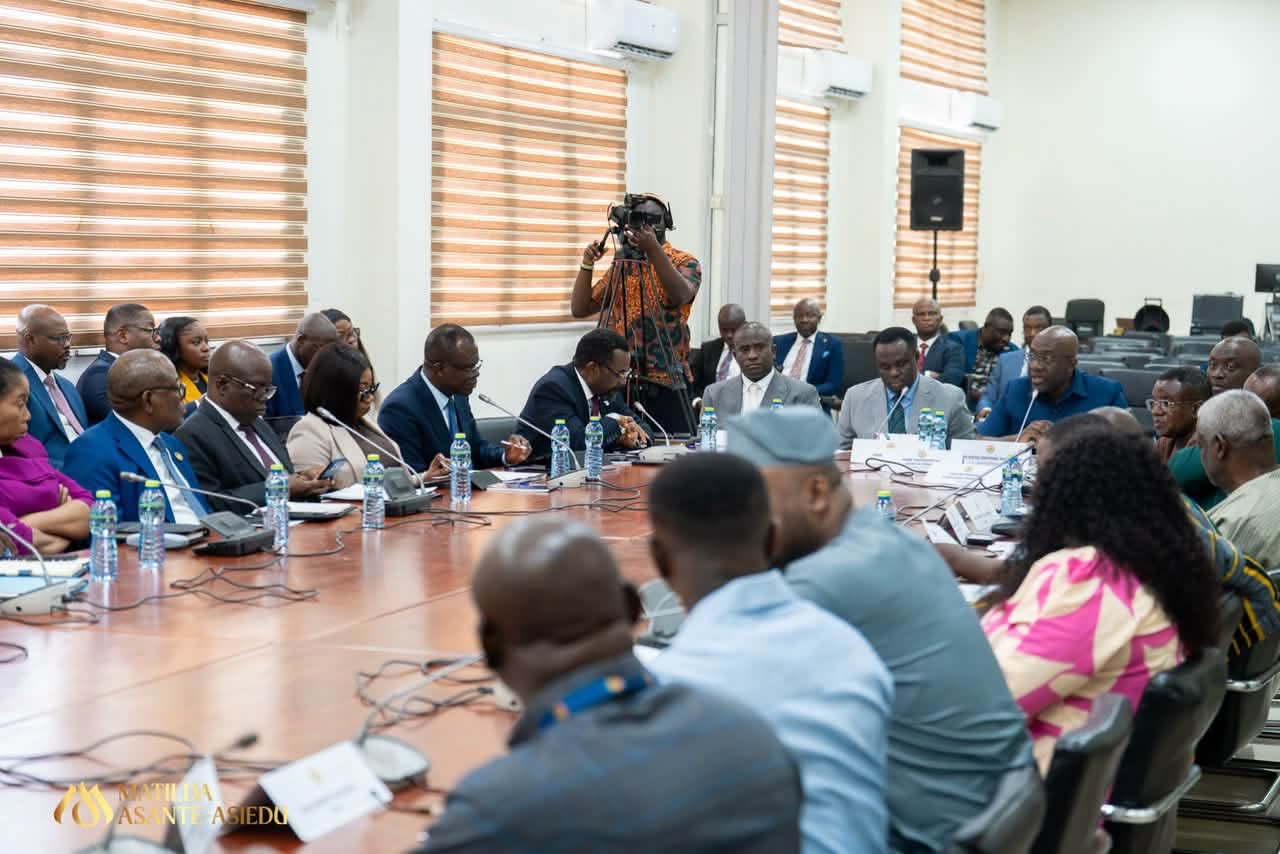
During an engagement with Bank of Ghana officials, Mr Oppong Nkrumah raised concerns about the relationship between the central bank’s inflation-targeting framework and the broader need to sustain economic activity, create employment, and improve Ghanaians’ living conditions.
He highlighted the Bank’s stated inflation target of 8 percent, with a margin of plus or minus two percentage points, which sets the acceptable range between 6 and 10 percent.
Referring to the October 2026 inflation rate of 5.5 percent, he questioned whether the central bank was placing too much emphasis on maintaining inflation below the lower boundary of its target range, rather than giving sufficient consideration to the implications for businesses, employment and economic expansion.
Mr Oppong Nkrumah argued that the inflation target was not simply a statistical benchmark but was also intended to support an optimal environment for economic growth and job creation.
He therefore asked whether continuing to pursue inflation levels below 6 percent could amount to an overly restrictive monetary policy stance, particularly when businesses and households were still dealing with high operating costs and other economic pressures.
Responding to the concerns, a Bank of Ghana official rejected the suggestion that the central bank was deliberately forcing inflation below its target range.
The official explained that the Bank’s projections indicated that inflation would gradually move back into the established target band of 8 percent, plus or minus two percentage points, within the forecast period.
The official further attributed some of the unusually low inflation readings, including the reported decline to 3.2 percent, to what monetary authorities describe as base-drift effects, arising from the high inflation levels recorded in the previous year.
According to the official, the Monetary Policy Committee must also remain cautious about emerging risks and ensure its policy decisions support a gradual, stable move of inflation towards the target.
However, Mr Oppong Nkrumah maintained that the central bank’s approach deserved further examination, particularly because the International Monetary Fund had indicated in its latest review that much of the inflationary pressure facing Ghana was cost-driven.
He questioned whether the Bank’s reliance on demand-management measures, including liquidity sterilization and other monetary policy instruments, could place unnecessary pressure on economic activity without directly addressing the underlying causes of rising prices.
He explained that where inflation is largely driven by production costs, utility charges, rent and other supply-side pressures, measures aimed primarily at controlling demand may not sufficiently address the challenges confronting businesses and households.
The former Information Minister therefore sought to establish whether the central bank was engaging government and advising institutions responsible for managing the real economy to address those cost-related pressures.
He specifically pointed to rising services inflation, rent and electricity costs, arguing that these factors continued to affect households and businesses despite the decline in the headline inflation rate.
According to him, the central bank must recognize that inflation figures alone do not necessarily reflect the full economic difficulties people across the country are experiencing.
In response, the Bank of Ghana official maintained that monetary policy decisions were based on economic data and rejected the suggestion that the central bank was over-managing demand.
The official explained that monetary policy was primarily a demand-management tool and was not designed to directly resolve cost-related inflationary pressures.
The official also pointed out that the Monetary Policy Committee had reduced the policy rate from 28 percent to 14 percent, explaining that the decisions were guided by the need to balance inflation control with protecting economic growth.
The Bank further said its inflation-targeting framework considers both price stability and economic growth, and that the committee remains mindful of the potential effects of its decisions on the real sector.
Mr Oppong Nkrumah then turned to the differences between Ghana’s national inflation figures and the inflation rates recorded in some regions and sectors of the economy.
He observed that while the headline inflation rate stood at 5.5 percent, some regional and sectoral figures were considerably higher.
He cited Ashanti Region, where inflation was reported at approximately 9.8 percent, and services inflation, which he said had risen to about 8.3 percent.
He questioned whether the wide differences between the national headline figure and the inflation experiences in particular regions and sectors could explain why many Ghanaians continued to feel the pressure of rising living costs despite the reported decline in overall inflation.
The MP argued that the credibility of economic indicators must also be assessed against the realities confronting households and businesses, particularly when the cost of essential services and other expenses remains high.