

Ethiopia is on course to triple exports to $10bn, as Prime Minister Abiy Ahmed ties industrialisation directly to sovereignty.
Addressing the fourth “Made in Ethiopia” expo, Abiy positioned production not merely as economic policy but as a strategic imperative shaping the country’s future independence.
“When we say production grants sovereignty,” he states, “we mean that failure to produce invites the consequences and problems created by others onto ourselves.”
The framing reflects a deeper policy recalibration. Ethiopia is pivoting away from import dependence toward domestic production capacity, recasting industrial growth as both an economic and geopolitical necessity.
The headline figure underscores the shift. Exports, which had hovered around $3bn annually for years, are now projected to reach approximately $10bn — a threefold increase that Abiy insists is structural rather than cyclical.
“For the first time in our history, we will achieve about $10bn in exports,” he says. “This is a great victory. The foundation of this victory is industry.”
Beyond rhetoric, macroeconomic signals appear to support the government’s optimism. Ethiopia projects GDP growth of 10.2% this year, broadly aligning with forecasts from the International Monetary Fund and the World Bank, which both estimate expansion at just over 9.2%.
The narrowing gap between domestic projections and external forecasts suggests improving confidence in Ethiopia’s economic trajectory, even as the country navigates debt pressures, foreign exchange constraints and post-conflict recovery challenges.
At the centre of this momentum lies industrial performance. Manufacturing growth has more than doubled over four years, rising from 4.7% to 10.7%, reflecting sustained policy coordination, targeted investment and sector-specific incentives.
A critical component of this strategy is import substitution. Over the same period, Ethiopia has replaced an estimated $14.5bn worth of imports with domestically produced goods — a shift aimed at reducing pressure on scarce foreign exchange reserves while strengthening local industry.
“If you hadn’t produced this,” Abiy tells industrialists, “finding $14.5bn would have been exhausting and would have increased the debt burden on our children.”
The argument is both economic and strategic. By reducing reliance on imports, Ethiopia seeks to shield itself from external shocks — from commodity price volatility to supply chain disruptions — while building internal resilience.
Recent disruptions in fuel and gas supply have reinforced this narrative. “We saw the challenge we faced because we were unable to produce fuel and gas,” Abiy notes, linking supply insecurity directly to gaps in domestic production.
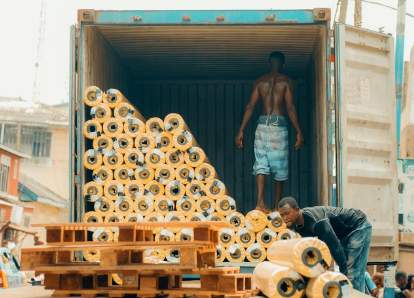
The government is now accelerating efforts to expand output across multiple sectors, from agricultural inputs to construction materials. New ceramics factories expected to meet national demand are being presented as early proof points of this transition from import reliance to local manufacturing.
Finance bottlenecks and policy intervention
Yet the industrial push is not without constraints. Access to finance remains one of the most significant barriers to expansion, with Abiy acknowledging that credit allocation to industry is still insufficient.
“The financial sector’s loan support for industry is still low,” he says, signalling imminent policy intervention.
A new law, expected within weeks, will require both private and state-owned banks to allocate a defined share of lending to industrial development. The move is designed to correct structural imbalances in Ethiopia’s financial system, where credit has historically favoured trade and short-term commercial activity over long-term production.
Even so, officials concede that domestic capital alone cannot meet the scale of industrial demand.
“Even if we decided to lend 100% of our wealth to industry, it would not be enough,” Abiy says, pointing to the need for continued capital formation and external investment.
This tension — between state-led industrial ambition and financial system limitations — will likely define the next phase of Ethiopia’s economic transformation.
While policy direction is clear, execution will depend on whether financial reforms can unlock sustained investment flows without exacerbating inflationary pressures or financial sector risks.
From domestic production to regional ambition
At the firm level, the “Let Ethiopia Produce” initiative is already reshaping the industrial landscape. Nearly 1,000 previously idle factories have resumed operations, while more than 3,600 new investors have entered the sector over the past four years.
This expansion is not only boosting production capacity but also supporting employment, export diversification and technology transfer. It signals growing private-sector confidence, even amid structural challenges.
Abiy has framed this mobilisation in explicitly political terms, calling on industrialists to embrace what he describes as “economic heroism.”
“If you don’t produce, there is no development,” he says. “From you, economic heroism is required.”
The government has identified 96 priority products for domestic production, targeting sectors where import dependence remains high despite latent local capacity.
But Ethiopia’s ambitions extend beyond its domestic market. Abiy is now urging manufacturers to expand into African markets, positioning regional trade as the next frontier of industrial growth.
“You were being told ‘produce, produce’; now we say ‘go out,’” he tells investors, encouraging the formation of firms capable of operating across multiple African countries.
The strategy aligns with broader continental integration efforts, particularly under frameworks such as the African Continental Free Trade Area, which aims to boost intra-African trade and reduce reliance on external markets.
By scaling production and targeting regional demand, Ethiopia hopes to transition from import substitution to export competitiveness — a shift that could redefine its role in Africa’s economic architecture.
Abiy’s emphasis on production as sovereignty crystallises this vision. Dependence on imports, aid or external supply chains is framed as incompatible with national autonomy.
“A country that relies on others cannot say it is free or sovereign,” he argues. “It is dependent.”
The doctrine blends ideology with pragmatism. Industrialization is not only a pathway to growth but also a mechanism for securing economic independence and projecting influence.