


Top figures in the New Patriotic Party (NPP) and Ghana’s legal fraternity have challenged law students to move beyond academic theory and position themselves for real-world impact in law, politics, and governance.
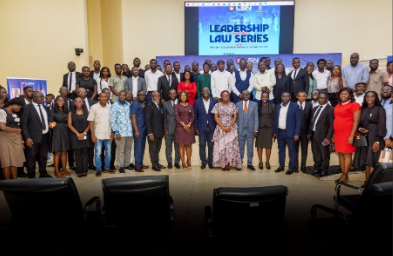
The call was made at the 2026 Law Students’ Network (LSN) Leadership and Law Series held over the weekend at the ISSER Conference Centre, University of Ghana, Legon, under the theme, “Beyond the Classroom: Winning in Law and Politics.”

The event brought together prominent legal practitioners and political actors, including Osahen Alexander Afenyo-Markin, Member of Parliament for Effutu and Leader of the Minority Caucus; Godfred Yeboah Dame, former Attorney-General and Minister of Justice; and Frank Davies, Chairman of the Constitutional and Legal Affairs Committee of the New Patriotic Party (NPP).
Others included Gary Nimako Marfo, Head of the NPP Legal Affairs Directorate; Sammi Awuku, MP for Akuapem North; Samuel Abu Jinapor, MP for Damongo; and Kojo Oppong Nkrumah, MP for Ofoase Ayirebi. Also present were Fatimatu Abubakar, aide to former President Nana Addo Dankwa Akufo-Addo, and Diana Asonaba Dapaah, former Deputy Attorney-General.
They were united by a common message: academic excellence alone is no longer sufficient in today’s complex and competitive professional environment.
In his opening remarks, Convener of the LSN, Abraham Kwaku Gyasi, urged participants to view legal education as only the foundation of a broader journey. He stressed that modern lawyers must combine knowledge with exposure, critical thinking, and active engagement with real-world systems.
Beyond theory
Delivering the keynote address, former Attorney-General and Minister for Justice, Godfred Yeboah Dame, urged law students to move beyond classroom theory and develop a deeper appreciation of the legal profession’s practical and philosophical foundations.
He cautioned that legal training should not be reduced to memorization of statutes and case law, but must expose students to governance realities, institutional development, and the practical application of legal principles in shaping society.
Reflecting on his own journey, Mr. Dame noted that earlier generations of law students benefited from strong ideological grounding and structured mentorship, which shaped both their academic growth and professional outlook.
He stressed that such exposure produced lawyers who were not only technically competent but also actively engaged in national development and public service.
According to him, modern legal education must intentionally recreate similar environments that foster mentorship, intellectual discipline, and critical engagement with legal and political systems.

Public life and positioning
Member of Parliament for Akuapem North, Sammi Awuku, also stressed that academic qualification alone is not sufficient for success in public life.
He noted that while the classroom provides structure, discipline, and foundational knowledge, it does not fully prepare students for the realities of professional and political life.
“The classroom is necessary, but it is not sufficient. It gives us knowledge and discipline, but it does not always prepare us for the real world,” he said.
Mr. Awuku cautioned that many young professionals experience a reality shock after school, adding that success depends not only on intelligence but also on awareness, positioning, timing, and understanding how systems operate.
Beyond courtroom practice
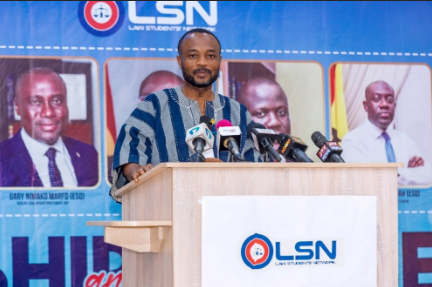
Chairman of the NPP Constitutional and Legal Affairs Committee, Frank Davies (Esq.), urged young lawyers to broaden their understanding of legal practice, stressing that qualification from law school marks only the beginning of a legal career.
He noted that a common misconception among young lawyers is the belief that being called to the Bar represents the peak of their journey.
“In reality, it is only the beginning. The real challenges start after enrolment, when lawyers must build competence and sustainable careers,” he said.
Mr. Davies highlighted the growing diversity of legal practice, pointing to opportunities in banking and finance, taxation, natural resources law, intellectual property, technology law, international arbitration, environmental law, and human rights advocacy.
Stand firm under pressure
Second Deputy Minority Chief Whip, Jerry Ahmed Shaib, urged law students and young lawyers to remain firm, disciplined, and uncompromising in the face of political pressure.
Speaking on behalf of Minority Leader Alexander Afenyo-Markin, he emphasized that integrity and fidelity to justice must guide legal practice and public service.
He expressed concern over what he described as inconsistencies among some political actors, noting that public declarations of principle are sometimes contradicted by actions.
“No one, however powerful, may break the law with impunity,” he stated.
Mr. Shaib cautioned that the current political environment demands discipline, resilience, and ethical clarity from young lawyers entering public life.
Women in leadership
Fatimatu Abubakar, aide to former President Nana Addo Dankwa Akufo-Addo, called for stronger inclusion of women in leadership and politics.
She said that despite their contributions to national development, structural, social, and economic barriers continue to limit women’s participation.
Reflecting on her journey, she noted that her entry into politics was shaped by persistence, family influence, and opportunity rather than formal networks.
She encouraged young women not to be discouraged by perceived barriers, stressing that determination and consistency remain key.
“For the ladies who are uncertain about entering politics, this message is for you,” she said.
She also called for stronger male support in advancing gender inclusion, arguing that national development requires collective effort.

Attitude and mentorship
Samuel Abu Jinapor, MP for Damongo, underscored the importance of attitude, mentorship, and humility in shaping professional success.
Speaking via video message, he said academic qualifications alone are not enough to guarantee success.
“You may have all the qualifications on paper, but your attitude will determine how far you go,” he said.
He stressed that mentorship remains critical to personal and professional growth, noting that no one succeeds in isolation.
Political parties as “ships.”
Former Deputy Attorney-General Diana Asonaba Dapaah described political parties as “ships” navigating a complex global governance environment.
Speaking via video address, she noted that political systems are shaped by ideology, communication, and public engagement.
“My humble belief is that, out of four or more parties, each party is a ship,” she said.
She also highlighted the growing influence of digital communication and social media in shaping modern governance and political participation.