

The New Patriotic Party (NPP) has accused President John Dramani Mahama’s government of repackaging unfulfilled economic promises under a new policy agenda, describing the proposed US$10 billion New Economy programme as another version of the 24-Hour Economy initiative that has yet to deliver the jobs and economic transformation promised to Ghanaians.
The party, through the Ranking Member of Parliament’s Economy and Development Committee, Kojo Oppong Nkrumah, has challenged the government to account for its existing flagship programmes, public expenditure and employment commitments before introducing another ambitious economic initiative.
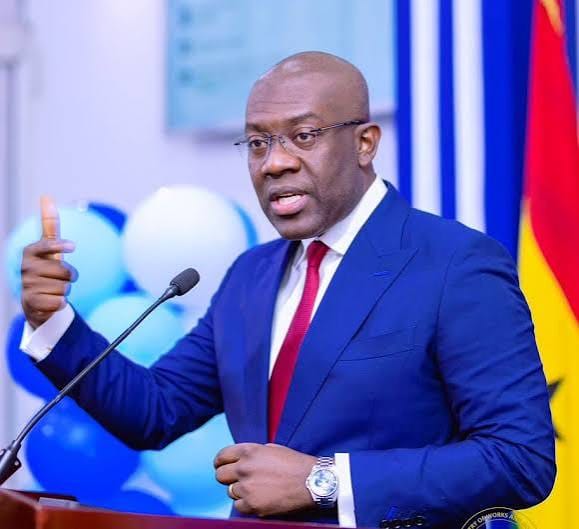
Mr Oppong Nkrumah made the remarks during a press conference held at Parliament on Tuesday, November 10, ahead of Finance Minister Dr Cassiel Ato Forson’s presentation of the 2027 Budget Statement and Economic Policy scheduled for Thursday, November 12, 2026.
Addressing journalists, the Ofoase-Ayirebi MP said the government was increasingly concentrating on presenting attractive economic figures and announcing new programmes while ordinary Ghanaians continued to struggle with the cost of living, limited access to credit, declining business activity and unemployment.
He argued that economic performance should not be judged solely by headline inflation, exchange rate movements and interest rate reductions but by whether those indicators translate into improved household incomes, thriving businesses and sustainable employment.
“Whenever Government announces a monetary figure, Ghanaians should ask three questions: how was it produced, what has it cost us, and how does it connect with your pocket?” he said.
He maintained that the government’s approach appeared to prioritise favourable economic statistics over the actual financial experiences of households and businesses.
“Our message is simple. This Government has chosen to manage the economy for the headline, not the household; for the paper, not the pocket,” he stated.
The NPP’s central argument is that the Mahama administration should first account for the promises made under its existing economic programmes, particularly the 24-Hour Economy and the Big Push, before seeking public support for the proposed New Economy initiative.
The party also questioned the government’s claim that its economic policies were delivering significant improvements, citing concerns about budget execution, public debt, job creation, business liquidity, the cedi and the cost of essential services.
According to Mr Oppong Nkrumah, the government has already received approximately GH¢650 billion in taxpayers’ money over its first two years in office but has not provided satisfactory evidence that its flagship promises have produced the expected results.
New Economy described as another 24-Hour Economy promise
At the centre of the NPP’s criticism is the proposed US$10 billion New Economy programme announced by President Mahama on August 14, 2026.
The programme is expected to mobilise US$2.5 billion annually over four years across seven sectors, with agriculture projected to receive US$5 billion.
The Finance Minister has indicated that further details of the initiative will be provided in the 2027 Budget.
However, Mr Oppong Nkrumah questioned why government was introducing another major economic programme when it had yet to provide a comprehensive account of the 24-Hour Economy, which was launched in July 2025 with an announced US$4 billion financing ambition over four years.
The 24-Hour Economy was presented as a major intervention to expand production, encourage businesses to operate in multiple shifts and create at least 1.7 million jobs by 2028.
The programme was expected to transform Ghana’s productive sectors by promoting round-the-clock business operations, increasing industrial output and creating employment opportunities for young people.
But the NPP argues that more than a year after its launch, government has failed to provide sufficiently detailed and independently verifiable figures showing how many jobs have actually been created or how much of the announced US$4 billion has been mobilised.
The party also questioned the significance of the US$5.5 billion in project agreements announced by government in July 2026, arguing that signed agreements should not be confused with actual financial disbursements, completed projects or jobs created.
Mr Oppong Nkrumah said Ghanaians needed verifiable evidence of the programme’s performance rather than projections and announcements.
The NPP cited an assessment by the Institute for Economic Research and Public Policy (IERPP), which it said highlighted the absence of a clear account of the programme’s financing and employment outcomes.
According to the party, even if the projected 160,000 jobs associated with four announced projects materialise, the figure would represent less than one-tenth of the 1.7 million jobs promised under the 24-Hour Economy.
It also raised questions about discrepancies in the 2026 Budget, where the Budget Speech reportedly allocated GH¢110 million to the programme while the expenditure table indicated GH¢90 million.
The party is therefore demanding a comprehensive financing and implementation report, independently verifiable employment figures, clarification of the conflicting budget allocations and a public monitoring dashboard backed by independent audits.
It argues that the proposed New Economy risks becoming another ambitious political announcement without a clear demonstration of how previous commitments have been fulfilled.
The NPP consequently described the initiative as a rebranding of an existing promise rather than an entirely new economic direction.
“This is not a New Economy. It is a new 24hr Economy promise,” the party declared.
The opposition also questioned the source of financing for the proposed programme, suggesting that government could be relying substantially on additional fiscal space created by the reduction of its primary balance commitment under the IMF programme from 1.5 per cent to 0.5 per cent of GDP.
It argued that the additional fiscal space should not automatically be presented as new money because the government would still need to generate and collect the revenue required to finance the programme.
The party expressed doubts about the administration’s ability to raise the necessary funds, citing what it described as weak revenue performance and the under-execution of existing flagship programmes.
It wants the Finance Minister to disclose how much of the proposed US$10 billion would come from the Treasury, the Ghana Infrastructure Investment Fund, Development Bank Ghana, private investors and development partners.
It is also demanding clarity on whether the programme represents additional financing or overlaps with existing commitments, including the Big Push infrastructure initiative, which was previously presented as a US$10 billion programme.
Questions over 800,000 jobs promised in 2026
Employment was another major issue raised by Mr Oppong Nkrumah during the press conference, with the former Information Minister questioning the government’s ability to account for the jobs it promised to create.
He recalled that the 2026 Budget was presented as being specifically designed to create up to 800,000 new jobs, with approximately 490,000 expected to come from road contracts under the Big Push.
The 24-Hour Economy was also expected to generate 1.7 million decent jobs by 2028.
However, the NPP argued that the government had not provided adequate evidence to establish how many of the projected jobs had materialised.
It questioned the methodology used to arrive at the 490,000 jobs expected from road construction, explaining that the figures were based on World Bank job-multiplier estimates rather than an actual count of workers engaged on construction sites.
The party also cited a public admission by the Head of Strategy at the 24-Hour Economy Secretariat on October 19, 2026, that the Secretariat could not yet state how many jobs had been created under the programme and was working with the Ghana Statistical Service to develop a system for measuring employment outcomes.
The NPP described the situation as a troubling example of government announcing employment targets before establishing a reliable mechanism to measure their achievement.
Mr Oppong Nkrumah further referred to Ghana Statistical Service figures which, according to the party’s statement, showed that youth unemployment among persons aged 15 to 35 averaged 21.9 per cent during the first three quarters of 2025, compared with a national unemployment rate of 12.8 per cent.
For young people between the ages of 15 and 24, the average unemployment rate was reported at 32.5 per cent, while Greater Accra recorded a youth unemployment rate of 31.9 per cent.
He argued that the figures raised questions about the effectiveness of the government’s employment interventions, particularly when young graduates and other jobseekers continued to struggle to find work.
The NPP is demanding that the 2027 Budget provide a detailed breakdown of the jobs government claims to have created, including their locations, sectors, duration and whether they are permanent or temporary.
It also wants the administration to publish a verified jobs ledger covering 2025 and 2026, together with updated labour force statistics, so that Parliament and the public can independently assess the government’s employment record.
GH¢650bn spending and budget execution under scrutiny
Beyond the New Economy and job creation, Mr Oppong Nkrumah questioned the government’s record in executing approved budgets, arguing that budgetary allocations had not consistently translated into actual expenditure and completed projects.
Citing figures from the 2025 Mid-Year Review, the 2026 Budget Statement and other government-related reports, the NPP said capital expenditure fell significantly short of approved targets during the 2025 financial year.
The party indicated that between January and June 2025, capital expenditure was budgeted at GH¢18.1 billion, but actual expenditure stood at GH¢7.1 billion, representing a shortfall of approximately 61 per cent.
For the January to September 2025 period, capital expenditure was budgeted at GH¢26.6 billion, while actual spending amounted to GH¢10.9 billion, leaving a shortfall of 59 per cent.
Domestically financed capital expenditure also recorded a significant gap, with GH¢7.2 billion spent against a target of GH¢15.9 billion.
The NPP further questioned arrears clearance, stating that government had budgeted GH¢7.5 billion for the first half of 2025 but cleared only GH¢4.8 billion.
It also raised concerns about the utilisation of the Annual Budget Funding Amount (ABFA), which represents petroleum revenue allocated to government expenditure.
According to the statement, while US$573.1 million had been set as the annual ceiling for ABFA, only US$1.9 million had been utilised by September 2025.
The party argued that the government’s own 2026 Budget confirmed that no oil revenue had been disbursed to the Big Push by the end of September 2025, despite Parliament having dedicated oil revenues and mineral royalties to the programme.
It maintained that a fiscal surplus achieved partly through failure to execute approved expenditure should not automatically be celebrated as evidence of strong fiscal discipline.
The NPP also cited the Institute for Fiscal Studies, which it said had identified arrears clearance and capital expenditure as areas with significant shortfalls during the first half of 2026.
It further raised concerns about GH¢8.6 billion in audited claims reportedly still under review, calling for the publication of the Auditor-General’s full report, including details of rejected claims and the entities or individuals that submitted them.
The party also questioned the government’s announcement that it had awarded GH¢63 billion in road contracts under the Big Push.
It compared this figure with allocations of GH¢13.8 billion in the 2025 Budget and GH¢30 billion in the 2026 Budget, arguing that the combined allocations of GH¢43.8 billion left at least GH¢19 billion in signed contracts without corresponding cash appropriations.
According to the NPP, awarding contracts without securing the necessary funding could create another accumulation of arrears, particularly if contractors execute work without receiving timely payments.
The party also questioned the increase in public debt, stating that total public debt rose from GH¢641.1 billion in December 2025 to GH¢733.9 billion in July 2026.
It said the increase of GH¢92.8 billion over seven months required a detailed explanation, particularly because the reported cash deficit over the same period was significantly smaller.
The NPP wants the government to reconcile the increase in debt and explain how much of the additional borrowing went into the Sinking Fund, cash buffers, arrears payments and other expenditure.
Oppong Nkrumah challenges government’s inflation success story
The former Information Minister also challenged the government’s presentation of the 5.5 per cent inflation rate as evidence that economic conditions had significantly improved for ordinary Ghanaians.
He argued that the decline in headline inflation had not necessarily translated into lower household expenses or improved business conditions.
According to him, the Bank of Ghana’s own 2025 accounts showed that the central bank sterilised GH¢93.56 billion to manage demand in the economy.
He maintained that the decline in inflation was achieved partly by withdrawing substantial liquidity from the financial system rather than through increased production or a corresponding reduction in the cost of essential goods and services.
Mr Oppong Nkrumah further cited GH¢16.73 billion reportedly spent by the Bank of Ghana in 2025 to pay banks to hold cedis outside the wider economy.
He argued that the policy had imposed significant costs on the central bank while restricting the amount of money available to businesses and consumers.
The MP said the Bank of Ghana’s inflation target was 8 per cent, with a margin of plus or minus two percentage points, giving a target range of 6 to 10 per cent.
He noted that inflation had remained below the lower boundary of the target range for 11 consecutive months, from December 2025 to October 2026.
He questioned whether the monetary policy approach had become too restrictive, particularly when businesses continued to complain about weak sales and liquidity constraints.
The NPP cited concerns raised by the Association of Ghana Industries over falling sales and limited liquidity, as well as reports of reduced Christmas sales among traders at Makola and Kantamanto markets.
It also referred to a reported 7.2 per cent contraction in household-facing services, including chop bars and hotels, during the third quarter of 2025.
On employment, the party said unemployment moved from 13.1 per cent at the end of 2024 to 12.6 per cent in the second quarter of 2025 before rising again to 13 per cent in the third quarter.
It argued that the reduction in inflation had not been accompanied by sufficient improvements in employment opportunities and business activity.
Essential services continue to put pressure on households
Mr Oppong Nkrumah also challenged the government’s reliance on headline inflation by comparing the 5.5 per cent figure with increases in the prices of essential services.
According to the figures presented by the NPP, electricity tariffs recorded a combined increase of 28.7 per cent since January 2025, despite some reductions during the period.
Water tariffs recorded a combined increase of 13.3 per cent in 2026, while transport costs rose by 14.1 per cent between October 2025 and October 2026.
The party also cited increases of 10.5 per cent in housing, rent and utilities, 9.4 per cent in education services and 11.5 per cent in services overall.
It compared these increases with the minimum wage adjustments, arguing that workers were struggling to keep pace with the rising cost of essential services.
The NPP said the minimum wage had increased by 19.9 per cent since January 2025, while electricity costs had risen more sharply over the same period.
It also questioned the cost of replacing the Ghana Card, which it said had risen to GH¢200, arguing that the daily minimum wage increase had not adequately compensated workers for the rising costs of transportation, electricity, water, rent and education.
The party maintained that several of these costs were influenced by decisions of public institutions, including the Public Utilities Regulatory Commission, government ministries and other regulatory bodies.
It therefore wants the government to provide a comprehensive assessment of how approved increases in regulated prices have affected household budgets.
Private sector credit remains a major concern
The NPP also questioned the extent to which reductions in interest rates had improved access to credit for businesses, farmers and small-scale manufacturers.
It argued that lower interest rates announced by government and the central bank would have limited impact if commercial banks continued to restrict lending to productive sectors of the economy.
The party cited private sector credit as a proportion of GDP, saying the figure remained below 8 per cent under the current administration, compared with approximately 32 per cent in Kenya and 36 per cent across sub-Saharan Africa.
It further claimed that banks were lending only about 36 pesewas of every cedi deposited with them.
The NPP compared the current situation with figures from its period in government, stating that private sector credit stood at 16.1 per cent of GDP in 2017 and remained above 13 per cent through the COVID-19 period and the years preceding the debt restructuring crisis.
It said the ratio declined to single digits during the 2023 and 2024 economic crisis and debt restructuring period but had remained below 8 per cent under the NDC administration.
The party wants government to present a credible plan to improve access to financing for traders, farmers and small manufacturers, rather than focusing only on reductions in headline lending rates.
Cedi depreciation raises questions over foreign exchange interventions
The opposition also raised concerns about the sustainability of the cedi’s appreciation in 2025 and its subsequent depreciation in 2026.
According to the NPP, the cedi appreciated by approximately 40 per cent against the US dollar in 2025 following substantial foreign exchange interventions.
The party said it had warned that the appreciation could prove difficult to sustain without a stronger productive economy capable of generating foreign exchange.
It claimed that by September 2026, the cedi had lost 9.5 per cent against the dollar since the beginning of the year, with depreciation approaching 10.5 per cent by early November.
The statement further cited market reports indicating that the Bank of Ghana sold approximately US$9.2 billion into the foreign exchange market between January and August 2026, including US$2.01 billion in June alone.
The NPP said the country’s international reserves declined from approximately US$14.5 billion in February to US$11.1 billion by August, representing a reduction of more than US$3 billion within six months.
It also referred to an estimated GH¢8.3 billion loss recorded by the Bank of Ghana in 2025 from exchange rate movements on its foreign assets and gold.
The party questioned the increasing role of small-scale gold purchases in generating foreign exchange, citing GoldBod’s reported US$1.87 billion from small-scale gold trading in September 2026.
It argued that the government’s growing reliance on gold purchases to support foreign exchange interventions raised questions about the traceability of gold sourced from small-scale mining operations.
The NPP also questioned whether the increasing demand for small-scale gold could have implications for illegal mining activities and the destruction of water bodies, particularly in the absence of a comprehensive system to trace the origin of gold purchased.
It further argued that local manufacturers were facing difficulties from both sides of the currency movement. During the period of cedi appreciation, cheaper imports affected their market share, while the subsequent depreciation increased the cost of imported machinery and raw materials.
NPP outlines demands ahead of Ato Forson’s budget
As the Finance Minister prepares to present the 2027 Budget, the NPP has outlined a number of measures it wants government to address.
The party is demanding the publication of the full cost of the Bank of Ghana’s liquidity management operations in 2026, together with a clear plan, including amounts and timelines, for recapitalising the central bank.
It also wants monthly figures on foreign exchange sold into the market, details of the amount sourced from small-scale gold purchases and a timetable for implementing a comprehensive gold traceability system through GoldBod.
On workers’ welfare, the NPP wants the 2027 minimum wage to be determined with greater consideration for the cost of essential services rather than relying exclusively on headline inflation. It is also demanding publication of the Tripartite Committee’s technical report.
The party further wants government to disclose the combined impact of all regulated price increases approved in 2025 and 2026, particularly those affecting electricity, water, transportation and other essential services.
Before committing public funds to the proposed New Economy, the opposition wants a detailed financing plan showing how much of the programme represents new money, where the funds will come from and which existing commitments may be affected.
It is also demanding a verified jobs ledger covering government programmes implemented in 2025 and 2026, alongside the release of updated labour force statistics before the parliamentary debate on the budget concludes.
Other demands include a detailed account of all major government programmes showing the amounts budgeted, released and spent, as well as the outputs delivered.
The NPP wants government to publish the current stock of arrears and outstanding payables, including unpaid Interim Payment Certificates, reconcile the increase in domestic debt and explain discrepancies between figures contained in the 2026 Budget Speech and the accompanying expenditure tables.
Government urged to focus on the real economy
Mr Oppong Nkrumah concluded that the 2027 Budget should mark a departure from what he described as an approach centred on economic headlines, announcements and favourable statistics without corresponding improvements in the lives of ordinary Ghanaians.
He argued that inflation, exchange rates and interest rates should be assessed not only by the figures announced by government but also by whether they translate into improved purchasing power, stronger businesses and employment opportunities.