

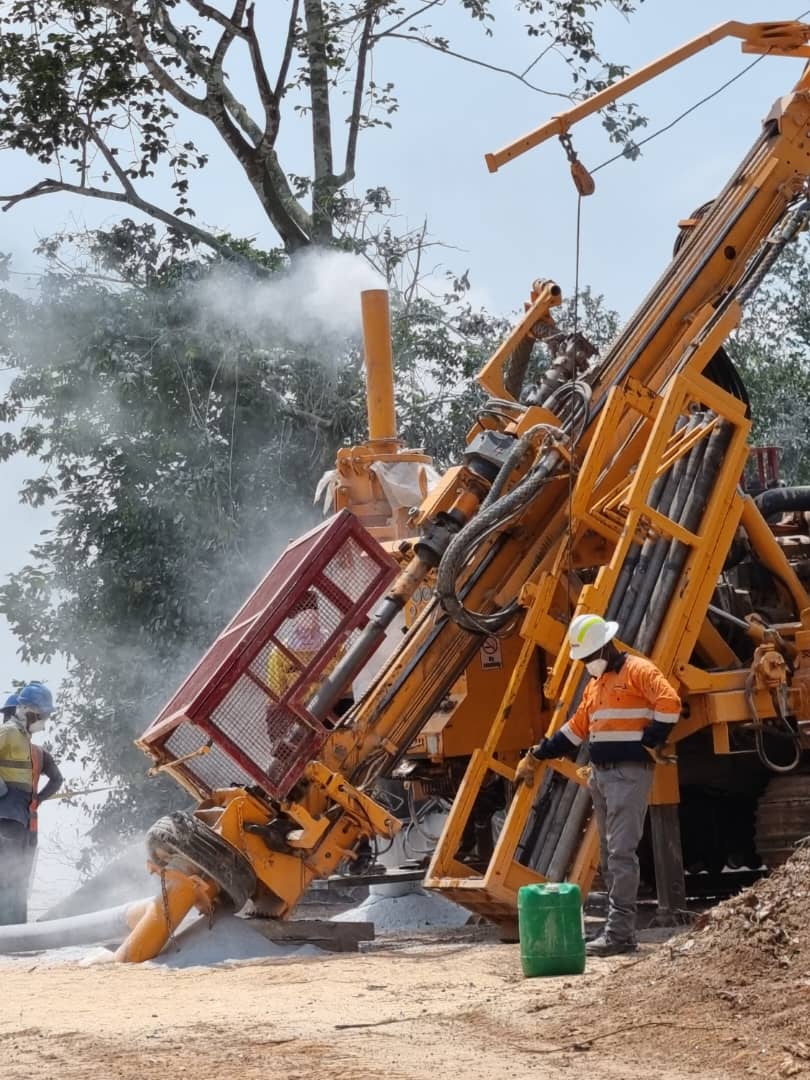
Ghana’s commercial discovery of lithium by Atlantic Lithium of Canada was met with great expectation by Ghanaians with constant commentary by experts, religious bodies and civil society organisations, all excited by the prospect of this discovery.
Ghana’s lithium promise rests on more than the commercial development of Ewoyaa and the seven other Atlantic Lithium tenements across the Central region. For the first time, Ghana saw the prospect of real value addition across the value chain of a very important mineral.
Edward Nana Yaw Koranteng, then Chief Executive Officer of the Minerals Income Investment Fund (MIIF), and Martin Ayisi, then Chief Executive Officer of the Minerals Commission, led investment negotiations to pursue a broader objective: Ghana earning ownership returns, influencing commercial decisions, and building industries around its mineral resources.
Koranteng and Ayisi helped shape a package connecting public equity, international shareholding, board representation, Ghana Stock Exchange participation, commercial offtake and feldspar development. These elements should be judged against the benefits sought: a stronger Ghanaian stake in mining and a route towards domestic industrial development.
Unfortunately, after self-inflicted prolonged delays, competing African producers have moved ahead, and Atlantic Lithium is now the subject of a proposed approximately US$210 million acquisition by China’s Zhejiang Huayou Cobalt; the question is whether Ghana can preserve that original industrial ambition.
Lithium Demand Is Still Growing
The short-term lithium market has been volatile, but the long-term fundamentals remain significant. International Energy Agency data show global lithium demand rising from about 95,000 tonnes in 2021 to 205,000 tonnes in 2024, 455,000 tonnes by 2030 and 928,000 tonnes by 2040 under its stated-policies scenario. The policy issue for Ghana is therefore not today’s lithium price alone, but the country’s prospective position in an industry expected to be considerably larger over the next two decades.
Figure 1. Global lithium demand in thousand tonnes of lithium content. Historical figures for 2021 and 2024; IEA Stated Policies Scenario projections for 2030 and 2040. Source: Global Critical Minerals Outlook 2025.
The Negotiations with Atlantic Lithium
Edward Nana Yaw Koranteng led MIIF’s investment negotiations with Atlantic Lithium, while Martin Ayisi of the Minerals Commission led the mining and regulatory process within the government’s wider negotiating framework.
Their roles were complementary. Koranteng’s distinctive contribution was to connect the investment terms to Ghanaian ownership, domestic capital mobilization, industrlisation and opportunities beyond the mine.
MIIF’s negotiated investment framework totalled US$32.9 million. The proposed US$27.9 million component would secure a 6% contributing interest in Atlantic Lithium’s Ghana portfolio of seven tenements, including the world-class Ewoyaa.
Unlike a free-carried stake, this required investment and participation in funding obligations. Its intended benefit was an additional public ownership interest alongside the State’s stake, subject to completion of the investment.
MIIF also undertook a US$5 million parent-company investment, completed in January 2024, acquiring approximately 19.25 million shares, or about 3% of Atlantic Lithium, with warrants for approximately 9.6 million additional shares, making MIIF the third-largest shareholder of Atlantic Lithium globally.
With this masterstroke, MIIF would share the upside of Atlantic Lithium’s massive lithium discovery in Ivory Coast and its explorations in Australia, South America, and Angola. A feat which placed MIIF and Ghana on the global critical minerals market. Koranteng secured exposure to the international company and negotiated participation in the Ghanaian assets, which many considered a negotiation masterclass.
Ownership, Governance and Offtake
The wider original package increased the State’s free-carried interest from 10% to 13%, increased royalties from 5% to 10%, 1% of gross revenue for the community directed at social investments and a detailed local content contract structure.
Together with the proposed MIIF interest, this envisaged 19% public participation in the Ghana portfolio. The parent-company stake carried a further governance benefit: MIIF representation on Atlantic Lithium’s board, which Koranteng was subsequently invited to join. The objective was to give Ghana an institutional voice in corporate decisions as well as an economic interest.
Koranteng also pursued commercial access to the resource through MIIF’s proposed participation in a competitive process to purchase up to 40% of spodumene output at market prices. This was an opportunity to compete for supply, rather than an unconditional allocation.
Securing feedstock could support later processing investments, with MIIF starting negotiations with Re Element of the United States and a South Korean processing company on the possible establishment of a modern lithium processing plant in the Central or Western region, with the overarching objective of supporting the establishment of a battery factory in Ghana to serve West Africa.
The Benefits Behind the Negotiated Package
| Lithium resource Ewoyaa |
Public ownership 13% State + proposed 6% MIIF |
Commercial offtake Compete for up to 40% |
Downstream ambition Refining and batteries |
Potential markets EVs and energy storage |
The negotiated elements served different purposes: equity for ownership returns, board representation for oversight, offtake participation for potential feedstock access, 1% of gross revenue for community development, and a Ghana Stock Exchange listing for wider Ghanaian investor participation. Feldspar (a lithium by-product) development offered a parallel manufacturing opportunity. Their combined industrial value depended on implementation, financing, and commercially viable projects.
The Ghana Stock Exchange and Domestic Ownership
The negotiated push for Atlantic Lithium’s cross-listing on the Ghana Stock Exchange as part of MIIF’s investment framework opened the opportunity up for all Ghanaians The intended benefit was practical: Ghanaian pension funds, institutions and individuals could invest in the company developing a domestic mineral resource, broadening participation beyond the State’s holdings.
The listing of Atlantic Lithium took place in 2024. It translated one negotiating objective into an operating capital-market mechanism, although investment returns and trading liquidity remained dependent on company performance and market conditions. Its place in the MIIF strategic framework was to connect mining development to Ghanaian savings and investment.
Feldspar and the Industrialisation Strategy
The negotiations also included feldspar, a commercially useful by-product associated with Ewoyaa and an important input for ceramics, tiles, glass and other manufactured products.
MIIF’s published account of the negotiations included joint feldspar development. MIIF pushed this as a route to supplying Ghana’s ceramics industry, with potential applications in tiles and glass. The intended benefit was a domestic industrial input and an additional project revenue stream.
Delivering that benefit would require recovery studies, product quality suitable for manufacturers and viable supply arrangements.
From Lithium Mine to Lithium Economy
At the listing of Atlantic, Koranteng stated that development economics distinguishes resource extraction from resource-based industrialisation. As a country, Ghana captures relatively limited value if its participation ends when concentrate leaves the mine gate. Greater value can potentially be captured through domestic ownership, processing, supplier industries, technological capabilities, skilled employment and linkages with domestic capital markets.
This approach can be understood through the development-economics idea of linkages: ownership retains part of the investment return; local procurement supports suppliers; processing creates additional activity; and domestic shareholding connects mineral development to savings.
In this vein, the negotiators sought to make lithium part of Ghana’s industrial development, with batteries, energy storage and electric mobility as longer-term ambitions. Those ambitions extended beyond the specific transactions already completed.
An Agreement That Attracted Significant Support
The original agreement was contested, and some policy and civil-society voices argued that Ghana should seek still better fiscal terms and stronger control. Those concerns were legitimate subjects for scrutiny.
At the same time, Dr Steve Manteaw, Co-Chair of the Ghana Extractive Industries Transparency Initiative, described the agreement in December 2023 as the “best natural resource contract” Ghana had signed to that point.
Sir Sam Jonah also publicly praised its fiscal terms as superior to those available in many competing jurisdictions. Their assessments did not make the agreement beyond improvement, but they underscored how materially it departed from Ghana’s traditional mining model.
Ghana Lost Time While Africa Moved Forward
The mining lease was signed in October 2023 and ratified in March 2026. The ratified terms revised the royalty and growth and sustainability levy provisions to align with the applicable framework. The original negotiated package and the later ratified terms should therefore be distinguished.
The delay also postponed the opportunity to turn ownership, production, and industrial objectives into operating benefits. The delay by Ghanaian parliamentarians also affected Atlantic’s capital raising for the Ghana project, which would have impacted production timelines in Ghana.
While Ghana stalled, other African lithium companies moved ahead. Zimbabwe has become a leading African lithium producer and is attempting to move further into processed products. Mali has also entered lithium production. Ghana’s comparative advantages—political stability, established mining institutions, ports, financial markets and experienced professionals—make the lost time especially important.
| Jurisdiction | Position | Industrial direction | Lesson for Ghana |
| Ghana | Ewoyaa lease ratified March 2026 | Original strategy linked mining to ownership, offtake, GSE, feldspar and downstream processing | Preserve industrial architecture and accelerate execution |
| Zimbabwe | Large-scale lithium production | Moving toward lithium sulphate and further processing | Production plus beneficiation can deepen value capture |
| Mali | Commercial lithium production commenced | Rapid mine development despite higher political risk | Speed and project execution matter |
Then came Huayou of China’s proposed acquisition of Atlantic
In May 2026, Atlantic Lithium entered a binding Scheme Implementation Deed with Zhejiang Huayou Cobalt under which the Chinese battery-materials group proposes to acquire all issued Atlantic Lithium shares for approximately US$210 million. The transaction is proposed, not completed, and remains subject to the relevant shareholder, court and regulatory conditions.
Huayou is an integrated participant in the global battery-materials value chain. Its involvement could provide capital, processing expertise, technology and market access. The policy question is therefore not whether Chinese investment is inherently positive or negative, but whether Ghana can use the proposed change in ownership to preserve and deepen the industrial commitments originally built around Ewoyaa.
Illustration: Two Possible Outcomes
| INDUSTRIAL PARTNERSHIP | EXTRACTION-LED OUTCOME |
| Huayou capital + technology → local processing → feldspar development → skills transfer → batteries/energy storage → African market | Mine financing → spodumene concentrate → export → overseas processing → limited downstream value capture in Ghana |
What Ghana Stands to Lose
What Ghana stands to lose is the connection between MIIF and the Government of Ghana’s negotiating objectives and their intended benefits. If equity commitments remain uncompleted, the envisaged ownership returns narrow. If a takeover removes the local listing without an alternative, investor access diminishes.
If offtake participation and feldspar development fail to advance, potential processing and manufacturing links remain unrealised. These are distinct risks that require specific contractual and commercial responses.
| If Ewoyaa becomes an export mine principally | If the industrial strategy is preserved |
| Royalties and taxes | Royalties, taxes and ownership returns |
| Mining employment | Mining plus processing/manufacturing employment |
| Spodumene exports | Processing and refining |
| Limited domestic value capture | Greater domestic value capture |
| Foreign processing dependence | Skills and technology transfer |
| Limited capital-market impact | GSE and institutional-investor participation |
| Feldspar underutilisation risk | Ceramics, tiles and glass opportunities |
| Ghana supplies the value chain | Ghana participates further along the value chain |
The Issue Is Policy Continuity
Policy continuity means assessing each negotiated element on its merits and carrying viable commitments into the next phase. Ghana should establish the status of MIIF’s proposed portfolio investment, the treatment of its shares and board representation under the takeover, the future of the GSE listing, and the scope for offtake and feldspar arrangements. Downstream projects need separate feasibility assessments, financing and implementation timetables.
A Fading Dream?
Ghana’s lithium opportunity has not disappeared. Ewoyaa remains a significant resource, the mining lease has been ratified, and the proposed Huayou transaction could bring substantial financial and technical capacity.
The test is whether the next phase delivers the benefits pursued: public ownership returns, Ghanaian investor access, a voice in governance, opportunities to secure feedstock and local manufacturing links. Mine construction would be a major achievement, but these additional objectives require deliberate follow-through.
The proposed Huayou acquisition makes the question more urgent. Ghana must determine whether the next phase of Ewoyaa will preserve and strengthen those ambitions through partnership with a major battery-materials company, or gradually reduce them as the priority shifts principally to financing and operating the mine.
Ghana should preserve and implement the viable elements of that strategy as Ewoyaa advances. The promise Edward Koranteng and Martin Ayisi pursued was a lithium resource that could build Ghanaian wealth and support new economic activity. Whether those negotiated opportunities become practical benefits will determine how much of that promise Ghana retains.