

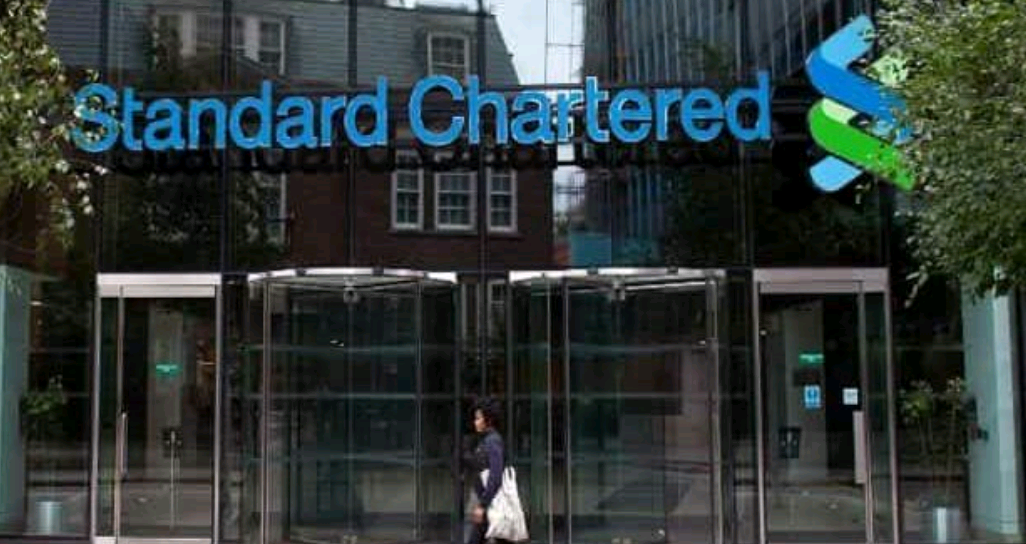
Standard Chartered is set to cut about 7,800 back-office jobs by 2030 as the Asia- and Africa-focused lender accelerates its use of artificial intelligence and automation, in one of the clearest signs yet that global banks are moving from digital experimentation to workforce restructuring.
The London-headquartered bank said the planned reduction represents more than 15 percent of its back-office roles, though it did not specify which countries or units would be most affected.
The bank has major operational hubs in India, China, Malaysia, and Poland.
The move forms part of Chief Executive Bill Winters’ updated global strategy, which seeks to lift returns and improve productivity across the bank’s operations.
Reuters reported that Standard Chartered is targeting a return on tangible equity of more than 15 percent by 2028 and about 18 percent by 2030, after achieving earlier financial targets ahead of schedule.
“We are scaling practical uses of automation, advanced analytics and artificial intelligence to streamline processes, improve decision-making and enhance both client service and internal efficiency,” the bank said in a statement
The announcement places Standard Chartered among a growing number of global companies cutting roles as artificial intelligence begins to absorb tasks once performed by human workers, particularly in support, compliance, risk, technology, and administrative functions.
Financial services, with its heavy reliance on data processing, client documentation, fraud monitoring, and regulatory reporting, is seen as one of the sectors most exposed to automation.
But the bank has sought to frame the cuts not merely as a cost-reduction exercise, but as part of a broader reallocation of resources towards technology, higher-value client coverage, and more efficient operations.
Reuters reported that Mr. Winters described the strategy as part of building a more productive and better-capitalized institution, rather than simply stripping out headcount.
The restructuring comes at a time when Standard Chartered is seeking to deepen its focus on higher-margin businesses, including wealth management, affluent retail clients, and financial institutions.
The bank has also been pushing to strengthen its position in key emerging markets, where it has long presented itself as a bridge between Asia, Africa, and the Middle East.
For Ghana and other African markets where Standard Chartered has a long-standing presence, the announcement raises questions about how global banking digitization could affect local operations over time.
The bank has not announced Ghana-specific job cuts, and the current plan appears focused on global back-office roles rather than frontline market operations.
Still, the development will be closely watched by labor analysts and banking-sector observers as artificial intelligence becomes more embedded in compliance, customer service, risk management, and operations.
Standard Chartered is not alone. Singapore’s DBS earlier said it expected to cut about 4,000 contract and temporary roles over three years as AI use expands, while several major technology companies have also announced significant layoffs linked to automation and a shift in investment priorities.
The latest move underscores a difficult trade-off confronting global banks: the same technologies that promise faster service, lower costs, and stronger risk controls are also beginning to unsettle traditional employment models in one of the world’s most regulated industries.