

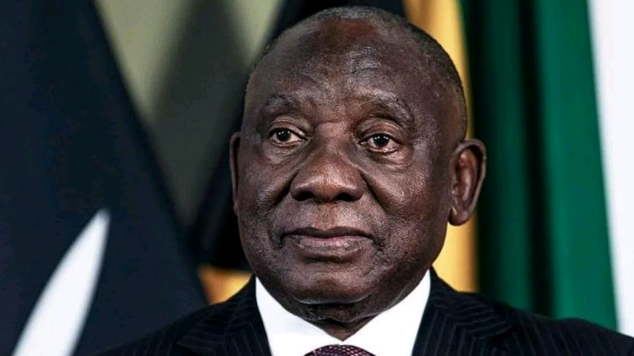
Just like Watergate in the US, South Africa’s “Farmgate” scandal started with a break-in but has since spiralled into something that could threaten the future of the sitting president.
Cyril Ramaphosa now faces the possibility of being removed from office as MPs have taken the unprecedented step of setting up a committee that will recommend whether or not he should be impeached.
This issue first came up in parliament in 2022, but last month, the county’s highest court ruled that MPs had violated the constitution by blocking moves to impeach Ramaphosa.
At that time, the president’s African National Congress (ANC) controlled more than half the seats in parliament, but after the 2024 election, he no longer has that majority to rely on.
What is Ramaphosa actually accused of doing?
It all started back in 2020 with a robbery at the president’s private farm in Phala Phala, Limpopo province. Thieves broke in and allegedly stole $580,000 (£430,000) in US dollar bills that had been stuffed into a sofa.
But details only came out two years later when the country’s former spy chief, Arthur Fraser, highlighted the alleged theft in an explosive dossier that he sent to the police.
Fraser, a close ally of former President Jacob Zuma, who Ramaphosa replaced, accused the head of state of hiding the theft from the police and tax authorities.
At the time Ramaphosa said there was “no basis for the claims of criminal conduct”.
The spy, the president and the cash in the sofa
As the stolen cash was in foreign currency, it meant that exchange control laws could also have been contravened.
The reserve bank looked into the issue and found that there were no violations of the exchange control act and the public protector, who investigates allegations of abuse of power, found no wrongdoing on the president’s part.
But parliament also began an impeachment process and established an independent panel to investigate the allegations.
It came to some damning findings, including saying there was “substantial doubt about the legitimacy of the source of the currency that was stolen” and concluding that Ramaphosa “has a case to answer”.
What did the president say?
Ramaphosa has always been clear that he did not do anything wrong and resisted calls to resign.
In 2022, he confirmed that a robbery had taken place and that the money – he gave a figure of $580,000, though Fraser had mentioned $4m – had been from the legitimate sale of buffalo from his livestock business.
In response to the independent panel’s report, he filed a legal application to have the report set aside.That was dropped once parliament had voted against accepting the report but the president has since revived it, arguing that the independent panel had “misconceived its mandate, misjudged the information placed before it and misinterpreted the four charges advanced against me”.
How does the impeachment process work?
According to South African law, the president can be removed for:
violating the constitution or law
serious misconduct or
an inability to perform the functions of the job.
Ramaphosa is accused of violating the first two. Parliamentary rules spell out the process followed for impeachment.
The independent panel’s report is part of that process, but now a committee of MPs has been established to examine the charges against the president and make a recommendation.
If it recommends impeachment, the matter is put to a vote.
But according to the constitution, at least two-thirds of MPs must vote to remove the president.
Is Ramaphosa likely to be impeached?
The two-thirds rule may be what saves the president.
Ramaphosa needs at least 133 MPs to reject an impeachment motion and the ANC currently has 159 seats in the National Assembly.
Political analyst Sandile Swana told the BBC it was unlikely that the ANC MPs would turn on Ramaphosa if it came down to a vote.
“The ANC has made it clear that it is not in the business of impeaching its own president, regardless of the facts,” he said.
What is less clear is which way the MPs from the other parties in the 10-party governing coalition will vote.