
As the war in Iran drags on, China has deepened its influence with fuel-starved neighbors, offering to ease shortages while pushing its renewable energy technology.
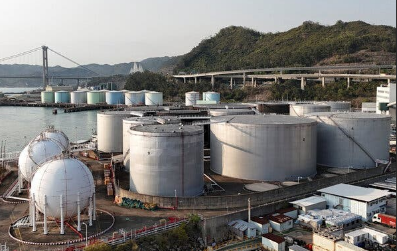
In the days after the United States and Israel attacked Iran and the Strait of Hormuz was closed, China banned oil-product exports, squeezing Asian countries that rely on its refineries for jet fuel, gasoline, and diesel.
Across Asia, governments are petitioning Beijing to blunt the war’s impact. Unlike the rest of the region, China is dealing from a position of strength. It is the world’s largest importer of crude oil, but it has amassed huge reserves, spent decades reducing its dependence on foreign oil, and poured hundreds of billions of dollars into clean energy technology.
Vietnam appealed to Beijing over its looming jet fuel shortage. The Philippines asked China not to restrict fertilizer exports. After a visit to China last month to press the subject, Australia’s foreign minister said Beijing would cooperate with Australian companies on jet fuel shipments.
The outreach produced assurances from China to address regional energy security issues as well as commitments from other countries to advance diplomatic dialogue with Beijing and, in some cases, cooperate on future renewable energy projects, according to government readouts. The diplomacy kept some Chinese fuel flowing, helping Asia avoid some of the worst-case scenarios that experts feared at the start of the war.
Since the war began, Beijing has held high-level talks with officials from the Philippines, Australia, Vietnam, Cambodia, Laos, Thailand, Myanmar, and Bangladesh.
China’s message has been consistent: It did not start the war and does not want the Strait of Hormuz closed off — but it does offer an alternative to fossil fuels.
Beijing has cast itself as the leader of a future powered by renewable and domestically sourced energy, in contrast to President Trump’s embrace of oil and natural gas, which leaves much of the world exposed to volatility in regions like the Middle East.
“China is stepping in cautiously to support its neighbors,” said Michal Meidan, head of China energy research at the Oxford Institute for Energy Studies, an independent research group. “They are using this as a soft-power tool to say, ‘We will try to support your energy security with the caveat that China comes first,’ laying the foundations for sales of green technology as a way of security in the future.”
For years, China has used its economic might and technological know-how to extend its global influence through the Belt and Road Initiative, doling out an estimated $1 trillion in loans and grants for infrastructure projects worldwide, mostly in developing nations. But the war in Iran has allowed it to extend its influence without the reputational risk associated with lending to heavily indebted countries.
“Chinese officials are aware of the blowback, and they see clean energy as a remedy to the bad image of the Belt and Road Initiative,” said Dan Wang, China director at the Eurasia Group.
Oil continued to flow from China in the first month of the war, though experts caution against reading too closely into export figures, which can swing sharply from month to month. Shipments of jet fuel from China to Vietnam increased 34 percent, fertilizer exports to the Philippines rose 33 percent and diesel exports to the Philippines surged 187 percent in March, compared with the month before.
Asian economies are still reeling from the war’s costs, which have reached a scale not seen since the Covid-19 pandemic halted much of global trade. Economists warn that the longer the strait stays shut, the more devastating the long-term damage will be for a region that still depends heavily on Middle Eastern oil.
But continued shipments of some Chinese oil products to select countries have offered relief and underscored how Beijing deploys carrots in times of crisis to engender goodwill, analysts and energy experts say.
“China’s ban was not a complete ban,” Ms. Wang said. “It was more selective, and it seemed that good diplomatic relations played a big role.”
Vietnam and Australia, for example, were beneficiaries because their relationship with Beijing has been improving. “So they did get some fuel, if not the full amount they needed,” said Ms. Wang, who recently travelled to China and met with industry experts.
At times, China has dangled the prospect of assistance in exchange for acceptance of its political terms. In March, as Taiwan raced to secure new energy sources, China’s Taiwan Affairs Office floated a thinly veiled bargain to the self-governed island, which Beijing claims as its own.
Taiwan, the office said, would enjoy “better resource security after peaceful reunification, with a strong motherland as its backing.” The island imports more than 96 percent of its energy, and around 60 percent of its oil transits through the strait.
The war in Iran has exposed many of Asia’s vulnerabilities, and China is not alone in using its resources to keep the region afloat. Japan pledged $10 billion to help Southeast Asian nations cope with soaring oil prices and support factories that supply important equipment to Japanese industry.