

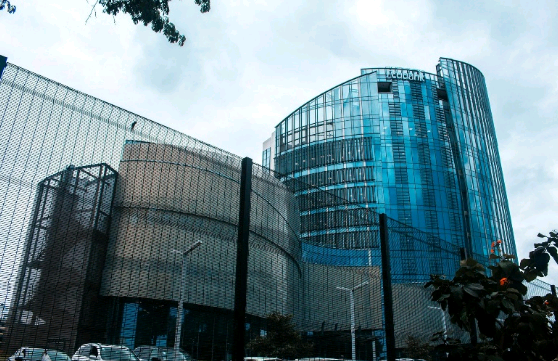
A seemingly technical boardroom decision at Ecobank Transnational Incorporated (ETI) is fuelling fresh speculation over who will ultimately control the strategic direction of Africa’s most geographically expansive banking group.
The decision by Bosquet Investments to fill only one of the two board seats it inherited from South Africa’s Nedbank Group has reignited questions about the future of the chairmanship at the Lomé-based lender, whose network spans 35 African countries and remains one of the continent’s most significant financial institutions.
At the centre of the discussion is Alain Nkontchou, the Cameroonian financier whose investment vehicle Bosquet recently acquired Nedbank’s 21.22% stake in ETI for $100mn.
The transaction, approved by the Banking Commission of the West African Monetary Union (UMOA), was formally announced by Ecobank last week and marks one of the most consequential shareholder shifts in the bank’s recent history.
While Ecobank has sought to present the transition as orderly, market participants increasingly view the move as the opening chapter of a broader governance reshuffle that could eventually see Nkontchou return to the chairmanship he held between September 2020 and June 2024.
His successor, current chairman Papa Madiaw Ndiaye, now finds himself overseeing a board whose dominant shareholder is the very man who previously occupied his seat.
“The market reads this as a transition that has begun, not as a settled arrangement,” one Africa-focused fund manager said, requesting anonymity because the matter touches on board confidentiality.
“Filling only one seat when entitled to two is not a passive choice. It signals that Bosquet is staging its representation rather than rushing it.”
A vacant seat and growing questions
Nedbank exited Ecobank’s share register in December 2025 after 17 years as one of the group’s most influential investors. Until its departure, the South African lender held two seats on ETI’s board through Brian Kennedy and Terence Sibiya.
Yet despite inheriting both positions, Bosquet has appointed only one nominee, leaving the second seat conspicuously vacant.
The identity of Bosquet’s representative has not been publicly disclosed, and Ecobank has declined to comment on when the second appointment may be made.
The issue surfaced prominently during ETI’s annual general meeting in Lomé on June 3, where Ndiaye was asked directly whether Bosquet’s arrival could eventually lead to a change in board leadership.
The chairman avoided speculation but delivered remarks that immediately attracted attention among investors and governance watchers.
Asked whether the new shareholder might seek the presidency of the board, Ndiaye declined to enter “into hypotheses based on contexts I do not have the advantage of knowing”.
He then added: “I continue to serve this institution with pride and great commitment, for as long as it pleases the shareholders.”
The chairman extended the same observation to group chief executive Jeremy Awori, the Kenyan banker who assumed leadership of the group in March 2023.
For many investors, the wording was notable.
Chairpersons of major listed banks rarely reference the duration of their tenure in terms so explicitly linked to shareholder preferences, particularly at a time when a new dominant investor is consolidating influence.
The comments have been closely analysed across Ecobank’s investor base, which spans shareholders trading the stock on the Nigerian Exchange, the Ghana Stock Exchange and the Bourse Régionale des Valeurs Mobilières in Abidjan.
The heightened interest reflects more than governance intrigue.
Ecobank’s shares have surged approximately 60% in dollar terms during 2025 and more than 130% since the beginning of 2026, helped by growing investor confidence that the changing ownership structure could accelerate reforms and improve performance in key markets.
Africa’s biggest banking shareholder takes centre stage
Nkontchou’s influence within Ecobank has expanded significantly following the Bosquet acquisition.
Bosquet’s 21.22% stake, combined with the 2.83% holding owned through Enko Opportunity Growth, a fund controlled by Enko Capital Management, gives the financier economic exposure of at least 24.05%.
That makes him the largest economic shareholder in ETI, ahead of Qatar National Bank’s 20.10% stake and Arise B.V.’s 14.10% holding.
Importantly, the position remains below the 30% threshold that would trigger a mandatory tender offer under Nigerian securities regulations, giving Bosquet flexibility should it wish to increase its stake over time.
The next phase of ETI’s governance transition is likely to revolve around two critical questions.
The first concerns the identity of the second Bosquet nominee and how that appointment could alter the balance between shareholder representatives and independent directors on a board that also includes delegates from Qatar National Bank, Arise, South Africa’s Public Investment Corporation and the ECOWAS Bank for Investment and Development.
The second concerns the relationship between the new controlling shareholder and the executive management team led by Awori.
Since joining from Absa Bank Kenya in March 2023, Awori has overseen a marked improvement in operational performance.
According to figures presented by chief financial officer Ayo Adepoju during the AGM, pre-tax profit rose 21% in 2025 to $801mn, while the number of subsidiaries generating returns above their cost of equity increased from 15 to 25 out of the group’s 34 banking operations over four years.